






Your child waters a balcony plant every morning. One afternoon, its leaves begin to droop. Confused, they ask, "But I watered it yesterday. Why is it still unhappy?" An ordinary plant becomes an opportunity to observe, ask questions, and learn.
For parents comparing top schools in delhi, experiences like these are worth considering alongside classroom learning. At Bethesda Christian Academy (BCA Delhi), Chattarpur, gardening is among the activities listed for students. But why should children learn to care for plants in the first place?
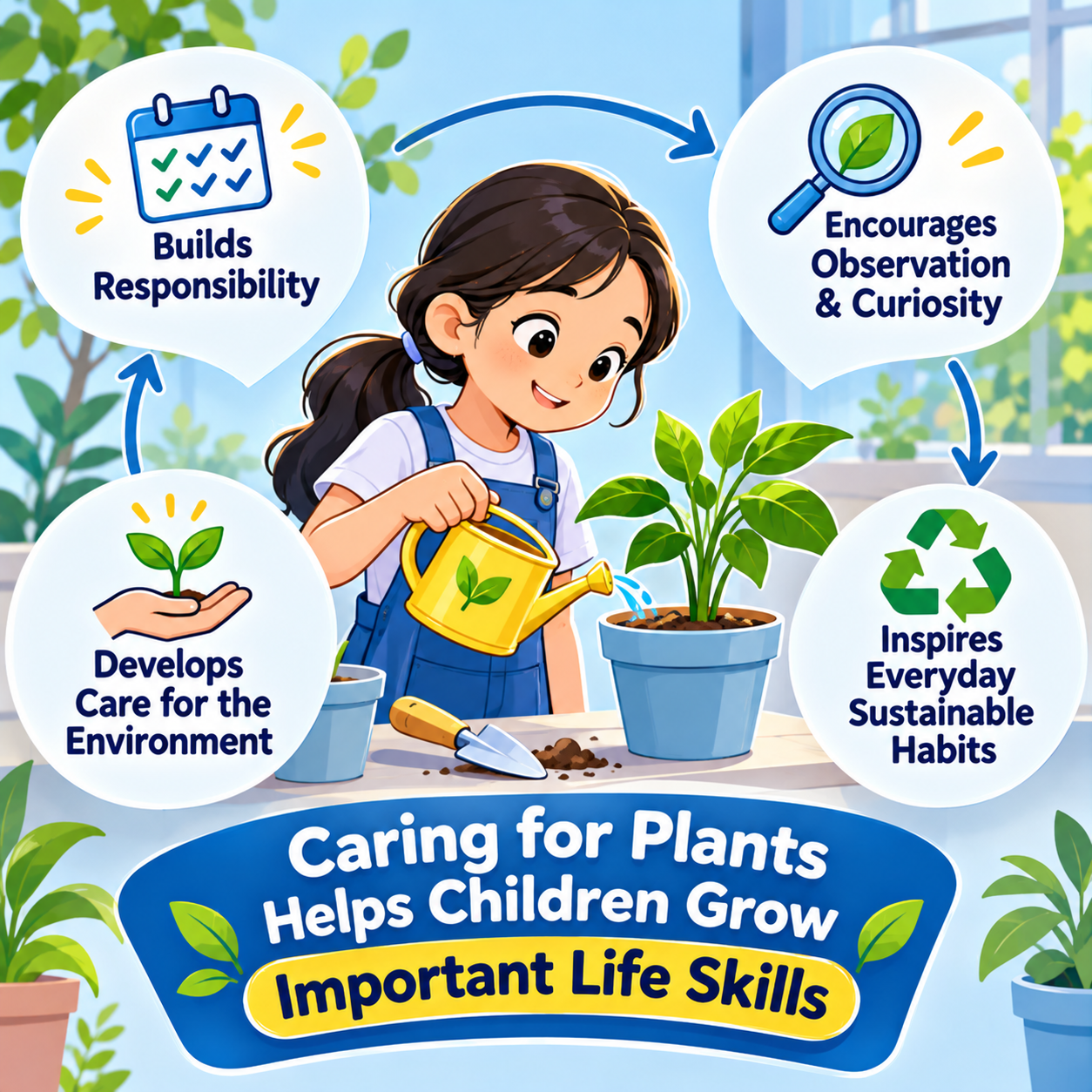
1. How Does Looking After a Plant Teach Responsibility?
A young child might happily plant seeds but forget about them the next day. This is not unusual. Responsibility develops through repeated practice, not a single exciting activity.
Give your child one manageable task, such as checking whether the soil feels dry before watering a plant. At first, they may need reminders. Gradually, they can begin noticing when the plant needs attention.
Suppose they forget for two days and the leaves wilt. Instead of saying, "You never take care of anything," ask, "What do you think we should check?"
This turns a mistake into an opportunity to learn. Children begin to understand that caring for living things means noticing their needs and responding regularly.
Parents should still supervise, especially with young children. The goal is not to make a child fully responsible for a plant's survival, but to help them practise dependable habits.
2. What Can Children Learn When a Plant Does Not Grow as Expected?
Imagine placing two pots near different windows. One receives several hours of sunlight, while the other remains mostly shaded.
After a week, your child notices that the plants look different. Instead of immediately explaining why, ask what else might have affected them. Did both receive similar amounts of water? Were they the same kind of plant?
These questions encourage careful observation.
India's National Curriculum Framework for School Education 2023 encourages children to learn about their environment through direct experiences, including growing plants and making observations.
Gardening also shows children that not every question has an immediate answer. A seed may take longer than expected to sprout. Leaves may turn yellow for several reasons. Finding out what happened requires patience and curiosity.
Even an unsuccessful attempt can teach something.
3. Can Caring for Plants Help Children Respect Their Surroundings?
A child who cares for a small plant may begin noticing things previously ignored: a broken branch, litter near a tree, or water running unnecessarily from a tap.
This awareness provides a starting point for broader conversations about shared spaces.
For example, while walking through a neighbourhood park, your child spots plastic wrappers around a flower bed. Ask, "Where should this waste go? What might happen if everyone leaves it here?"
Rather than simply telling children to protect nature, involve them in age-appropriate decisions about keeping their surroundings clean.
Research on school gardening suggests potential benefits for environmental engagement, but these depend on how activities are organised. One session cannot guarantee lasting responsibility.
Children also learn from what adults do. If parents waste water while repeatedly telling children to conserve it, the message becomes confusing.
Simple, consistent actions make environmental care easier to understand.
4. How Can Parents Encourage These Habits Without Having a Garden?
You do not need a large backyard. A balcony, windowsill, or even regular visits to a nearby park can offer useful learning opportunities.
Try starting with one small activity:
- Grow coriander or another suitable herb in a container with adequate light.
- Ask your child to check soil moisture before adding water.
- Photograph or draw changes in a plant once a week.
- Observe the same neighbourhood tree across different seasons.
- Collect litter during a supervised community clean-up, avoiding sharp or unsafe objects.
Let your child ask questions. If they wonder why a plant leans toward a window, encourage them to observe rather than simply memorise an explanation.
Choose child-safe plants, supervise the use of gardening tools, and ensure children wash their hands after handling soil.
Most importantly, avoid turning gardening into another performance test. A child does not need to grow the biggest plant or keep a perfect notebook.
The purpose is to pay attention, participate, and gradually understand how everyday choices affect the environment.
Learning Through Gardening at Bethesda Christian Academy, Chattarpur
Parents exploring the best schools in delhi may also want to understand how children experience learning beyond textbooks. At Bethesda Christian Academy (BCA Delhi), Chattarpur, located in Village Bhati, gardening is listed among the school's extracurricular activities, alongside art, music, and other creative opportunities.

Plant care offers a practical context for children to explore observation, regular routines, and environmental responsibility. Families considering the school can ask how gardening is organised, what students actually do, and whether children have opportunities to observe changes over time. These questions help parents understand how an activity connects with everyday learning.
Conclusion
Learning to care for plants is not only about growing flowers or vegetables. It gives children opportunities to notice problems, ask questions, practise routines, and consider the needs of living things.
Start small. Let your child observe a leaf, check the soil, or care for one suitable plant with your help.
What matters is not a perfect garden, but the curiosity and care developed along the way.
For more information on this and similar schools, check out this list of the best schools in Delhi.











 as a preferred source on