






Your child finishes homework, puts away their books, and immediately asks, "Mumma, what should I do now?" You suggest drawing, building blocks, or playing with toys, but a few minutes later, they return asking for another activity.
Many parents experience this situation. Children often have busy schedules filled with schoolwork, organised activities, and adult-led entertainment. However, they also need opportunities to make their own choices during play.
For parents exploring the Top schools in gurugram, understanding the importance of independent play is valuable. Schools such as The Navriti School, DLF Phase IV, Gurgaon provide a useful context for considering how play and everyday learning experiences contribute to children's overall development.
What Happens When Children Are Allowed to Lead Their Own Play?
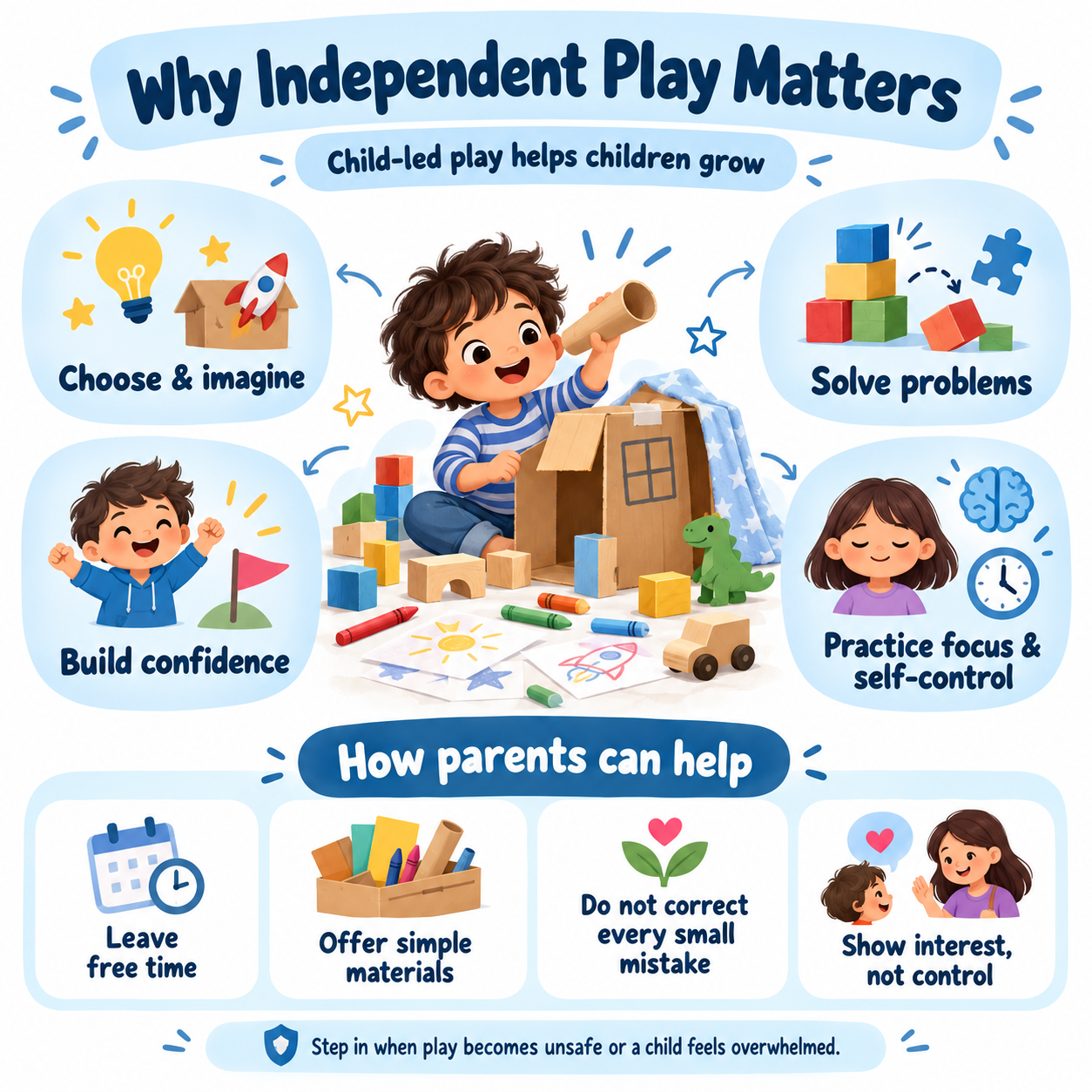
Independent play happens when children choose what they want to do, decide how an activity should unfold, and explore ideas without constant adult instructions.
For example, imagine your child collecting cushions, arranging them around the sofa, and creating a pretend house. They decide where the entrance should be, who lives inside, and what happens next.
Although this might appear to be ordinary play, the child is making decisions, using imagination, and finding solutions independently.
The National Curriculum Framework for Foundational Stage (2022) recognises free play, guided play, and structured play as important parts of early childhood education.
Each serves a different purpose. Structured activities help children follow instructions, while free play gives them opportunities to explore their own interests.
Children benefit from experiencing both. They need guidance to learn new skills, but they also need freedom to discover what interests them.
Why Constant Adult Instructions Can Limit Learning Opportunities
Parents naturally want to help children succeed. However, stepping in too quickly can sometimes prevent children from exploring solutions themselves.
Imagine a child building a tower using blocks. Every time the tower falls, a parent immediately rearranges the blocks to make it stronger.
The child completes the activity, but misses opportunities to understand why the tower collapsed and experiment with different arrangements.
When children are allowed to try again, they practise patience, planning, and flexible thinking.
Guidance from Harvard University's Center on the Developing Child explains how playful activities can help children practise executive-function skills, including attention, self-control, and working memory.
These skills are important for everyday activities, from completing tasks to managing emotions.
This does not mean parents should avoid helping their children. Instead, they can pause before offering solutions and allow children to attempt manageable challenges.
Sometimes, a simple question like "What else could you try?" encourages more independent thinking than immediately providing the answer.
How Parents Can Encourage Independent Play at Home
Encouraging independent play does not require expensive toys or a separate playroom. Small changes to everyday routines can create meaningful opportunities.
1. Leave some time without planned activities
Children do not need every afternoon filled with classes, worksheets, or organised games.
Allow some free time when they can decide whether to draw, build something, pretend, or explore their surroundings safely.
2. Offer simple materials instead of complicated toys
Cardboard boxes, building blocks, paper, crayons, and household objects can encourage imaginative play.
A cardboard box might become a spaceship, a shop, or a home for stuffed animals. Let children decide what they want to create.
3. Avoid correcting every small mistake
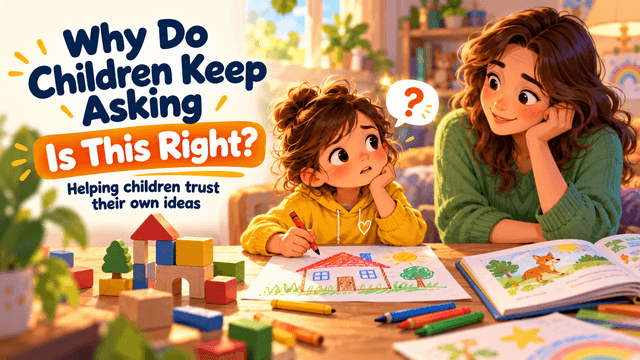
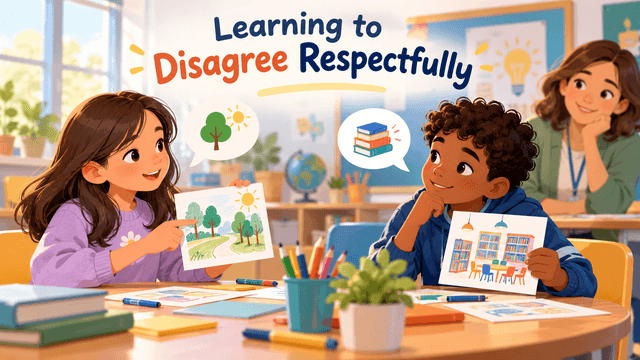
If your child draws a purple tree or builds an unusual structure, resist the temptation to make it look more realistic.
Play does not always require a correct answer. Allowing children to experiment encourages creativity and confidence in their ideas.
4. Begin with short periods of child-led play
Some children are accustomed to adults directing every activity. They may initially struggle to decide what to do independently.
Start with a short, comfortable period and gradually allow more independence as your child becomes confident.
You can stay nearby without controlling the activity.
5. Show interest without taking control
Instead of giving instructions, ask open-ended questions such as, "Tell me about what you're making."
If your child invites you to participate, follow their ideas rather than changing the activity.
The aim is to help children experience ownership over their play while knowing that support is available when needed.
When Should Parents Step In During Play?
Independent play does not mean leaving young children unsupervised. Parents still need to maintain a safe environment and respond when assistance is necessary.
For example, if two children begin arguing over the same toy, avoid immediately deciding who should have it. Encourage them to explain their feelings and suggest a solution.
However, adults should intervene when play becomes unsafe or children are overwhelmed by a situation they cannot manage.
The goal is to balance independence with appropriate guidance. Children benefit from both the freedom to explore and the reassurance of knowing adults are available.
Encouraging Independent Learning at The Navriti School, DLF Phase IV, Gurgaon
Independent play is an important consideration when evaluating early childhood education. At The Navriti School, DLF Phase IV, Gurgaon, the broader discussion of learning through play connects with the importance of imagination, exploration, and children's participation in everyday activities. Parents comparing the Best schools in gurugram can consider how different learning environments balance structured lessons with opportunities for creativity and independent thinking. Allowing children to explore ideas, make age-appropriate decisions, and learn through practical experiences can contribute to a balanced approach to early education.

Conclusion
Children do not need adults to organise every moment of their day. Sometimes, the most meaningful learning begins when they are free to explore their own ideas.
By providing safe spaces, simple materials, and appropriate guidance, parents can give children opportunities to develop independence, creativity, and problem-solving skills through everyday play.
For more information on similar schools, check out this list of the best schools in Gurugram.




 as a preferred source on