






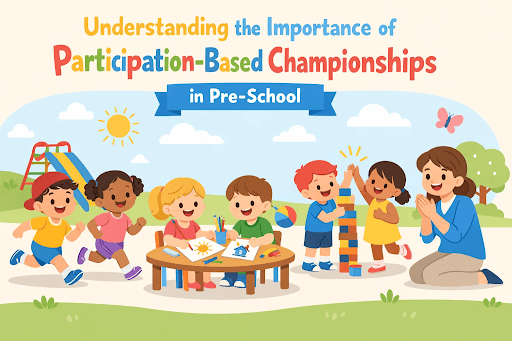

As a parent, you start noticing things that don’t always show up in reports or certificates. Yes, your child is learning letters, numbers, and basic skills, which are visible. But there’s something else you quietly begin to observe. Do they raise their hand in class? Do they try new activities without hesitation? Do they smile when they’re part of a group, or do they step back and just watch?
Because somewhere along the way, your focus shifts. It’s no longer only about what your child is learning; it becomes about how they are growing. And in these early years, especially in pre-school, confidence doesn’t come from winning. It comes from participating. From trying. From being part of something.
That's why championships based on participation are important. They aren't big, stressful events; they're small, meaningful chances for every child to learn and express themselves. When you start looking into the best pre-schools in Bangalore, you'll notice a difference, especially at Goldenbee Global School, where the focus is on more than just academics. They want to make sure kids feel safe to participate, make mistakes, and grow. In the end, it's not about raising a topper; it's about raising a happy, confident child.
Also Read | Why Emotional Safety Matters in Preschool: Lessons from Mother's Pride
Why Early Childhood Is Not About Competition?
Let’s be real, competition has its place. But not too early. In pre-school years (ages 2–6), children are still developing:
- Basic motor skills
- How well you can talk to others
- Understanding emotions
- Confidence in social situations
Research on early childhood development shows that almost 90% of brain development happens before the age of 5. That means these years are less about doing well and more about learning and seeing new things.
If competition is introduced too strongly at this stage, it can:
- Create fear of failure
- Reduce willingness to try new things
- Affect self-esteem
On the other hand, participation-based activities:
- Encourage curiosity
- Build confidence
- Create positive associations with learning
And that’s what really matters.
What Are Participation-Based Championships?
From a parent’s perspective, there are events where every child is involved, and every child is appreciated, and every child feels included. Instead of focusing only on winners, these championships celebrate effort.
It could be:
- A simple running race
- A storytelling activity
- A dance performance
- A group game
The goal is not to identify the “best” child. It’s to make sure every child experiences the joy of participating, and that changes everything.
What Children Actually Learn Through Participation?
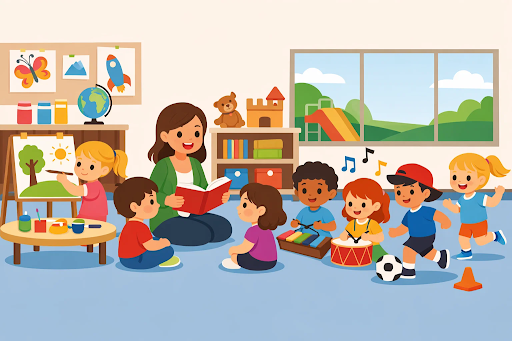
Sometimes, we underestimate how much children learn just by being part of something. Participation-based championships help children develop:
- Confidence: Standing in front of others, even for a few seconds, builds self-belief.
- Social Skills: Children learn to interact, wait for their turn, and cheer for others.
- Emotional Resilience: They understand that it’s okay not to be perfect what matters is trying.
- Motor and Cognitive Skills: Simple activities improve coordination, focus, and understanding.
- Joy of Learning: When there’s no pressure to win, children enjoy the process more.
Studies suggest that children who are encouraged to participate (rather than compete early) show higher engagement levels and better emotional development later in school.
Check Out | Igniting Potential Through Skill-Based Learning
How Participation-Based Championships Are Practiced at Goldenbee Global school(GBGH), Bangalore
As a parent, one of the first questions that naturally comes up is, will my child actually get a chance to participate, or will only a few children be selected? At Goldenbee Global school(GBGH), Bangalore, this is something the school seems to understand well. Participation is not limited, it’s encouraged for every child, whether it’s a simple activity like a fun race, storytelling, or a group performance, the focus stays on making sure each child gets their moment, no one is left out, and as a parent, that reassurance matters.
Then comes another concern: what if my child is shy, will they be forced into it? From what parents observe, the approach here is gentle; teachers don’t push children onto a stage, they guide them slowly, sometimes stand beside them, sometimes let them observe first and try later, it’s not about rushing confidence; it’s about building it. And then there’s the question of pressure, are these events competitive, will my child feel compared? Here, participation-based championships are designed to reduce that pressure. The focus is not on winners and losers, but on effort; every child is acknowledged, appreciated, encouraged, and that changes how children respond. They don’t hesitate, they don’t fear failure, they want to take part.
Finally, like most parents, you start wondering, is my child actually learning through all this? And over time, the answer becomes visible, you notice your child speaking more confidently, interacting better, willing to try new things, these are not things that come from textbooks, they come from experiences like these. And that’s where schools like Goldenbee Global school(GBGH), Bangalore stand out, by making participation part of everyday learning, not just a one-time event, because in the end, it’s not about raising a child who wins early, it’s about raising one who is confident enough to keep trying.
The Final Thought
As parents, it's easy to look for things like certificates, medals, and other visible accomplishments that can be measured and compared. But in the beginning, real growth looks different: it's quieter, slower, and much more important. It shows up in how your child starts to join in without being told to, how they enjoy being part of something even if they don't win, and how they are willing to try again after a small failure.
And as time goes on, these little things start to add up to something much bigger: confidence, happiness, and a sense of self-worth. That's why championships based on participation aren't just games; they help people grow and learn. And when you start looking into the best pre-schools in Bangalore, you begin to notice this clearly: the right environment is not the one that pushes children to win early, but the one that allows them to participate freely, grow naturally, and actually enjoy the process.
Because in the end, children who are encouraged to participate don’t just become good students, they grow into confident individuals, and as a parent, that’s what truly matters.
If you’d like to explore this further or look at similar options, you can browse through a list of some of the best schools in India.





 as a preferred source on