







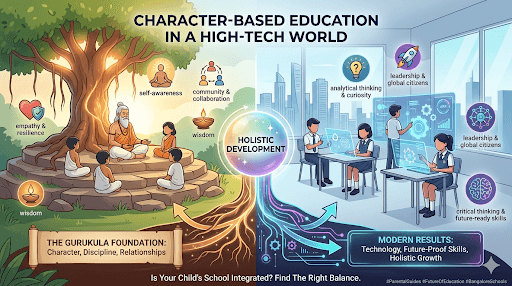

We all have heard of the concept- The Future of Education, where we imagine that all the things in the learning spaces have turned digital, more data-driven, and hence teaching students how they can thrive in this competitive world. Parents spend hours researching the best school offering a curriculum that can build their child’s personality to deal with the modern high-tech world.
But in searching for all of this, they lag in searching for the things that are the foundation of their child’s education. It is not about adding new programmes, but building the one that no algorithm, no new technology can replace.
Now the main question that arises here is- what are the courses, values, and subjects that can actually sustain in this competitive, ever-evolving world? We will see how some schools in Bangalore, like Canara Gurukula Public School, Bangalore, are integrating ancient Indian learning practices with modern concepts.
Also Read | From Gurukula Traditions to Global Citizens: The Canara Gurukula Transformation
What did the Gurukula System Always Understand?
The Gurukula system of learning and teaching did not work on the concepts of examination. It was built on the overall development of the human being. Children in Gurukula used to read about character, wisdom, discipline, and their relationship with teachers. They were not asked about maths and grammar, but about something beyond text, which was built into their character.
The Gurukula model emphasized routine and rhythm that were responsible for structuring days, physical discipline, morning rituals, communal relationships, and social integrity. Today, neuroscience calls this executive function, brain ability to self-regulate and focus, which was being built through the daily structure of Gurukula life. In short, there was no difference between academic knowledge and personal values. Ethics was not a subject; it was an environment.
How are ancient Gurukula concepts now surfacing in the modern name of Holistic Development?
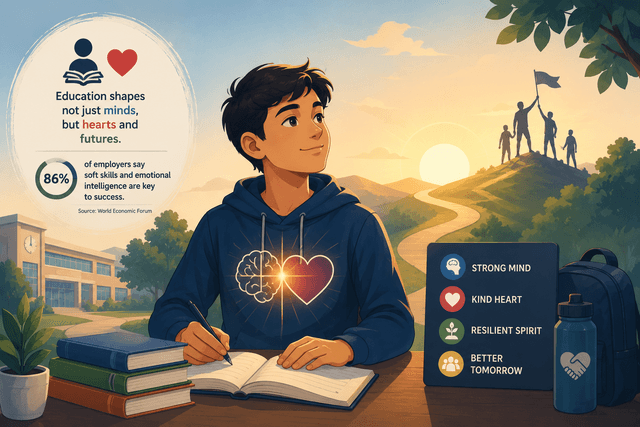
The World Economic Forum’s Future of Jobs Report 2025 listed the top skills employers will demand by 2030. Due to a shift in global trends in tech, the economy, and green transition, it is projected that 170 million new jobs will be generated by 2030, while displacing 92 million others.
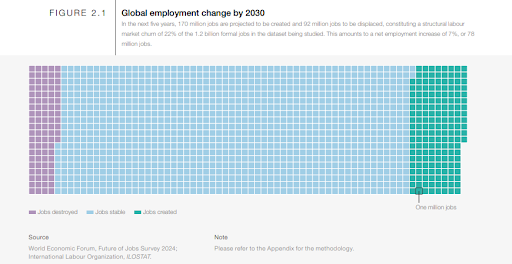
It is projected that not AI, or coding, but skills like analytical thinking, resilience, self-awareness, empathy, leadership, and curiosity will shape such career fields.
UNESCO's global education framework now explicitly calls for "holistic, wholestudent, wholeschool and wholecommunity approaches" that go beyond academic achievement. It identifies character building as the principal value schools must develop in students, alongside responsibility to oneself, to family, and to the community.
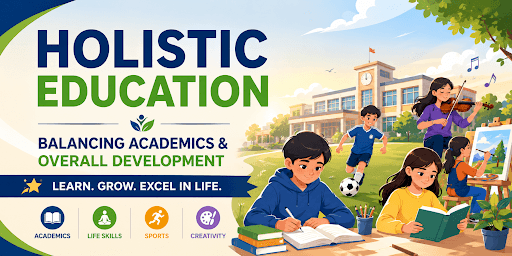
And this is what Gurukula was all about. They believed in building skills like empathy and active listening, resilience, leadership, self-awareness, and the ability to collaborate and connect with society. All these skills help in the development of the overall personality of an individual, and today, modern education calls it holistic development.
How is Canara Gurukula Public School, Bangalore, still keeping this tradition alive?
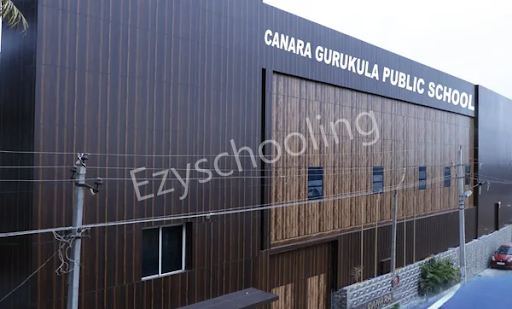
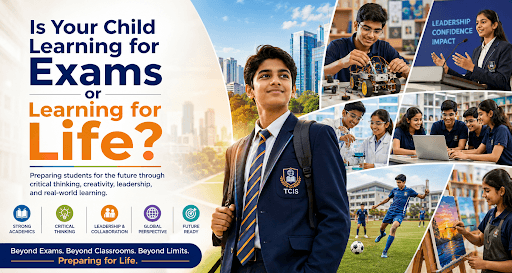
Canara Gurukula Public School is situated in the middle of the modern Electronic City of Bangalore and offers Modern Education by integrating the ancient learning practices of Gurukula. The term Gurukula, in the name of the school, is not just for branding purposes. It is a genuine commitment to the values, the relationships, and the whole person philosophy. This school in Electronic City, Bangalore, is offering education beyond textbooks and rote learning.
Where many schools treat discipline as a rule to enforce, Gurukula treats it as a practice to internalize. Where many schools measure success in marks, Gurukula measures it in the confidence, curiosity, and character that students carry with them long after the exam is over.
The teacher-student relationship at Canara Gurukula is not high. Educators here are not just delivering a syllabus but also invested in knowing each child, in understanding who they are beyond their academic performance, and in creating the kind of trust that makes real learning possible. This practice helps in creating individuals with a strong mindset. The structure and ethics of the school are the best educators of the students, that built the inner life of a child, not just filling their heads with tons of information.
UNESCO and WEF have shed light on something that was rooted in the ancient Indian Gurukula education system. In today’s world, where education revolves around future-ready classrooms, systems like Gurukula integrated with modern learning inputs feel learning beyond the classroom in the real world. So if you are also looking for such schools in Electronics City, Bangalore, Canara Gurukula Public Schools can be the best fit for your child.
To know more about this and other schools in Bangalore, check out

 as a preferred source on