




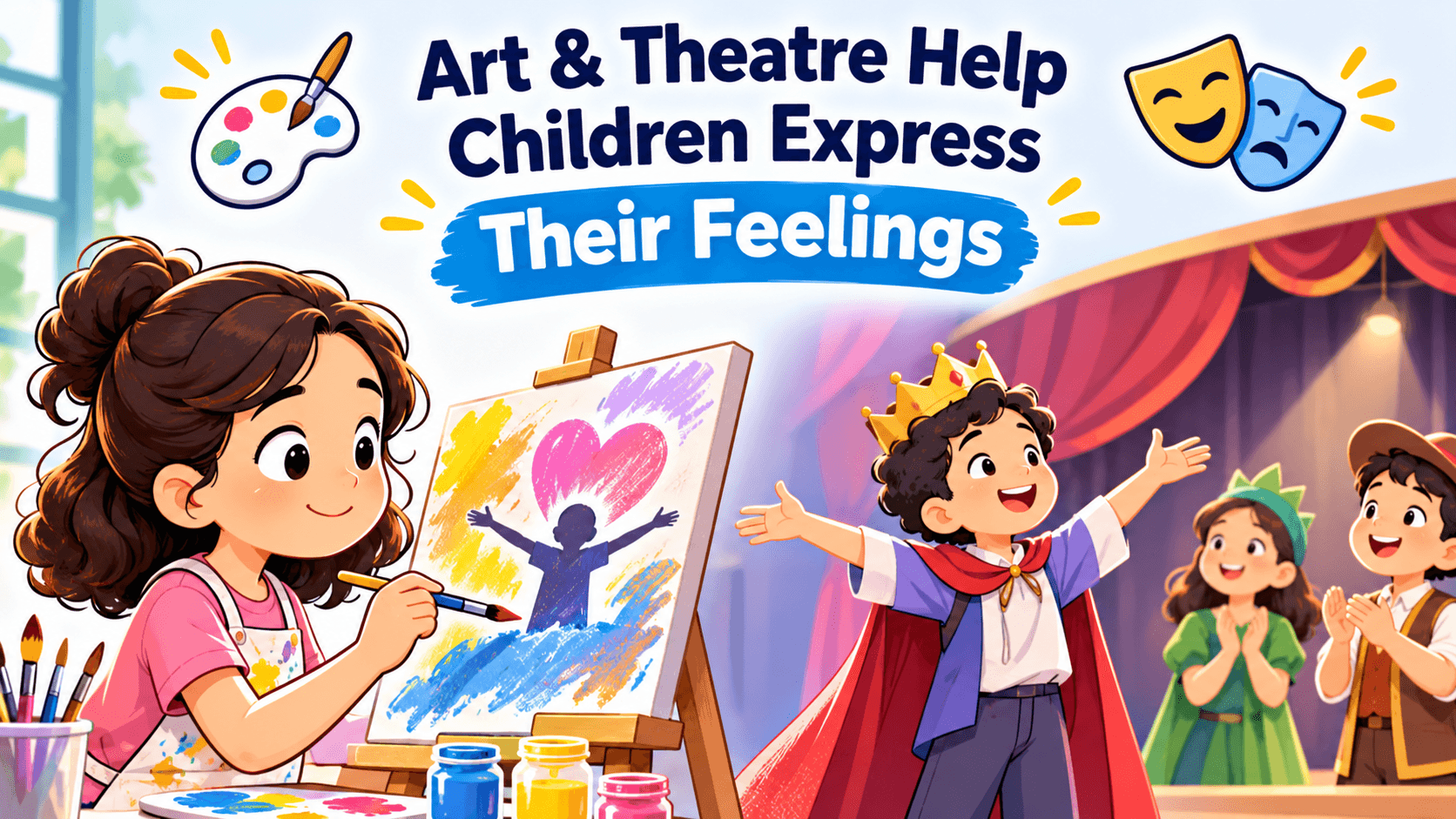

Your child returns from school looking upset. You ask what happened, but they simply say, “Nothing.” Later, you notice them drawing a lonely character or acting out an argument between two toys. Suddenly, their feelings seem easier to understand.
Children do not always have the words to explain sadness, frustration, fear, or excitement. Sometimes, they need another way to communicate. Art and theatre can give them that opportunity without making every emotion a difficult conversation.
Why Do Children Sometimes Struggle to Explain Their Feelings?
Understanding Emotions Takes Practice
Children experience complex emotions before they can always describe them clearly. A child might feel disappointed after losing a competition but express it through anger or silence.
Younger children are still developing emotional vocabulary. Even older children may struggle to discuss feelings when they fear criticism or embarrassment.
Creative activities provide another starting point. Instead of answering direct questions, children can explore experiences through colours, characters, stories, and movement.
A 2022 study published in Children examined arts-based therapies involving 62 children aged 7–10 with mild emotional and behavioural difficulties. Participants described improvements in self-expression and well-being, suggesting that creative approaches can help communicate feelings that are difficult to verbalise.
However, ordinary school art activities are not the same as professional art therapy.
How Does Drawing and Painting Support Emotional Expression?
Art Gives Children a Different Language
Imagine an eight-year-old who feels nervous about changing schools. Rather than explaining their worries, they draw a small person standing outside a crowded classroom.
The drawing may create an opportunity for conversation. A parent could ask, “Can you tell me about this picture?” instead of immediately assuming the child feels lonely.
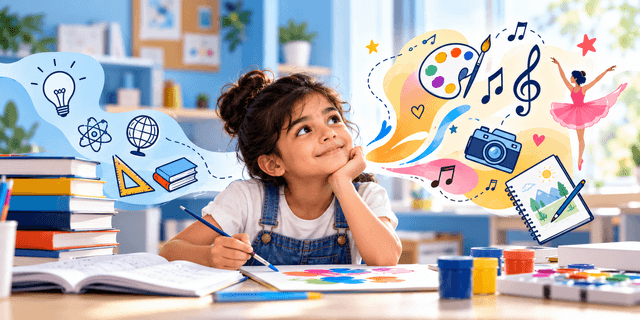
Drawing, painting, clay modelling, and collage allow children to explore emotions without worrying about finding the perfect words.
The Creative Process Matters More Than the Result
Parents sometimes focus too much on whether a drawing looks beautiful. However, emotional expression does not require artistic talent.
Try giving your child paper, crayons, and time to create freely. Avoid correcting their colours or asking them to copy a reference picture.
You could suggest simple activities such as drawing the happiest moment of the day, creating a character who feels worried, or choosing colours to represent different moods.
Remember that colours and shapes do not have fixed psychological meanings. A child using dark colours is not automatically unhappy. Let children explain their artwork in their own words.
A 2024 research review involving nine studies found promising links between creative arts programmes and well-being among young children. However, researchers also noted limitations in study quality, so these benefits should not be treated as guaranteed.
How Can Theatre Help Children Understand and Communicate Emotions?
Role-Playing Creates a Safe Distance
Children sometimes find it easier to discuss a fictional character's problems than their own.
For example, a child may hesitate to admit feeling excluded by classmates. But when acting as a character who is left out of a game, they can explore what that experience feels like.
Parents can use puppets, storytelling, or pretend-play situations to encourage such conversations.
Ask questions like, “What might this character be thinking?” or “What could their friend do to help?”
These activities encourage children to consider different perspectives without pressuring them to reveal personal experiences.
Acting Encourages Listening and Cooperation
Theatre also involves facial expressions, gestures, voice, timing, and teamwork. Children learn that communication involves more than spoken words.
During a short play, one child might portray someone who feels nervous, while another plays a supportive friend.
Such experiences provide opportunities to practise recognising feelings, listening carefully, and responding respectfully.
A 2026 systematic review examining creative programmes for children aged 6–12 identified emotional expression, social belonging, and collaboration among possible pathways linking arts participation with well-being.
These findings are encouraging, although the strength of evidence differs across activities and outcomes.
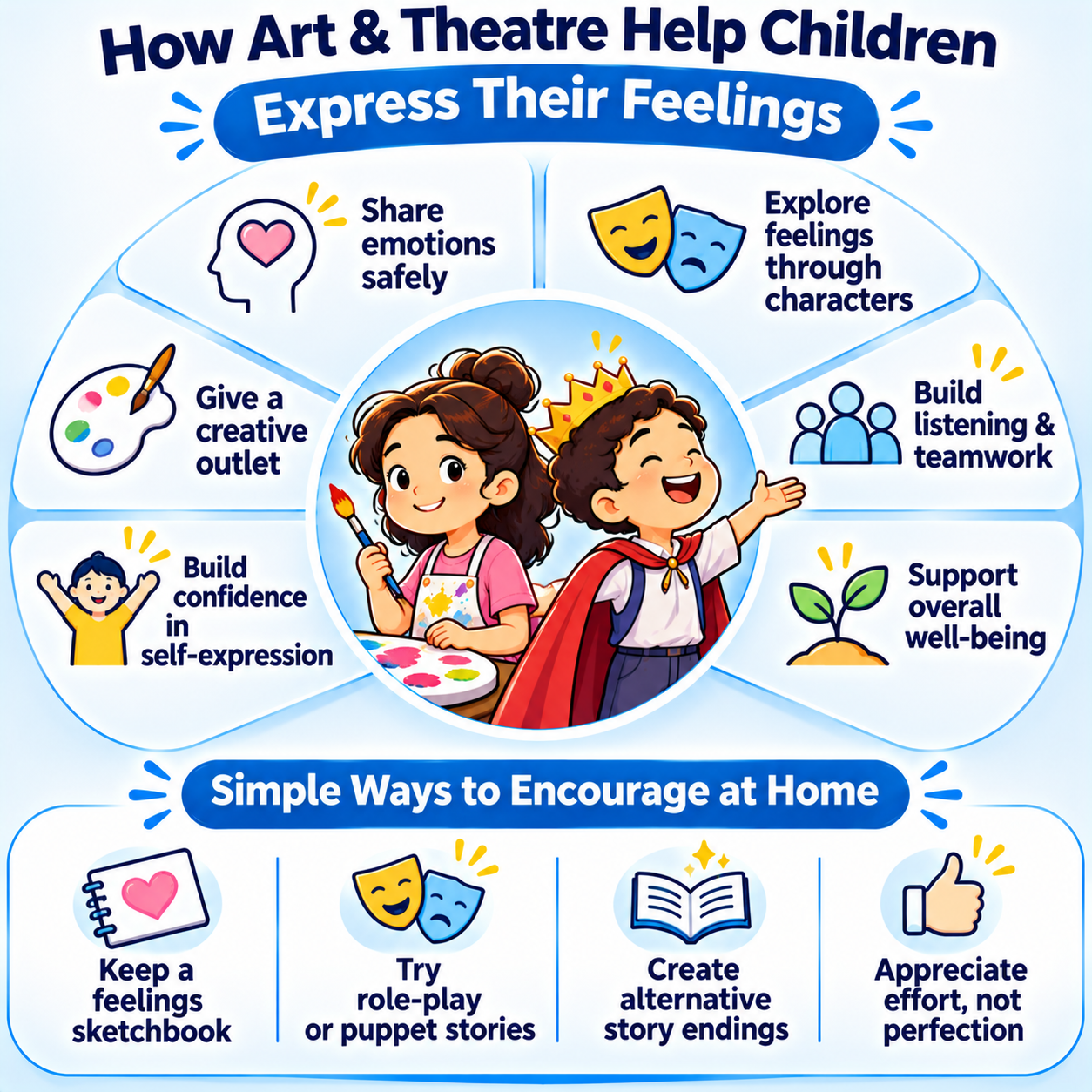
At The Cambridge International School - Sarjapur Road(TCIS), Haralur, Bangalore, the official website describes visual arts activities and an in-house programme called Steppenwolf Theatre@TCIS. Its published co-scholastic information includes opportunities involving painting, music, dance, and theatrical expression. For parents exploring Top Schools in Bangalore or comparing the Best Schools in Bangalore, understanding how creative activities fit into everyday learning can be a useful consideration. Parents can also ask how children are encouraged to participate comfortably, regardless of their artistic confidence.
Conclusion
Not every feeling needs to begin with a conversation. Sometimes, a drawing, story, or imaginary character helps children express what they cannot explain directly.
By providing creative opportunities and listening without judgement, parents can help children gradually understand and communicate their emotions. The goal is not to raise perfect artists or performers, but to give children more ways to express themselves.
For more information on this and similar schools, check out this list of the best schools in Bangalore.










 as a preferred source on