




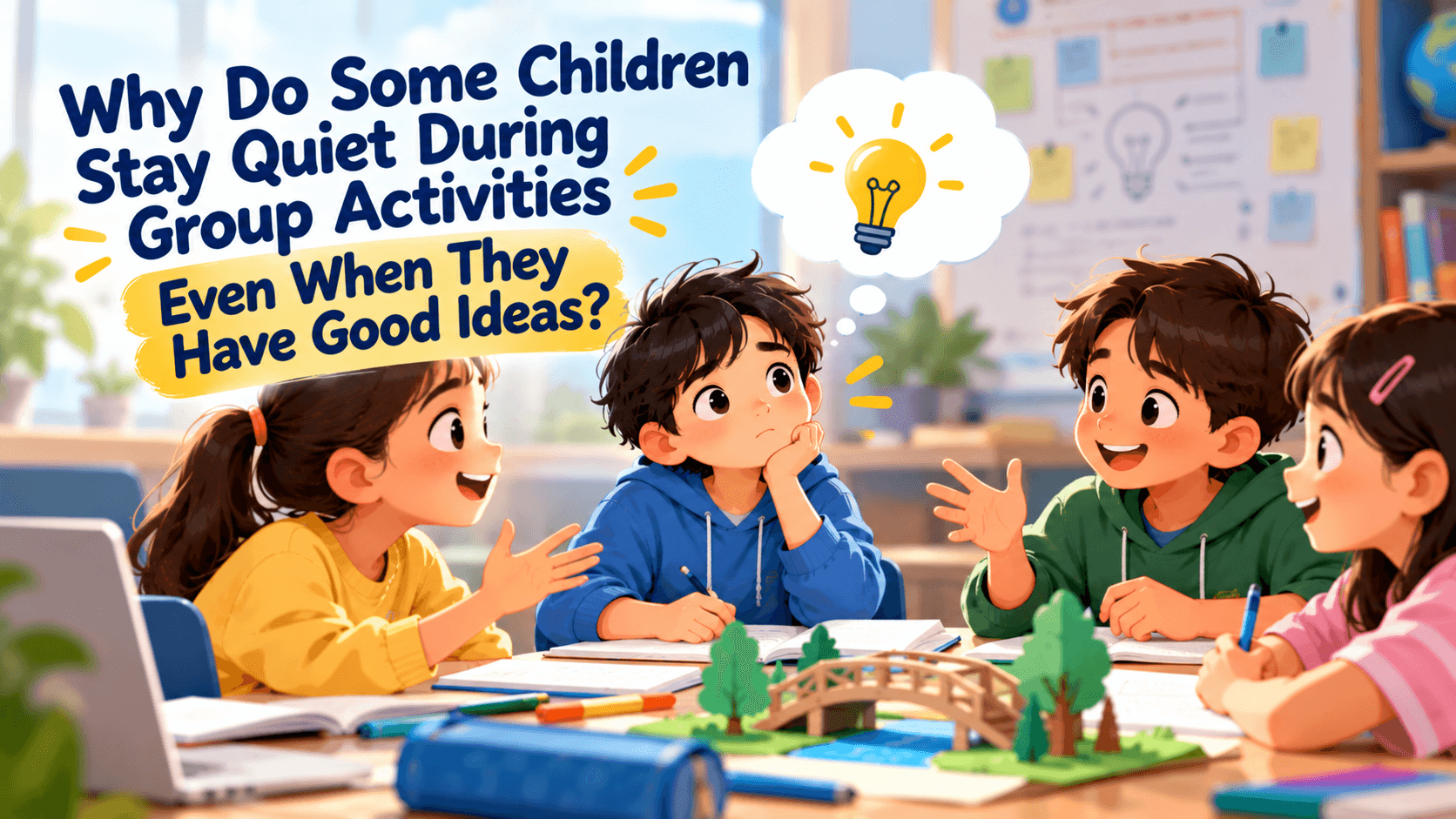

Your nine-year-old explains a science project confidently at home. They describe the experiment, suggest improvements, and answer your questions. But during a group activity at school, they barely say a word. When you ask why, they reply, "Everyone else was already talking."
For parents exploring Top Schools in Greater Noida West, including Prominence World School, Knowledge Park V, Greater Noida West, this can be puzzling. Does your child lack confidence, or are they simply uncomfortable speaking in a group?
Being quiet does not mean children have nothing to contribute. Understanding what holds them back helps parents respond without pressure.
Why Do Some Children Find It Difficult to Speak in Groups?
Speaking at home feels different from speaking in front of classmates. At home, children usually have time to finish their thoughts. In groups, several people may speak at once.
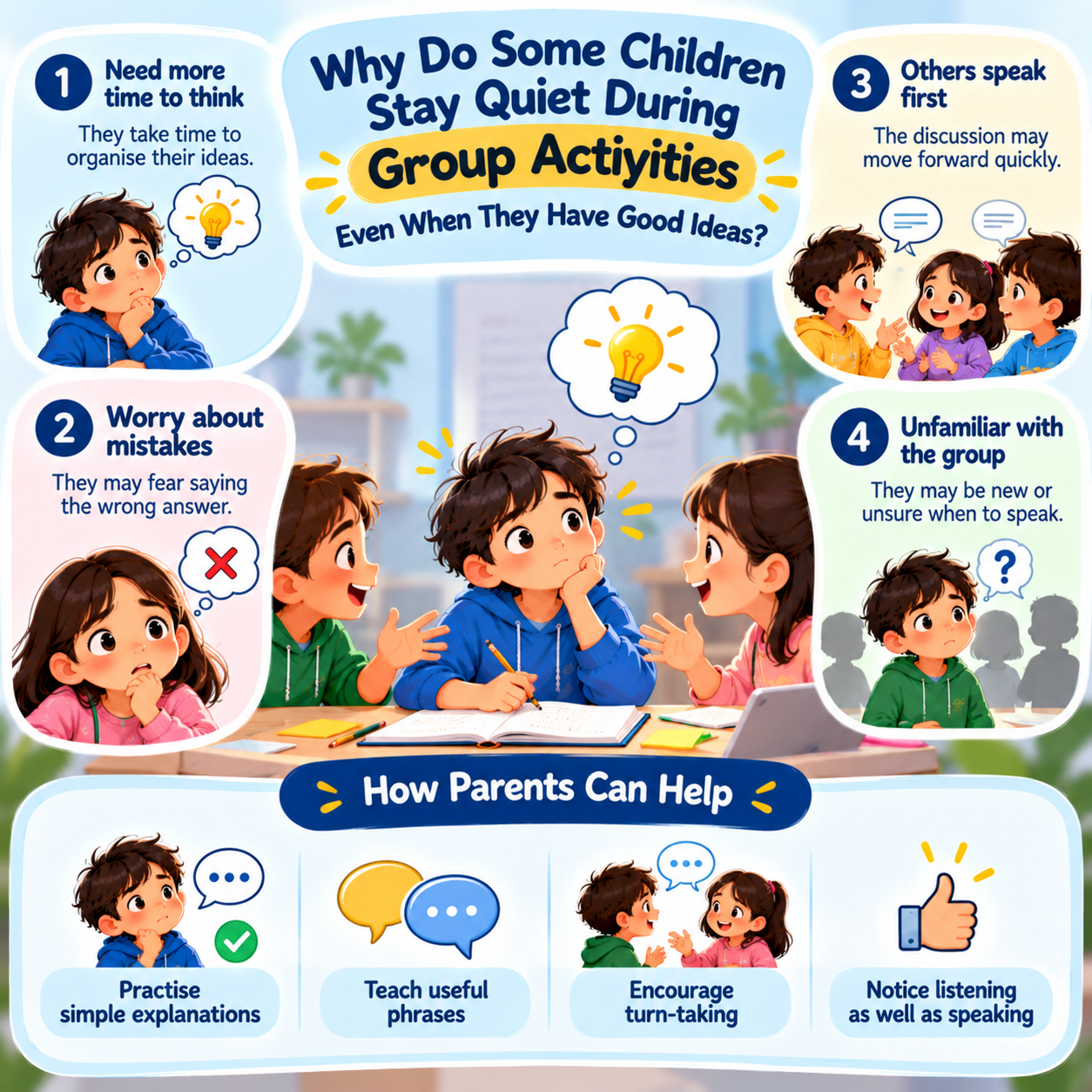
Some children need extra time to organise their ideas. By the time they are ready, the discussion has moved forward. Others worry about being interrupted, giving a wrong answer, or disagreeing with a friend.
A child may also be new to the group or unsure when it is their turn. These do not automatically indicate anxiety.
Instead of asking, "Why don't you ever speak?", try, "Was there something you wanted to share?" Then ask what happened when they tried.
The answer may reveal whether your child prefers listening, needs help entering conversations, or is struggling with a group where others dominate.
Does Speaking Less Mean a Child Is Not Participating?
Participation involves more than speaking frequently. Children also contribute by listening carefully, asking useful questions, noticing problems, and helping classmates complete tasks.
Imagine a group designing a model bridge. One student offers several ideas while another quietly studies the design. Later, the quieter child notices that the base is too narrow. That observation may help.
Education research from the Education Endowment Foundation shows that collaborative learning works best when group activities are structured and students have meaningful opportunities to contribute. Simply putting children together does not ensure equal participation.
Choosing to listen differs from wanting to speak but never getting the chance.
Parents can ask, "Did everyone have a turn?" or "Were you able to share your suggestion?" These questions help identify whether the difficulty lies in the child's comfort level or the way the activity is organised.
The goal is not to make every child the loudest person in the room. It is to ensure their ideas can be heard.
How Can Parents Help Children Share Their Ideas More Comfortably?
Children can practise group communication through family interactions.
Practise short explanations. Ask your child to explain a game rule or describe how they built something. Encourage them to start with one clear sentence and add details afterward.
Make room for turn-taking. During family conversations, allow everyone to finish without interruption. If someone cuts in, gently bring the discussion back to the original speaker.
Teach useful opening phrases. Children may know what they want to say but not how to join a conversation. Practise phrases such as "Can I add something?", "I have another idea," or "What if we tried this?"
Use simple role-play. Pretend you are classmates deciding how to make a poster. Offer a different suggestion and let your child practise responding respectfully.
Notice listening as well as speaking. Saying "You listened carefully and asked a helpful question" recognises a contribution without rewarding only the most talkative behaviour.
Avoid comparisons. Telling children that a confident classmate speaks more may increase pressure instead of helping.
Evidence on oral language learning supports purposeful discussion, modelling, and opportunities to explain ideas. Keep practice relaxed. Dinner conversations can be more useful than repeated instructions to "speak up."
When Should Parents Speak to Teachers?
An occasional quiet group session is not necessarily concerning. But if your child repeatedly wants to contribute and cannot, feels excluded, or becomes distressed before group work, it is worth speaking with their teacher.
Ask whether your child participates more comfortably with one partner or in a smaller group. Find out whether classmates interrupt, whether responsibilities are shared, and whether quieter students receive opportunities to speak.
Teachers may be able to introduce turn-taking, assign clear group roles, or invite children to share prepared ideas. Parents can support these approaches at home without demanding immediate changes in personality.
Encouraging Communication Through School Activities
When comparing the Best Schools in Greater Noida West, parents can consider what opportunities children have to express ideas and collaborate with others. Prominence World School, Knowledge Park V, Greater Noida West lists debate, drama, and language-learning facilities among its offerings. These activities are relevant to communication and expression, although a child's experience will depend on how activities are organised and supported. Parents can ask how the school encourages balanced participation and helps children who need more time to speak.

Helping Children Find Their Voice Without Pressure
Quiet children can be thoughtful, attentive group members. What matters is whether they feel able to contribute when they have something to say.
With supportive conversations, small chances to practise, and appropriate guidance at school, children can gradually become more comfortable sharing their ideas without feeling pressured to change who they are.
To know more about other schools in Greater Noida West, click on the link below















 as a preferred source on