





Your child consistently scores above 90% in exams and enjoys painting. But when exams approach, you ask them to put away their colours and focus entirely on textbooks. After all, if they are already doing well academically, are creative hobbies really necessary?
This is a question many parents face. While researching the Top schools in Greater Noida West, parents often prioritise academic results without giving equal attention to creative opportunities. Schools such as St. Teresa School, Sector 10, Greater Noida West highlight why it is worth considering learning experiences beyond textbooks.
Good Grades Do Not Reflect Every Ability a Child Has
Academic performance shows how well children understand and apply what they learn in school. However, examination scores cannot capture every ability a child possesses.
A student who performs exceptionally well in mathematics might also enjoy writing stories, composing music, or creating artwork. These interests allow children to explore abilities that may not be fully reflected in their report cards.
The OECD's PISA 2022 research on creative thinking found that academic performance and creative thinking are related but distinct. Doing well in traditional subjects does not automatically mean a student demonstrates the same level of creative thinking.
Consider a child who enjoys creating comic strips. While developing characters and stories, they make decisions about expressions, situations, and how to communicate ideas visually.
Such experiences encourage children to explore different possibilities rather than always searching for one correct answer.
Good grades are valuable, but they should not become the only measure of a child's potential.
How Creative Hobbies Support Children's Development
Creative hobbies provide children with opportunities to explore their interests, develop personal skills, and express themselves.
Here are four ways these activities can contribute to their development.
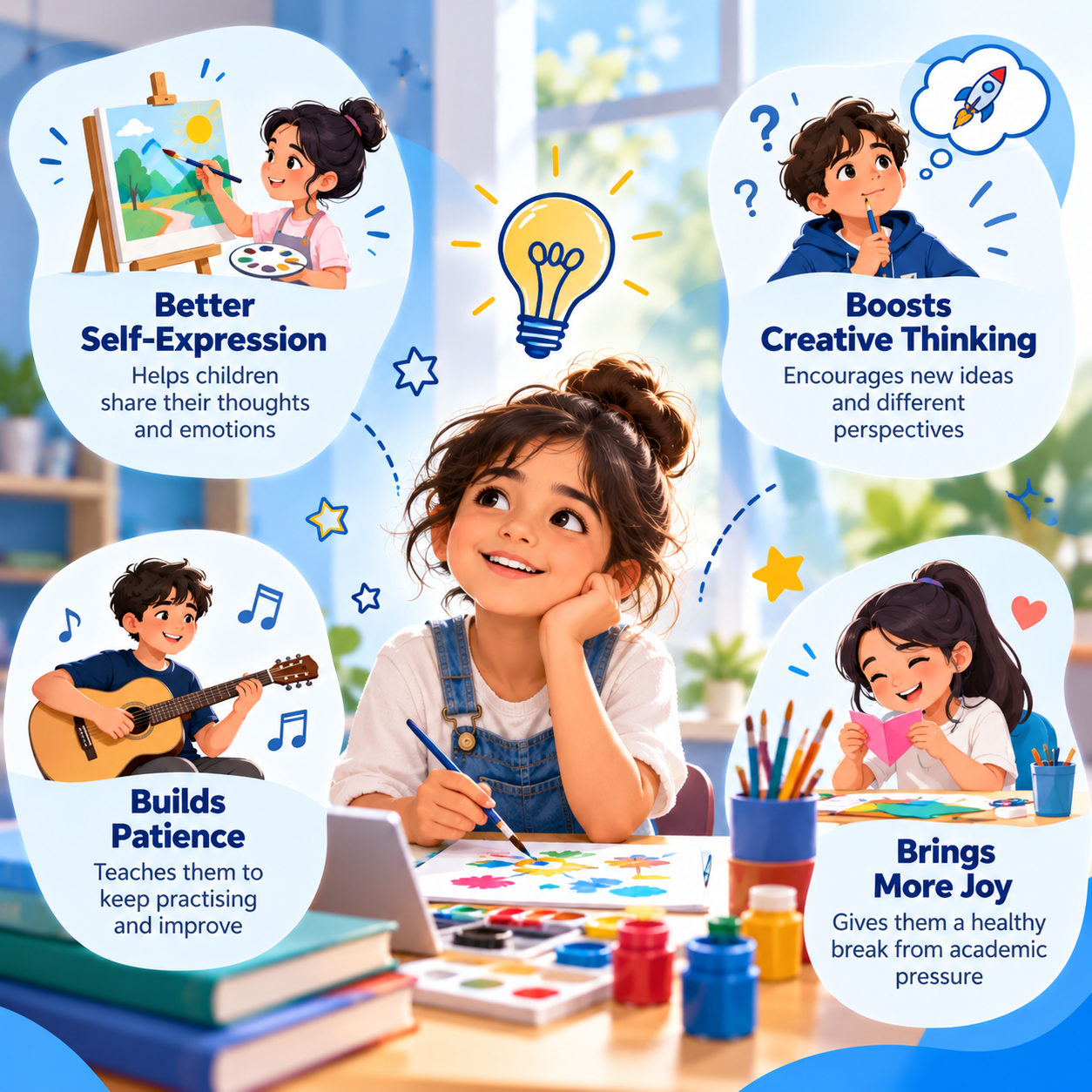
1. They Encourage Self-Expression
Children sometimes find it difficult to communicate their feelings directly.
Painting, dancing, playing music, or writing poetry can provide alternative ways to express thoughts and emotions.
For example, a child who struggles to describe an exciting experience might enjoy turning it into a drawing or short story.
2. They Encourage Creative Thinking
Creative activities often involve making choices without following fixed instructions.
While making a clay model, children decide its shape, colours, and details. They experiment, notice problems, and make changes.
The freedom to try different approaches gives children opportunities to practise flexible thinking.
3. They Develop Patience and Persistence
Learning a musical instrument or practising a dance routine requires time.
Children may repeat the same movement or musical passage several times before improving.
Through these experiences, they discover that progress often comes through practice rather than immediate success.
4. They Provide Enjoyment Beyond Academic Results
Children benefit from having activities they enjoy without constantly worrying about marks.
The American Academy of Pediatrics highlights the developmental importance of play, particularly for younger children.
Although structured hobbies differ from free play, both remind parents that childhood should include opportunities for enjoyment, exploration, and personal expression.
Creative Hobbies Do Not Have to Compete With Academics
One concern parents frequently raise is whether hobbies will reduce study time.
The answer depends largely on how a child's schedule is managed.
A creative hobby does not need to occupy several hours every day. Even short, regular sessions can give children opportunities to explore their interests.
For example, a Class 7 student who enjoys sketching might spend twenty minutes drawing after completing homework. On weekends, they could dedicate additional time to larger projects.
However, balance should not mean filling every available hour with activities.
Children also need adequate sleep, physical activity, family interaction, and unstructured free time.
Parents should also avoid turning every hobby into another competition. A child who loves singing does not necessarily need to participate in every music contest.
The objective should be to support genuine interests without creating additional pressure.
How Parents Can Help Children Discover the Right Hobby
Finding a suitable hobby begins with understanding what your child genuinely enjoys.
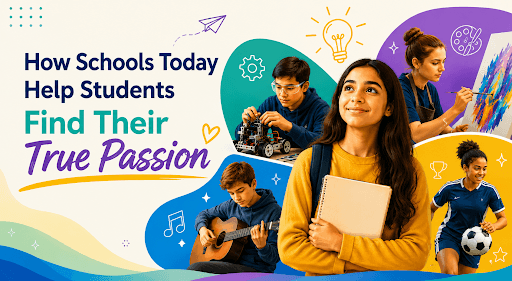
Offer different experiences. Let children explore drawing, music, dance, storytelling, crafts, or photography before expecting them to choose one activity.
Observe their natural interests. Notice which activities they return to voluntarily, even when nobody reminds them.
Avoid unnecessary comparisons. One child may enjoy classical dance, while another prefers making handmade greeting cards. Both interests deserve encouragement.
Start with simple resources. Expensive classes and equipment are not always necessary. Paper, pencils, recycled materials, and imagination can provide meaningful creative opportunities.
Give children a voice. Instead of choosing activities based entirely on future achievements or certificates, involve children in deciding what they want to explore.
India's National Curriculum Framework for School Education 2023 recognises artistic exploration and expression as important parts of education.
Parents can support this approach by making creative activities a welcome part of everyday life rather than treating them as rewards for good marks.
Encouraging Creative Interests at St. Teresa School
St. Teresa School, Sector 10, Greater Noida West describes a music room, dance studio, art and craft studio, and literary clubs among its creative learning facilities. These spaces provide opportunities for students to explore activities such as painting, music, dance, and creative writing. Parents comparing the Top schools in Greater Noida West or looking for the Best schools in greater noida west can consider how schools support children's creative interests alongside academic learning. Such opportunities are worth exploring during the school-selection process.

Conclusion
Academic success matters, but children should also have opportunities to discover what makes them curious, happy, and creative.
Whether through painting, music, storytelling, or dancing, hobbies allow children to develop interests beyond examinations.
Parents can support this by protecting time for creativity, encouraging exploration, and recognising effort rather than demanding perfection. A child's development deserves attention beyond the marks on their report card.
To know more about other schools in Greater Noida West, click on the link below








 as a preferred source on