




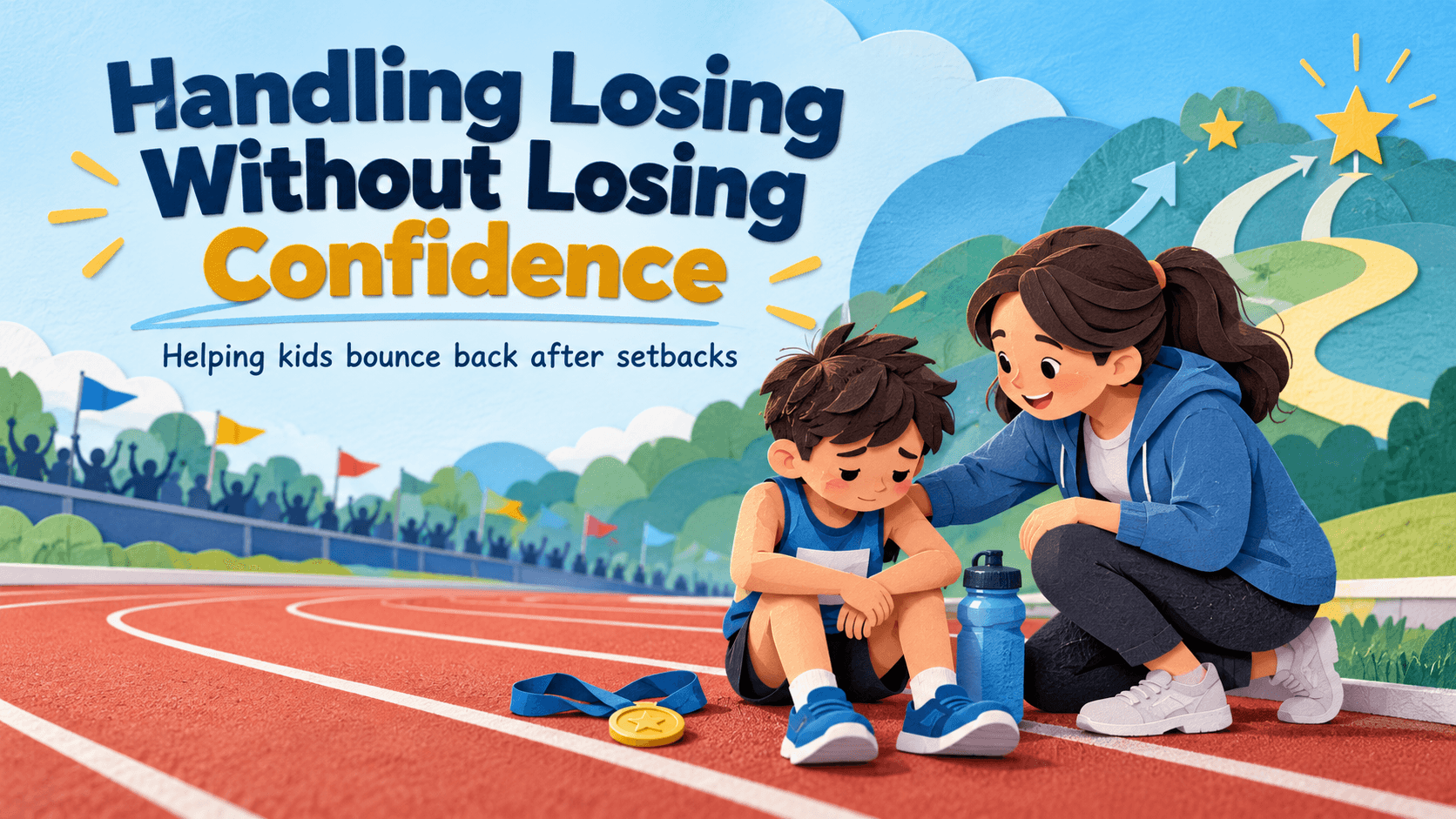

Your child participates in a school race after weeks of practice but finishes fourth. Instead of feeling proud of their effort, they return home upset and say, "I'm never participating again. I always lose."
For parents, watching their child struggle with disappointment can be difficult. The immediate reaction might be to comfort them, offer advice, or encourage them to try harder next time.
However, helping children handle losing requires more than motivation. It involves teaching them to understand their emotions, accept setbacks, and recognise their strengths beyond winning.
For parents exploring a Top School in Gurugram, understanding how sports and everyday competition contribute to emotional development is equally important. At S D Heritage Pride School(SDHPS), Sector 85, Gurgaon, sports are included among the school's co-curricular offerings.
Why Does Losing Feel So Difficult for Children?
Children often connect success with appreciation, recognition, and personal achievement. Winning a competition may bring applause, certificates, or praise from teachers and family members.
Losing, therefore, can feel like more than simply missing a prize.
A child who loses a badminton match might think, "Everyone else is better than me." Another child might feel embarrassed because their friends performed better.
These reactions are understandable, especially when children are still learning to manage strong emotions.
According to the American Academy of Pediatrics, excessive pressure to win can contribute to emotional stress in young athletes. Children benefit when adults recognise their effort, improvement, and sportsmanship rather than focusing only on results.
Parents can help by explaining that one competition measures performance on a particular day, not a child's overall ability.
Losing a match does not mean someone is a poor player, just as struggling with one examination does not make someone a weak student.
What Should Parents Say Immediately After Their Child Loses?
Imagine your child returning home after losing a football match. They throw their bag aside and refuse to discuss what happened.
Instead of immediately explaining what they should have done differently, allow them time to process their emotions.
The Child Mind Institute recommends acknowledging children's disappointment before encouraging them to learn from setbacks.
Parents can begin with simple responses:
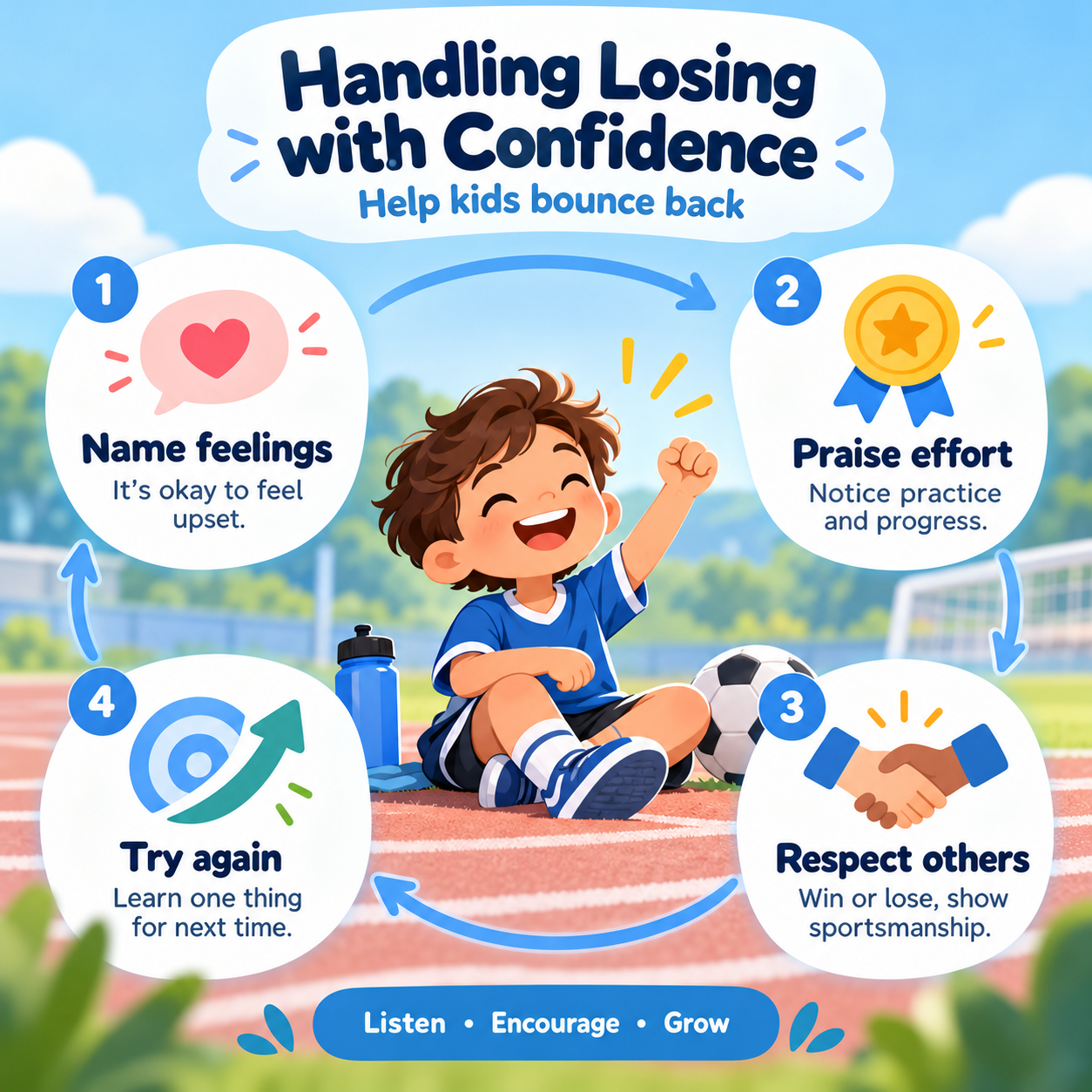
- Acknowledge their feelings: "I understand you're disappointed. You really wanted to win."
- Avoid immediate criticism: Instead of highlighting mistakes, allow your child to calm down.
- Recognise their effort: Mention something specific they did well during the competition.
- Offer reassurance: Remind them that your appreciation does not depend on winning.
Avoid statements such as "Stop crying, it's just a game" or "You must win next time."
Although these comments may seem harmless, they can make children feel that their emotions are unimportant or that winning is expected.
Sometimes, sitting beside your child and listening is more helpful than giving a long explanation.
Once they feel calmer, you can discuss what happened and what they might try differently next time.
How Can Parents Build Healthy Sportsmanship and Confidence?
Sportsmanship is not simply about shaking hands after a match. It includes respecting opponents, following rules, accepting decisions, and recognising other people's efforts.
Parents can introduce these habits through everyday experiences.
1. Play games together
Board games, chess, badminton, and simple family competitions provide opportunities to experience both winning and losing.
When parents lose, they can demonstrate a positive response by congratulating the winner instead of complaining.
2. Appreciate improvement, not only results
Rather than saying, "You should have won," try, "Your passing was much better today."
Specific encouragement helps children notice progress even when the final result is disappointing.
3. Avoid comparisons
Comparing your child with a sibling, friend, or classmate can increase unnecessary pressure.
Instead, encourage them to compare their current abilities with their own previous performance.
4. Encourage respect for opponents
Teach children to appreciate another player's good performance without feeling that someone else's success reduces their own worth.
These everyday habits help children understand that competition can involve learning, cooperation, and enjoyment alongside the desire to win.
How Can Children Learn From Defeat Without Fearing the Next Challenge?
Once children feel ready to discuss a disappointing result, parents can help them reflect on the experience.
Start by asking questions such as, "What did you enjoy about the game?" or "Is there one thing you would like to practise?"
For example, a child who loses a skating race might decide to improve their balance or turning technique before participating again.
The goal should be manageable improvement, not a guarantee of winning next time.
Parents can also share their own experiences of disappointment. Hearing how an adult handled a setback helps children understand that mistakes are part of life.
However, avoid pushing children to participate again before they feel emotionally ready. Offer encouragement while respecting their feelings.
If fear of losing repeatedly prevents a child from participating in activities they previously enjoyed, or causes significant distress, consider discussing the concern with a teacher, school counsellor, or qualified mental health professional.
Building confidence takes practice, patience, and consistent reassurance.
Encouraging Sportsmanship at S D Heritage Pride School
When exploring the Best School in Gurugram, parents may consider opportunities for sports participation alongside academic learning. S D Heritage Pride School(SDHPS), Sector 85, Gurgaon, highlights sporting activities as part of its educational offerings. According to its official website, the school has an Evening Sports Academy offering coaching in basketball, football, box cricket, skating, and martial arts. Such activities provide opportunities for children to experience competition, teamwork, and challenges. With encouragement from adults, these experiences can become valuable opportunities to practise handling disappointment and respecting others.

Conclusion
Children do not need to win every competition to become confident individuals. They need opportunities to try, experience disappointment, and discover that setbacks do not define their abilities.
When parents respond with patience, encouragement, and understanding, losing becomes less frightening and trying again becomes easier.
For more information on similar schools, check out this list of the best schools in Gurugram.









 as a preferred source on