




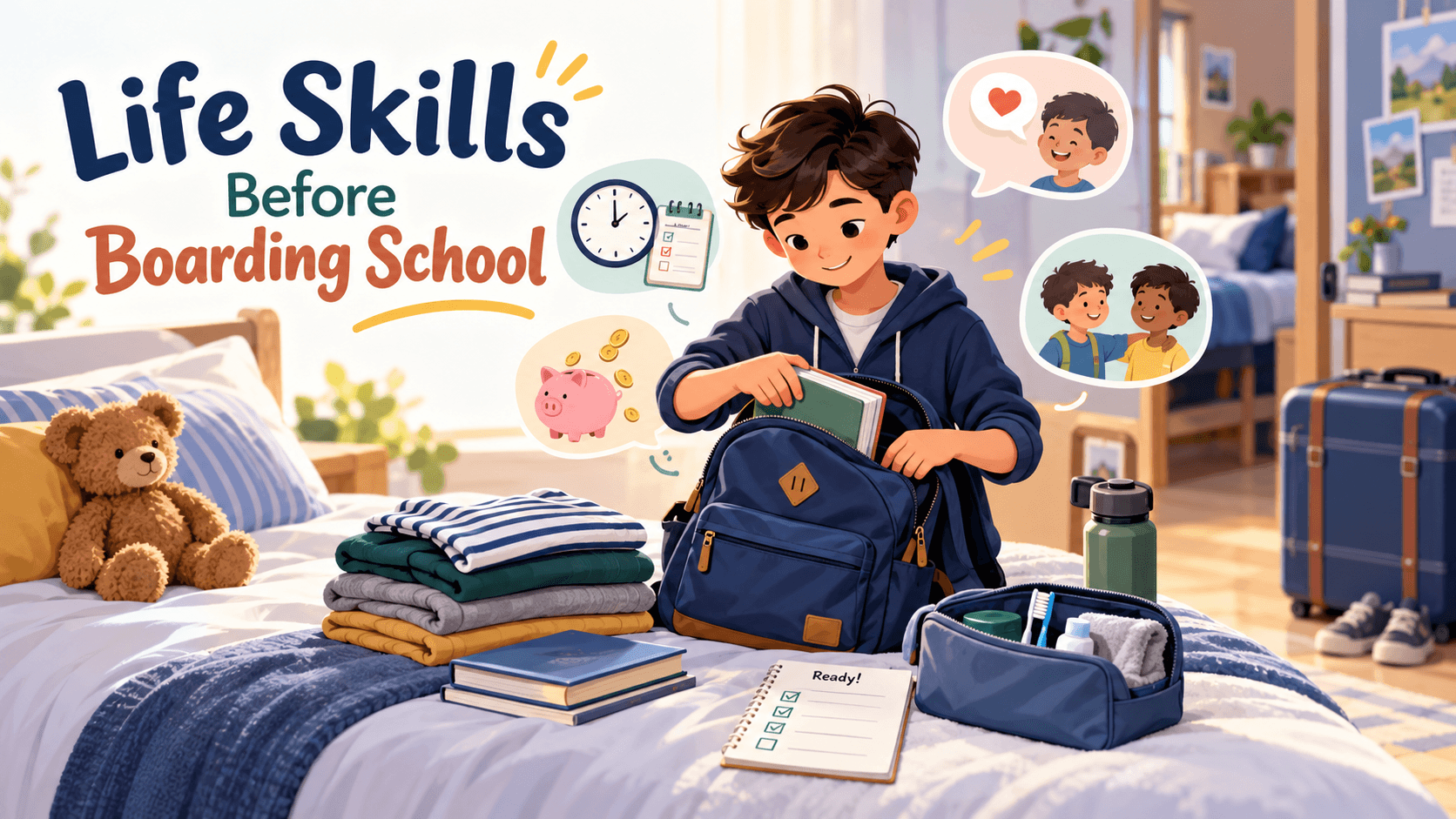

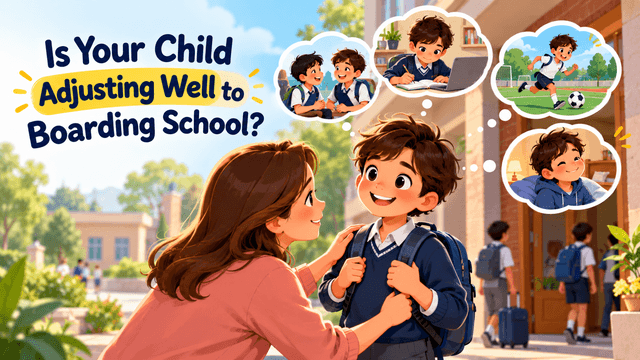
Your child is preparing to join a boarding school, but you still remind them to pack their schoolbag, organise their clothes, and complete homework. Naturally, you wonder how they will manage these responsibilities without you.
For parents exploring the Top boarding schools in India, academic quality is important, but so is their child's ability to manage everyday life independently. At Sweet Memories High School & Junior College(SMHS), Panchgani, life skills are also recognised as part of student development.
The good news is that children can begin developing these skills at home, long before their first day at boarding school.
1. Personal Care and Everyday Responsibility
At home, parents often handle small tasks without thinking twice. They organise uniforms, find missing books, and remind children about personal hygiene. At boarding school, children gradually need to manage many of these responsibilities themselves.
Before admission, teach your child to:
- Keep clothes, books, and personal belongings organised.
- Maintain daily hygiene without repeated reminders.
- Prepare their schoolbag and required materials.
- Keep their sleeping and study areas tidy.
- Recognise when they need medical assistance.
Start with simple changes. For example, let your child prepare everything needed for the following school day. Resist the urge to correct every small mistake immediately.
If they forget something, discuss how they could prevent it next time.
The aim is not perfection. It is helping children become comfortable taking responsibility for their belongings and daily needs.
2. Time Management and Basic Money Skills
Boarding school life usually involves scheduled classes, homework, meals, recreation, and rest. Children who understand how to manage time may find it easier to adapt to these routines.
Begin by allowing your child to plan part of their day.
Suppose they have homework, a favourite television programme, and a family activity planned for the evening. Instead of deciding everything for them, ask how they would organise their time.
Help them understand the difference between urgent tasks and activities that can wait.
Basic money management is another useful skill. Depending on the school's rules, children may have limited opportunities to manage personal spending.
You can introduce financial responsibility by giving your child a small practice budget. Ask them to decide how much to spend and how much to save.
These activities encourage thoughtful decision-making rather than simply following instructions.
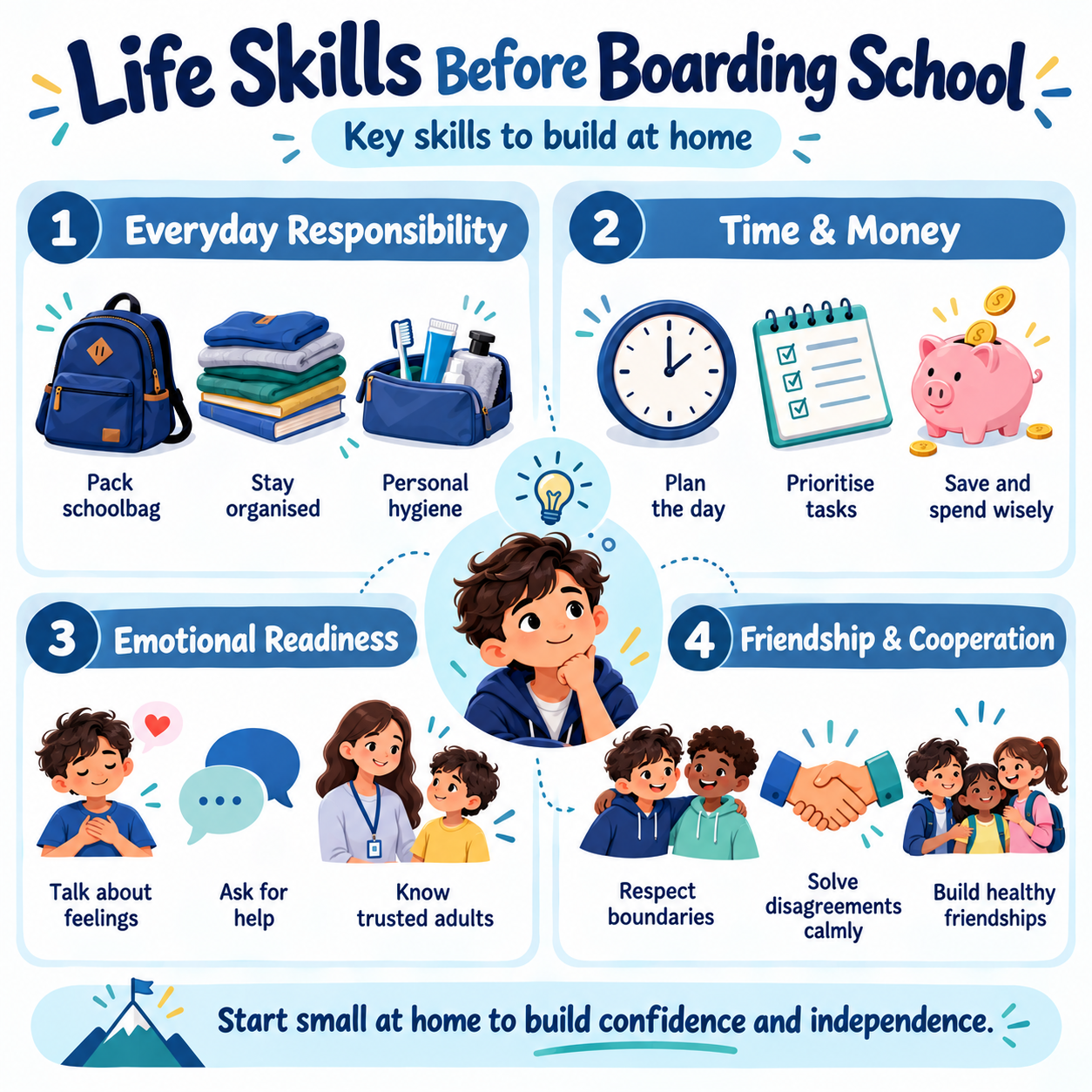
3. Emotional Readiness and Knowing When to Ask for Help
Learning to live away from family involves emotional adjustments. Children may miss home, feel nervous about unfamiliar surroundings, or struggle to express their concerns.
Parents can prepare them by discussing these feelings openly.
Explain that missing home does not mean they are weak or incapable of adjusting. Encourage them to talk about their emotions instead of hiding them.
The Central Board of Secondary Education's life skills guidance recognises emotional management, communication, and healthy relationships as important parts of adolescent development.
One useful exercise is practising everyday conversations.
Ask your child what they would say if they felt unwell, struggled with schoolwork, or wanted to speak privately with a teacher.
Help them identify situations where they should approach a trusted adult immediately, particularly when they feel unsafe or experience repeated bullying.
Children should understand that being independent does not mean solving every problem alone.
Before admission, parents should also discuss the school's communication procedures and whom children can approach for emotional or medical support.
4. Friendship, Cooperation, and Handling Disagreements
Living with other students requires patience, cooperation, and respect for personal boundaries.
A child who is used to having their own room or personal space may initially find shared living arrangements challenging.
Small disagreements can arise over borrowed belongings, noise, routines, or differences in habits.
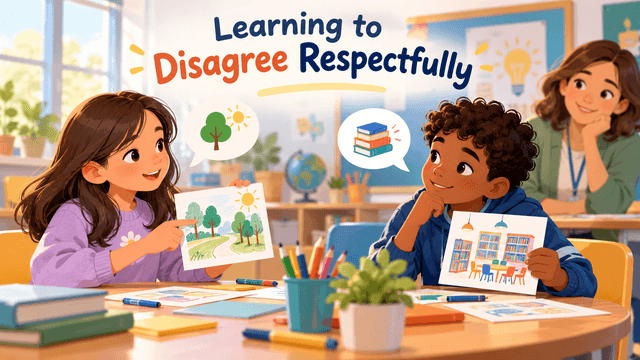
Parents can help children prepare by practising communication and problem-solving at home.
For example, ask:
What would you do if your roommate borrowed your notebook without asking?
Rather than immediately providing an answer, encourage your child to suggest possible responses.
Discuss how they might explain their feelings calmly, request permission before sharing belongings, and involve a responsible adult if the situation continues.
UNICEF's guidance on adolescent life skills highlights empathy, cooperation, communication, and peaceful conflict resolution as important abilities.
Children can practise these skills through family discussions, group activities, and everyday interactions with friends.
Learning to respect differences while expressing personal needs can help children build healthier relationships in shared environments.
How Sweet Memories High School & Junior College(SMHS), Panchgani Connects Life Skills with Education
At Sweet Memories High School & Junior College(SMHS), Panchgani, the school's officially described Life Skills Programme includes critical thinking, problem-solving, communication, emotional awareness, financial literacy, and time management. Its website also outlines learning through group discussions, presentations, practical scenarios, and activities focused on personal development.

For parents comparing the Best Boarding schools in India, understanding how a school approaches these everyday abilities can be an important part of evaluating the learning environment. Such programmes connect with the responsibilities and social situations children may encounter while living away from home.
Conclusion
Preparing a child for boarding school involves more than purchasing uniforms and organising admission documents. It also means helping them become comfortable with everyday responsibilities, emotions, and relationships.
Start with small habits at home. Allow children to make age-appropriate decisions, handle manageable responsibilities, and ask questions when they need guidance.
With patience, regular practice, and appropriate adult support, children can approach boarding school life with greater confidence and a growing sense of independence.
For more information on this and similar schools, check out this list of the best boarding schools in India.

 as a preferred source on