







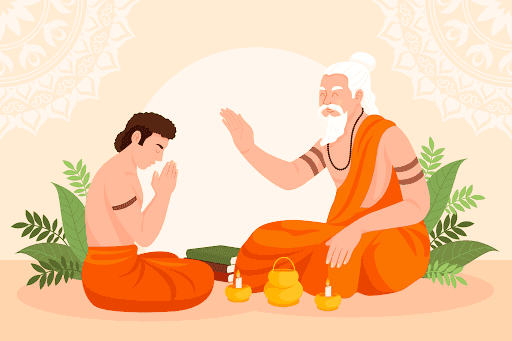

Indian education is experiencing a renaissance—a return to its ancient gurukula roots where learning extended far beyond textbooks. The traditional gurukula system emphasised character, discipline, and practical wisdom alongside academic knowledge. Today's forward-thinking schools are rediscovering these timeless principles and merging them with contemporary teaching methods.
Modern institutions are no longer satisfied with creating just academically successful students. They aim to develop well-rounded individuals who can navigate a complex, interconnected world while staying grounded in strong values. Canara Gurukula Public School in Electronic City, Bangalore, exemplifies this transformative approach—blending ancestral educational wisdom with cutting-edge facilities to nurture independent, globally-aware citizens.
In this article, we explore how the gurukula philosophy remains relevant in today's educational landscape, why experiential learning matters more than ever, and how schools are successfully bridging traditional values with modern pedagogical innovations.
Check Out | How Schools Can Instill a Growth Mindset Early
The Gurukula Legacy: More Than Just Classroom Learning
The Gurukula education system wasn't merely about knowledge transfer—it represented a complete way of life that shaped students into responsible, skilled, and morally grounded individuals. Understanding this legacy helps us appreciate why modern educators are looking backwards to move forward.
Living and Learning Together
Ancient gurukulas operated on a residential model where students lived with their guru, learning not just from formal lessons but through daily observation and participation. This immersive environment created deep bonds between teacher and student, fostering mentorship that extended beyond academics. Students absorbed values like respect, humility, and dedication simply by being part of this close-knit community.
Practical Skills Over Rote Memory
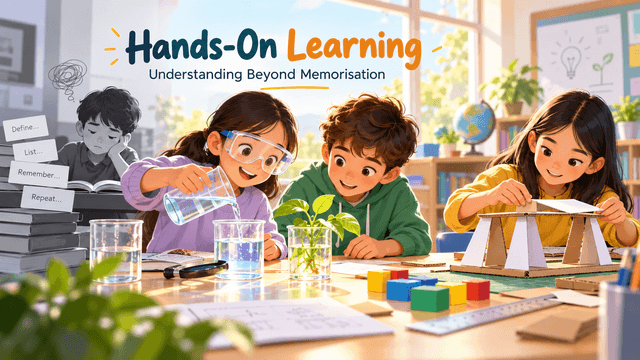
Unlike modern examination-focused systems, gurukulas emphasised hands-on learning. Students practised crafts, participated in agriculture, learned music and arts, and engaged in physical training. Knowledge wasn't abstract—it was applied, tested, and refined through real-world experience. This approach ensured that learning stuck because it was relevant and immediately useful.
Character as the Foundation
Discipline, self-control, and ethical conduct formed the bedrock of gurukula education. Students woke early, maintained cleanliness, followed routines, and learned to live harmoniously with others. The guru didn't just teach subjects—they shaped character. This holistic development created individuals who were not just knowledgeable but also principled and dependable members of society.
Bridging Two Worlds: Traditional Values Meet Modern Pedagogy
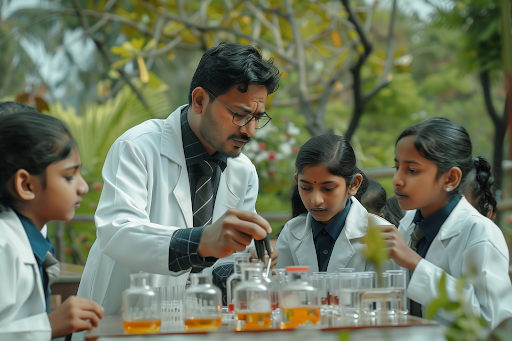
Today's educators face a unique challenge—preserving cultural heritage while equipping students with skills for a rapidly changing, technology-driven world. The solution isn't choosing one over the other but intelligently combining both approaches.
Why Experience Matters More Than Memorisation
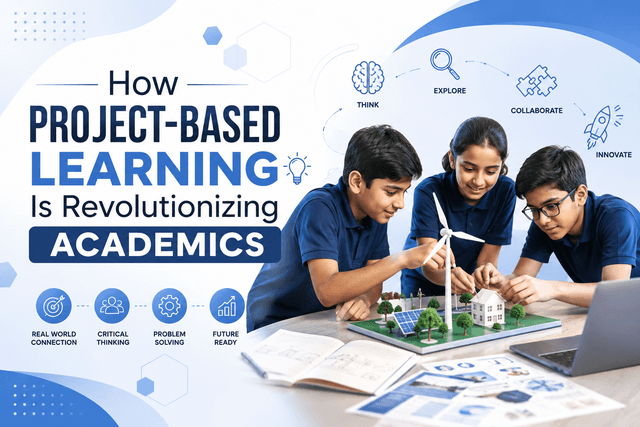
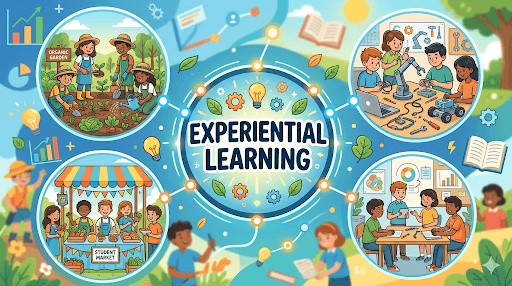
Research consistently shows that students retain information better when they actively engage with it. The National Education Policy 2020 strongly advocates for experiential learning, recognising that real understanding comes from doing, not just listening. When a child builds a robot, conducts a science experiment, or visits a historical site, they create mental connections that no textbook can replicate.
This shift from passive to active learning mirrors the gurukula approach, where knowledge was gained through practice. Whether it's a student programming a robot or an ancient disciple learning archery, the principle remains the same—learning by doing creates lasting competence.
STEM Meets Sanskar
Science, Technology, Engineering, and Mathematics (STEM) education has become crucial in preparing students for future careers. However, technical skills without ethical grounding can be dangerous. The integration of STEM facilities—robotics labs, composite science labs, mathematics labs—with value-based education creates a powerful combination.
Students learn coding and robotics while also participating in activities that build character, like Scouts and Guides programs. They explore scientific concepts in labs while maintaining discipline, punctuality, and respect for others—values that gurukulas held sacred.
Discipline as Empowerment, Not Restriction
Modern interpretations sometimes view discipline as constraining creativity. However, the gurukula tradition understood discipline differently—as self-mastery that enables true freedom. When students learn punctuality, cleanliness, and respect for rules, they're actually developing self-regulation skills that research links to better academic performance and life outcomes.
Schools that maintain clear behavioural expectations, require proper uniforms, and insist on courteous conduct aren't being old-fashioned. They're giving students the structure within which real learning and personal growth can flourish.
The Parent-School Partnership: Ancient Principle, Modern Tools
Education has never been solely the school's responsibility. The most successful learning happens when families and institutions work in harmony, each reinforcing what the other teaches.
From Guru-Shishya to Collaborative Guidance
In traditional gurukulas, parents entrusted their children completely to the guru's care. Today's model is different but equally important—parents and teachers function as partners, each bringing unique insights about the child. Regular communication ensures consistency in expectations and allows quick intervention when students face challenges.
This partnership becomes particularly powerful during adolescence when students test boundaries. When home and school present a united front on values like honesty, hard work, and respect, these principles become non-negotiable truths in the student's mind.
Technology Enabling Daily Connection
Digital platforms now make continuous parent-school communication possible. Apps provide daily updates on attendance, assignments, behaviour, and academic progress. Parents no longer wait for quarterly meetings to discover problems—they can address issues immediately.
This transparency builds trust. Parents feel involved in their child's daily educational journey, while schools benefit from parents who understand and support institutional goals. The technology is modern, but the principle of collaborative child-rearing is as ancient as education itself.
Beyond Academics: Nurturing Complete Individuals
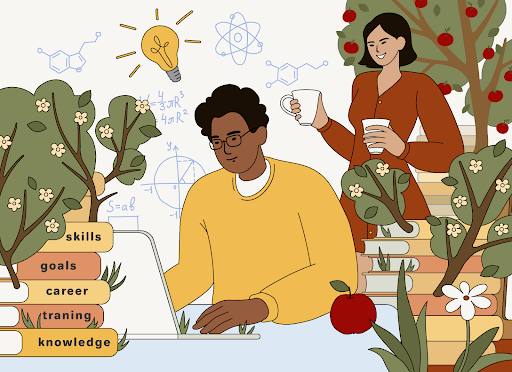
Academic excellence alone doesn't prepare students for life's complexities. The gurukula system recognised this centuries ago, and progressive schools today are returning to this comprehensive developmental model.
Physical Development Through Sports and Martial Arts
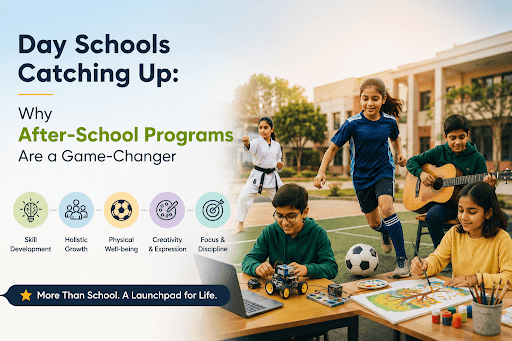
Regular physical activity does more than build strong bodies—it develops discipline, teaches handling of victory and defeat, and builds resilience. Sports like football, cricket, volleyball, and athletics create team players who understand cooperation. Individual pursuits like karate and chess develop focus and strategic thinking.
These activities mirror the physical training that was integral to gurukula life. A healthy body supports a healthy mind, and the discipline required for sports excellence transfers directly to academic pursuits.
Creative Expression and Cultural Grounding
Music, dance, drawing, and craft aren't "extras"—they're essential channels for self-expression and cultural connection. When students learn classical dance or traditional music, they're connecting with their heritage. When they paint or create crafts, they're developing spatial reasoning and fine motor skills.
Cultural activities also build confidence. A child who performs on stage, presents their artwork, or participates in dramatics develops public speaking skills and self-assurance that benefit them across all life domains.
Leadership Through Service
Programs like Scouts and Guides, debate competitions, and student leadership roles teach something crucial—how to lead while serving others. Students learn that leadership isn't about authority but about responsibility. They practice making decisions, organising activities, and motivating peers.
Key skills developed through co-curricular activities include:
- Teamwork and collaboration: Learning to work effectively with diverse personalities toward common goals
- Time management: Balancing academics with activities teaches prioritisation and efficient use of time
- Problem-solving: Sports, debates, and group projects present real challenges requiring creative solutions
- Emotional intelligence: Understanding and managing one's emotions while empathising with others
- Adaptability: Different activities demand different approaches, building mental flexibility
Check Out | Building Global Citizens with Strong Cultural Roots
Canara Gurukula Public School, Electronic City: Where Tradition Powers Transformation
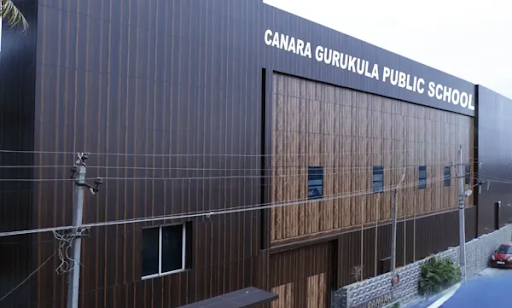
Located in T Gollahalli, Electronic City, Bangalore, this institution demonstrates how educational philosophy translates into practice when commitment meets vision. Established in 2015, Canara Gurukula Public School serves students from Nursery to Grade VIII in a co-educational environment. The school operates with English as its medium of instruction, making students comfortable with the global language while maintaining strong connections to Indian values and culture.
The school's vision centres on creating an environment where students choose excellence rather than having it imposed. Their mission explicitly states the goal: developing independent, self-sufficient adults who contribute responsibly to a global community. This philosophy directly echoes Gurukula principles—education shapes character, not just intellect.
The school provides facilities that enable hands-on learning across disciplines. The robotics lab introduces students to programming and engineering concepts through building and coding. The composite science lab allows experimentation across physics, chemistry, and biology. The mathematics lab makes abstract concepts concrete through manipulatives and activities.
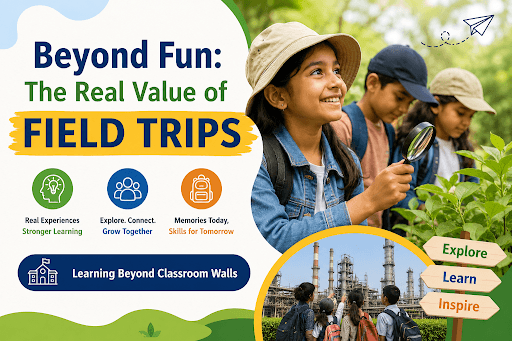
Beyond STEM, the spacious library encourages reading habits and independent research. Regular field trips to places of scientific, historical, and cultural significance bring textbook concepts to life, creating memorable learning experiences that students carry throughout their lives.
The school maintains clear expectations around punctuality, attendance, cleanliness, and conduct. Students wear proper uniforms, maintain tidy appearances, and communicate in English on campus. These aren't arbitrary rules—they're frameworks that teach self-discipline, respect for institutions, and professional habits that serve students throughout their lives. The school's emphasis on order, silence during study hours, and respectful behaviour mirrors the gurukula tradition of creating an environment where learning thrives.
For more information on this and other such schools in the area, check out this list of the best schools in Bangalore.

 as a preferred source on