






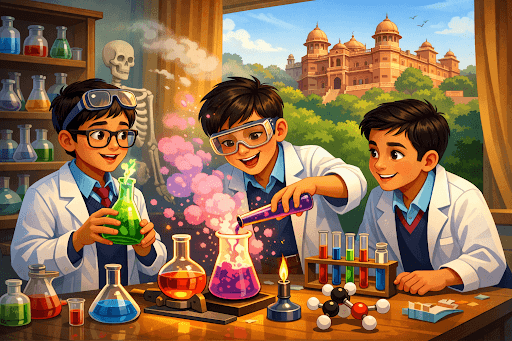

What if one day your child comes to you and says he wants to be a scientist? “But why?” you ask. He smiles and says, “Because today in the lab, I saw how two chemicals reacted and changed colour. I didn’t just read it, I actually saw it happen. Now I want to learn more.” That moment would stay with you, wouldn’t it?
Now that’s when hobby-based learning becomes important. It gives students the chance to learn more than theory and experience science practically. When students are allowed to conduct experiments, observe, and explore on their own, they begin to see science differently. It doesn’t feel like something to memorise, it feels like something to understand and enjoy.
In this article, we explore how hobby-based science learning helps students develop curiosity and how simply doing experiments by themselves builds deeper understanding. We will know about a school, which is one of the best science-based boarding schools in India, The Scindia School, that makes science activities fun.
Also Read | The Astachal Practice at The Scindia School
Why Science Theory Is Not Enough
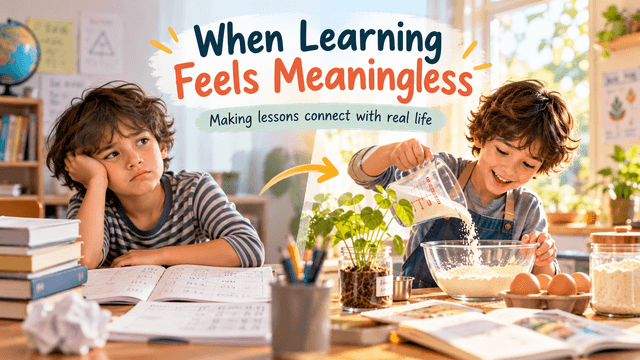
Do you remember when you were a child, you learnt things by experience, not just by reading or watching them? Because that’s what helps us learn things better. The same goes for your child; he will learn better by doing things rather than just learning it through theory.
For example, a student may read about how two chemicals react, but unless they see the reaction, it remains just an idea. When students only memorise, they often struggle to apply what they have learned. This is why many students find science difficult or lose interest over time.
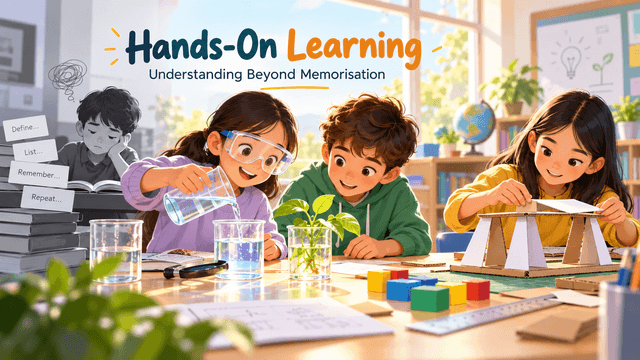
That’s where experiment-based learning comes into play. When students perform experiments themselves, they see how concepts work in real life. This makes learning clearer and longer-lasting.
How A Person Can Learn Through Experiments + Observations
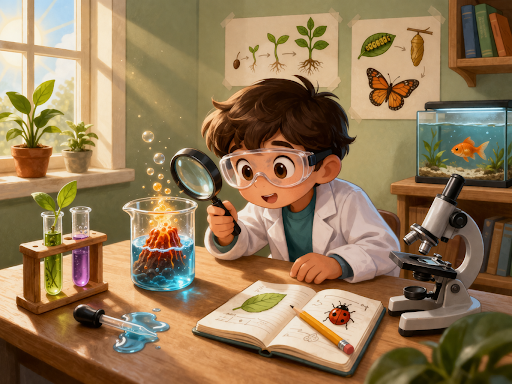
If science experiments become a student’s friend, they will start learning and understanding better, as well as scoring marks in their exams. They will try different ideas, and will gain curiosity, make mistakes and slowly but steadily learn from them.
For instance, when a student tries mixing some chemicals and then observes a change in colour or temperature, they start to understand the concept behind the reaction. They ask questions like “Why did this happen?” or “What will happen if I change something?” This kind of thinking is very important in science.
These activities involve:
- Trying simple experiments first and then observing the results
- Noticing some changes like colour, heat, or the formation of something new
- Asking questions as well as discussing the possible reasons for the same
- Using the trial and error method to reach to a point.
By these steps, students can easily link theory and practice together.
Can Science Build Strong Thinking Skills?
The answer is YES. When students do experiments, they don’t just learn science; they also develop thinking skills. But how?
For example, if an experiment does not give the expected result, students start thinking about what went wrong. Was the method correct? Were the materials used properly? This process improves their problem-solving skills. They also become more creative. Instead of sticking to fixed answers, they start exploring different possible outcomes. As a result, learning becomes more interesting and meaningful.
Gradually, students start seeing science as a way of thinking and understanding the world, not just a subject.
Making Science Interesting and Enjoyable
The thing is, whenever students do experiments, they not only learn; they also enjoy the process. The mixing of chemicals, the reactions, the pops, the sounds, even the strong smells, all of it fascinates them. This makes their learning much better than just reading and trying to understand the theory.
For example, a student who is not interested in regular classes might become excited while performing experiments. Their participation increases, and they start asking questions and sharing ideas. This makes them more interested and helps them learn faster.
Students get afraid when they try to learn science. It starts to seem like a big, difficult subject. But through such experiments, they feel more comfortable and start seeing science as something simple and easy to understand.
Check Out | How Integrated Curriculum Blends Knowledge with Real-World Skills
The Scindia School, Gwalior: Encouraging Curiosity Through Chemical Hobby
You need a school that can help your child learn science without feeling scared of it. This is where The Scindia School, one of the best CBSE boarding schools in India, comes in. Here, students not only learn theory but also perform experiments regularly, which helps them understand the same concepts better.

At The Scindia School, science feels real, not just something written in books. One student shared his first chemistry experiment. He mixed two solutions and saw the colour change in front of him. Before that, reactions were only lines in a book. But in that moment, he truly understood them.
Teachers here do not rush. They guide students and give them time to try things on their own. They allow mistakes and turn them into learning. The same student once got a wrong result in an experiment. Instead of correcting him, the teacher asked him to do it again and find the mistake. This helped him understand the concept much better.
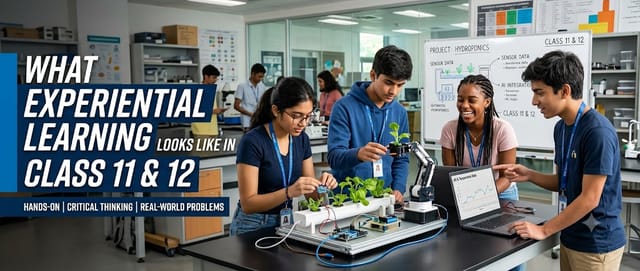
In physics labs, students use real equipment. They build circuits, test lenses, and study motion. When a bulb lights up from a circuit they made, the learning stays with them.
This hands-on way of learning makes a big difference. Students do not just memorise formulas. They see them, test them, and understand them clearly. Over time, this builds curiosity and confidence.
Now think about this from a parent’s point of view. Many parents notice that their child studies science, but does not always show interest. Through activities like a chemical hobby, students start enjoying the subject. They become more curious and gradually start asking questions at home as well. This shows that they are both learning and understanding.
Your question would be, “What does this school do”? This school gives an environment where students can explore freely, make mistakes, and learn without pressure. Here, teachers guide them during activities and help them understand the concepts properly. This balance of guidance and freedom helps students grow steadily.
A Learning Experience That Stays with Students
A student who learns through experience and observation remembers it for a long time. Unlike memorised answers, practical understanding is not easy to forget. Students remember what they have seen and done.
As they grow, this curiosity continues to help them. They become more confident in handling scientific concepts and more interested in exploring new ideas. This also supports them in higher studies, where students learn to understand things and use them, not just mug them up.
The Final Thought
Science is not just about reading and writing answers. It is about observing, questioning, and understanding how things work. When students are given the chance to explore through experiments, they begin to enjoy the subject and develop a deeper connection with it.
At The Scindia School, Gwalior, a chemical hobby provides this opportunity. By encouraging students to experiment and explore, the school helps them develop curiosity and confidence in learning.
Because in the end, true learning in science happens not only when students study it, but when they experience it.
For more information on this and other similar boarding schools, please click on the link below.




 as a preferred source on