




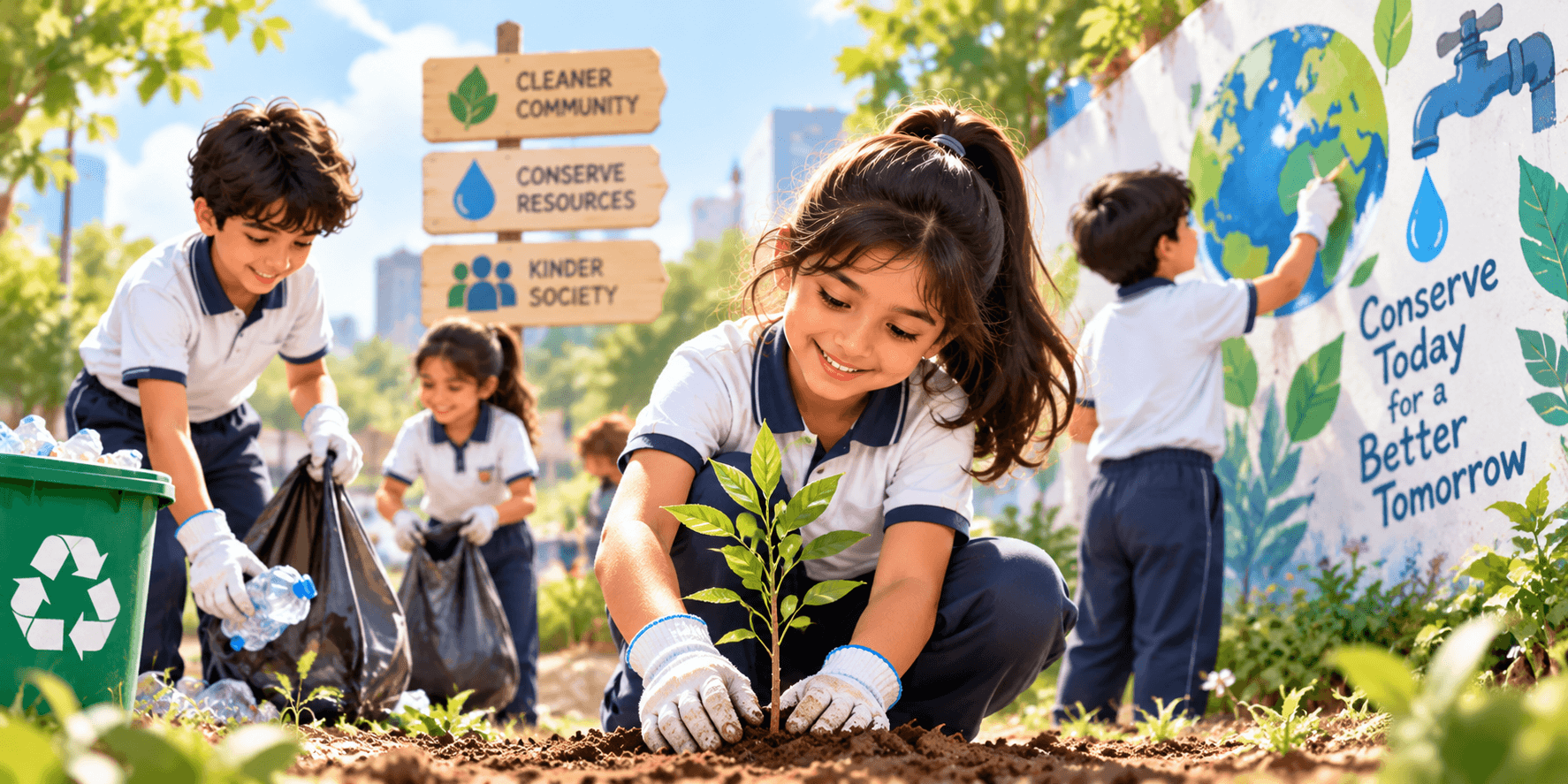

Your child knows that wasting water is wrong, yet leaves the tap running while brushing their teeth. They understand that keeping their neighbourhood clean is important but walk past litter without noticing it. As parents, you may wonder why knowing the right thing does not always lead to responsible behaviour.
This is where community service can make a difference. Parents exploring the Top schools in Ghaziabad, including St. Teresa School, Indirapuram, Ghaziabad, may also want to consider how schools encourage children to practise social responsibility through meaningful activities beyond textbooks.
Why Children Need Experiences, Not Just Lessons About Responsibility
Children learn important values through stories, classroom discussions, and advice from adults. However, understanding a value is different from applying it in everyday situations.
For example, a child might memorise the importance of water conservation for a school examination. But when they participate in an awareness activity, they begin noticing how water is used and wasted around them.
They may identify leaking taps, unnecessary water usage, or simple habits that families can improve.
These experiences help children understand that their actions affect other people and the environment.
India's National Education Policy 2020 encourages experiential learning and the development of ethical values, environmental awareness, and responsible citizenship.
Community service can support these goals when children participate actively rather than simply following instructions.
The purpose is not to make every child a social worker. It is to help them recognise that they can contribute positively to their surroundings.
What Children Can Learn From Meaningful Community Service
Community service gives children opportunities to practise skills that are difficult to develop through classroom explanations alone.
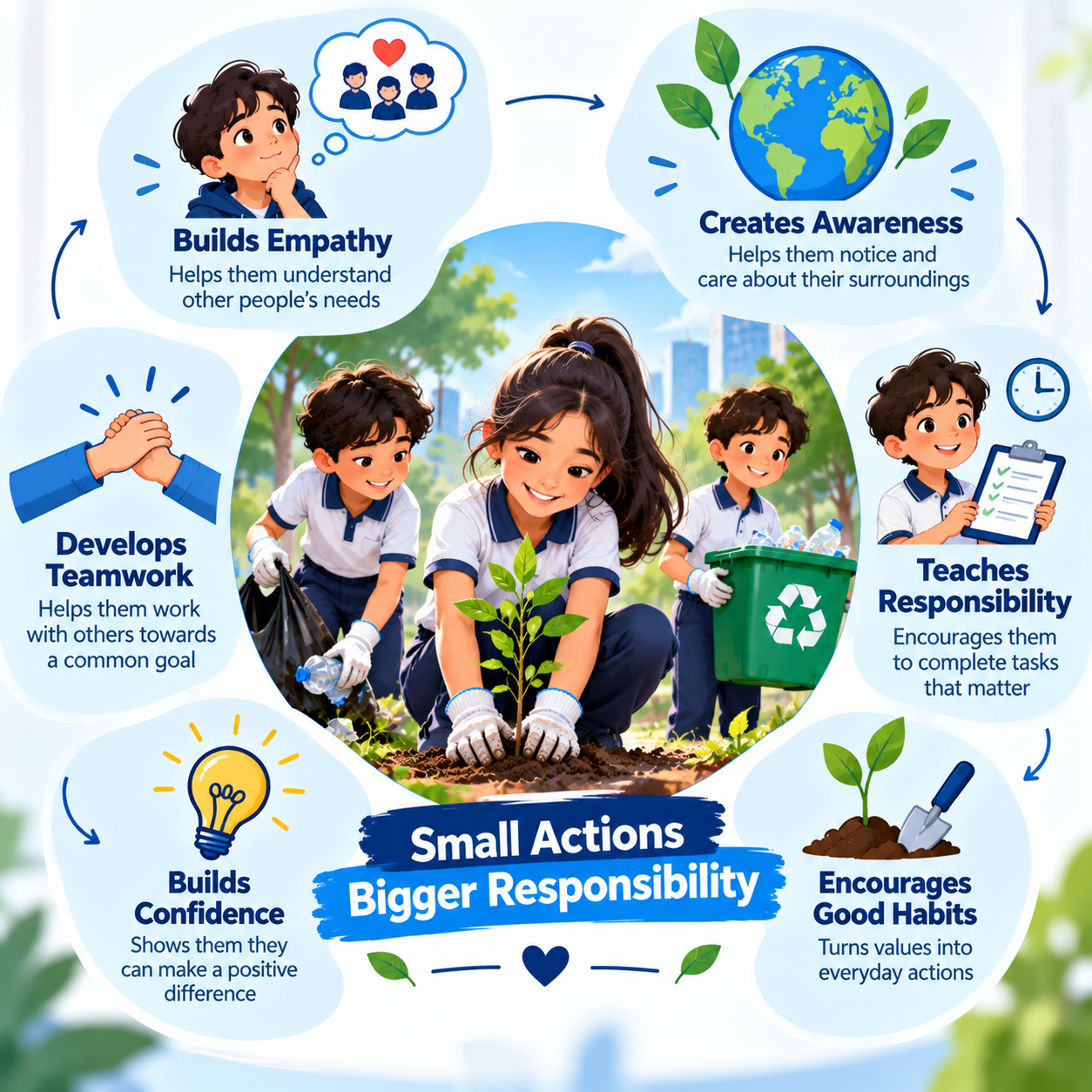
1. Understanding Other People's Needs
When children interact respectfully with people outside their usual social circles, they encounter different experiences and challenges.
For example, participating in a community reading programme may help them recognise that children have different learning opportunities.
Such experiences can encourage empathy when adults guide children to listen without judging or making assumptions.
2. Taking Responsibility for Their Actions
Responsibility develops when children complete tasks that genuinely matter.
A student helping organise a neighbourhood clean-up must arrive prepared, follow safety instructions, and complete their assigned work.
They begin understanding that participation involves more than simply attending an event.
3. Learning to Work With Others
Community activities often require planning, communication, and cooperation.
Children may need to divide responsibilities, listen to different suggestions, and work towards a shared objective.
These experiences provide opportunities to practise teamwork outside competitive academic settings.
4. Becoming More Aware of Their Surroundings
Community service can encourage children to notice problems they previously overlooked.
A water-saving initiative, for example, may prompt them to question wasteful habits at home.
Research published in Child Development in 2014, reviewing 49 studies involving young people aged 12–20, found positive developmental effects associated with community service, especially when activities included reflection.
This highlights the importance of discussing what children learn from their experiences.
Simple Community Service Activities Children Can Start With
Community service does not always require large events, donations, or formal volunteering programmes.
Children can begin with small activities that address genuine needs.
Neighbourhood cleanliness: Children can join an adult-supervised clean-up in a safe area. Adults should handle sharp objects, hazardous waste, and other unsafe materials.
Water conservation: Encourage children to identify water-wasting habits at home and share practical suggestions with family members.
Reading together: Older students can participate in supervised reading sessions with younger children who would benefit from additional support.
Supporting local initiatives: Families can contact a trusted community organisation to understand which supplies or assistance are actually needed before contributing.
The key is to make participation meaningful rather than focusing on photographs, certificates, or public recognition.
Children should also have age-appropriate responsibilities and opportunities to choose how they contribute.
A small activity completed thoughtfully can be more valuable than a large event that children barely understand.
How Parents Can Make Community Service More Meaningful
Parents play an important role in helping children understand community service.
Before choosing an activity, explain why it matters and who might benefit. Ask your child what they would like to contribute.
During the activity, encourage respectful behaviour and remind them that helping others should never involve treating anyone as helpless or inferior.
Afterwards, discuss their experiences.
You might ask:
- What did you notice during the activity?
- Who benefited from our efforts?
- What was difficult or unexpected?
- What could we do differently next time?
These conversations encourage children to think about the purpose and impact of their actions.
Research on adolescent community service suggests that reflection is particularly important for meaningful developmental outcomes.
Parents can also encourage children to continue responsible habits at home rather than treating community service as a one-day event.
Community Responsibility at St. Teresa School, Indirapuram
St. Teresa School, Indirapuram, Ghaziabad reported conducting Jal Pakhwada 2026, during which students from Classes VI–IX promoted water-conservation awareness through community outreach. The initiative focused on responsible water usage and supported the goals of clean water and sanitation. For parents comparing the Top schools in Ghaziabad or searching for the Best schools in Ghaziabad, such activities offer a relevant example of learning extending into community participation and environmental awareness.

Conclusion
Responsible behaviour develops through everyday choices, meaningful experiences, and opportunities to reflect.
Children do not need to lead major projects to make a positive contribution. Helping conserve water, supporting a useful community activity, or caring for shared spaces can be a starting point.
When parents encourage small acts of service without pressure or unnecessary recognition, children have opportunities to understand why their actions matter to others.
To know more about other schools in Ghaziabad, click on the link below




 as a preferred source on