






Your child is solving a maths problem. After reading the question once, they immediately say, "Mum, I don't know how to do this. Can you help?" Before you can respond, they have already reached for your phone to search for the answer.
Sound familiar?
For many parents, the challenge isn't that their child cannot learn. It's that they often look for help before trying. Developing independent thinking is an important part of education, something that parents and schools, including Sparsh International School (SIS), Omega I, Greater Noida, can encourage through opportunities to explore, question, and solve problems.
Why Do Children Become Dependent on Ready-Made Answers?
Children are naturally curious, but certain habits can make them hesitant to think for themselves.
One common reason is the fear of making mistakes. When children believe that getting an answer wrong means failing, they may prefer asking someone who already knows the solution.
Sometimes, adults unintentionally strengthen this habit. Imagine a child struggling with homework while a parent quickly explains every step. The work gets completed, but the child misses an opportunity to think independently.
Instant access to Google, YouTube, and AI tools can also make finding answers easier than working through questions.
However, the problem isn't technology itself. It's how children use it.
The goal is to help children understand that learning involves asking questions, testing ideas, and occasionally getting things wrong.
How Can Parents Encourage Independent Thinking at Home?
Independent thinking doesn't develop overnight. Small changes in everyday conversations can help children become more confident problem-solvers.
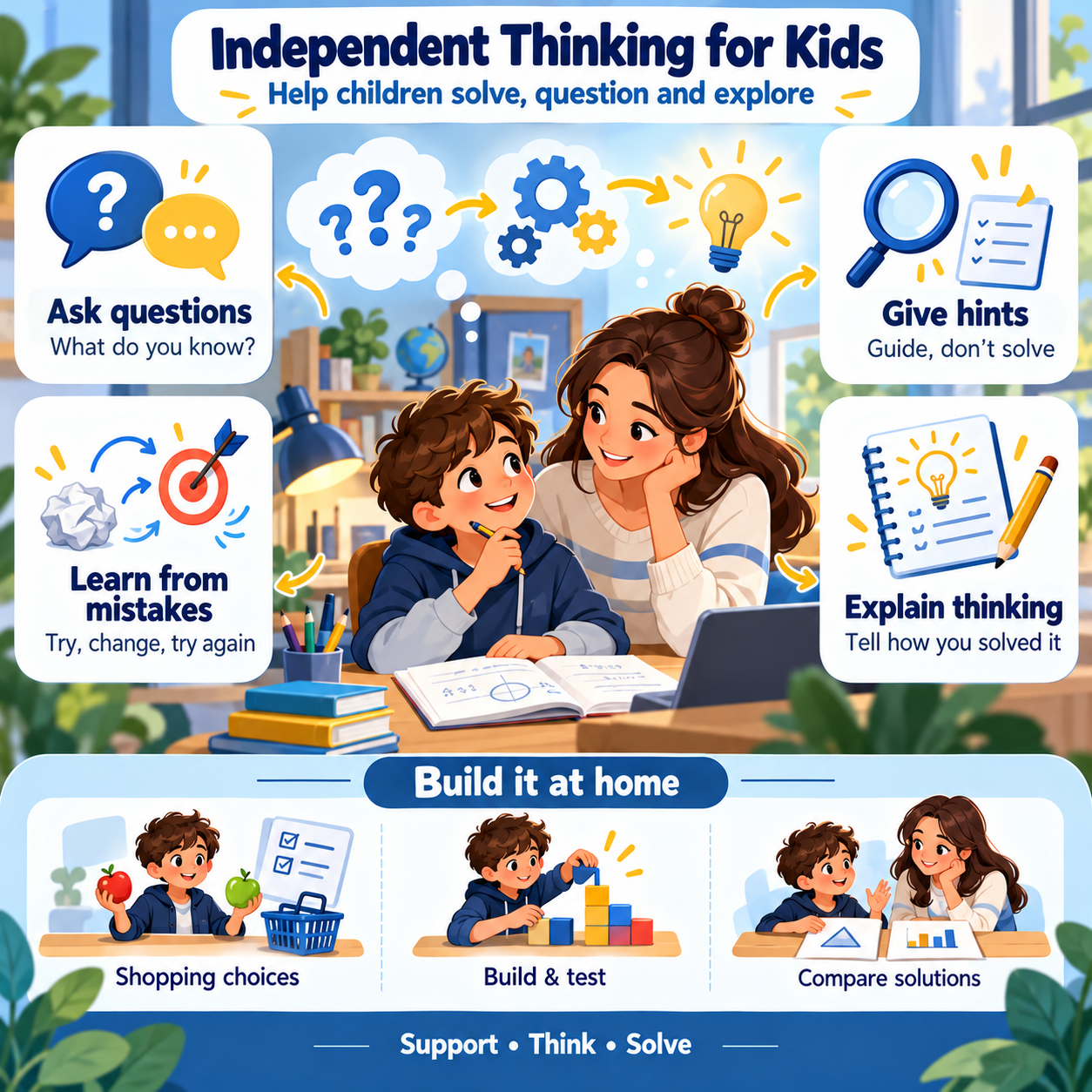
1. Ask Questions Instead of Giving Immediate Answers
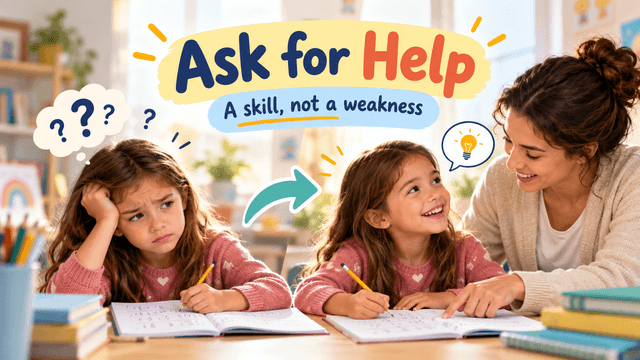
When your child asks for help, avoid immediately explaining the solution.
Instead, try asking:
- "What do you already know about this?"
- "Have you tried another way?"
- "What do you think the first step could be?"
For example, if your child struggles with a maths problem, encourage them to identify the information given before attempting the calculation.
Such questions help children organise their thoughts rather than depend entirely on someone else's explanation.
2. Give Hints Without Solving Everything
There's a difference between guiding children and doing their work.
Suppose your child is writing a story but cannot think of an ending. Instead of suggesting the entire ending, ask what their main character might do next.
If they remain stuck, offer two possible directions and let them decide.
This approach is called scaffolding, where adults provide enough support to help children progress and gradually reduce that support as their confidence grows.
3. Make Mistakes Part of Learning
Children who fear criticism may avoid trying unfamiliar approaches.
When your child makes a mistake, discuss what happened rather than immediately correcting them.
For instance, if their science experiment doesn't work, ask what they could change before trying again.
This teaches children that an unsuccessful attempt can still provide useful information.
Parents can also share examples of problems they couldn't solve immediately. It shows children that adults learn through trial and error too.
4. Encourage Children to Explain Their Thinking
Sometimes, children know the correct answer without understanding why it works.
Ask them to explain their reasoning in simple words.
The Education Endowment Foundation highlights the importance of metacognition, which involves planning, monitoring, and evaluating one's learning.
Encouraging children to explain their choices helps them reflect on how they reached an answer, not just whether it was correct.
Everyday Activities That Build Problem-Solving Skills
Independent thinking doesn't have to begin with textbooks. Ordinary household activities can offer useful learning opportunities.
Plan a shopping budget: Give your child a small imaginary budget and ask them to choose between different items. Encourage them to compare prices and explain their decisions.
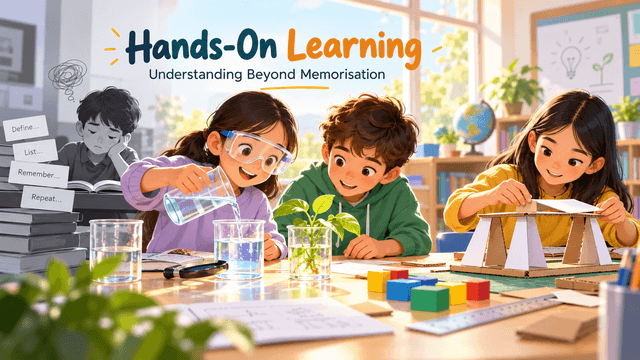
Try a building challenge: Ask your child to build a paper bridge that can hold a few coins. Let them experiment with different shapes and discover which design works better.
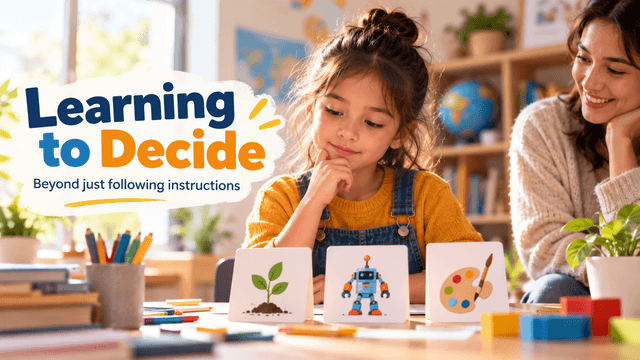
Compare possible solutions: Present a simple problem with two possible approaches. Ask which option they would choose and why.
These activities encourage children to make predictions, test ideas, and reconsider their choices.
India's Atal Innovation Mission promotes similar principles through hands-on learning, creativity, and design thinking in its Atal Tinkering Labs.
When Should Parents Step In and Help?
Independent thinking does not mean children should struggle alone.
If your child has attempted a problem several times, lacks the knowledge needed to solve it, or becomes visibly frustrated, additional guidance may be necessary.
Start by asking what they have tried. Then offer a small hint. If that doesn't help, demonstrate one step and encourage them to complete the next.
The aim is not to remove parental support but to make it more effective.
Children need both the freedom to explore solutions and the reassurance that help is available when needed.
Encouraging Independent Thinking at Sparsh International School
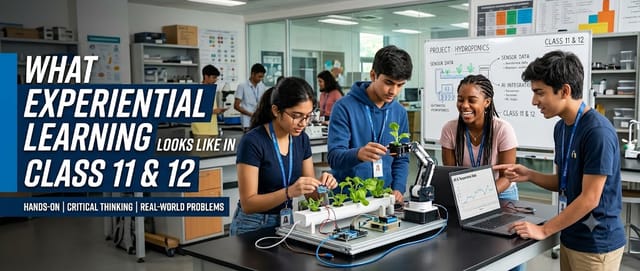
For parents exploring Top Schools In Greater Noida or comparing the Best Schools in Greater Noida, opportunities for practical problem-solving are worth considering. Sparsh International School (SIS), Omega I, Greater Noida highlights its Atal Tinkering Lab as a space for exploring robotics, electronics, and emerging technologies. The school's published approach also emphasises project-based learning and critical thinking. Such opportunities reflect the importance of allowing children to experiment with ideas, ask questions, and explore solutions beyond textbook exercises.

Conclusion: Raise Children Who Can Think, Not Just Answer
Independent thinking develops when children have opportunities to try, make mistakes, and understand their decisions.
Parents don't need to stop helping. Instead, they can guide children without taking over every problem.
The next time your child asks for an answer, begin with one simple question: "What have you tried so far?"
To know more about other schools in Greater Noida, click on the link below






 as a preferred source on