




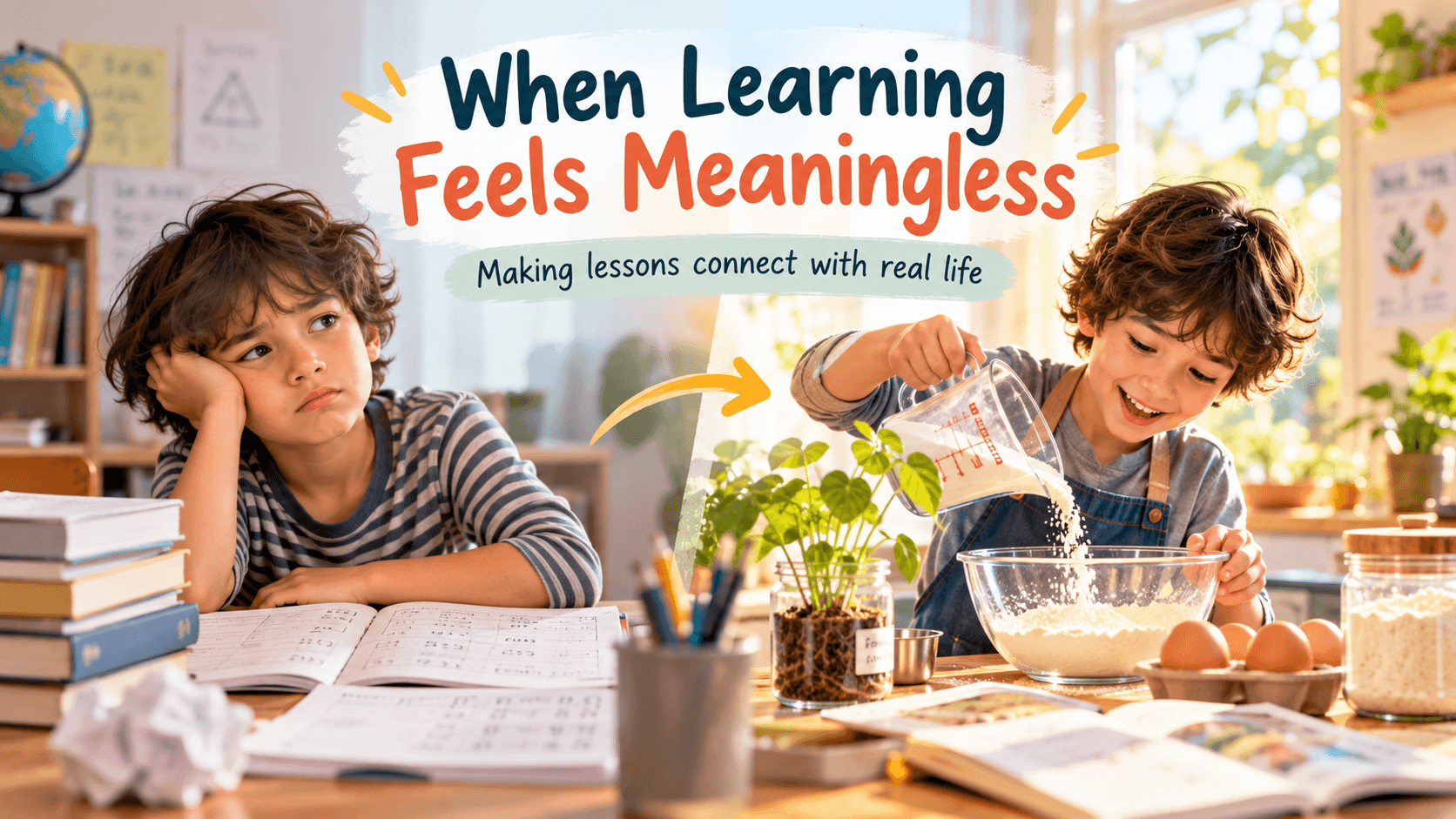

"Why do I need to learn this? When will I ever use it?"
Many parents hear these questions when their children struggle to complete homework or prepare for examinations. A child who once enjoyed learning may suddenly describe certain subjects as boring or unnecessary.
This does not always mean the child is lazy or unwilling to study. Sometimes, children lose interest because they cannot understand how classroom lessons relate to their everyday lives.
When exploring the Best School in Gurugram, parents may also consider how schools make academic concepts meaningful. Educational approaches described by the Presidium network, associated with Presidium School, Sector 40, Gurgaon, provide a relevant example of connecting learning with practical experiences.
Why Learning Can Start to Feel Meaningless
Children are naturally curious, but their interest can decrease when lessons seem disconnected from things they recognise or understand.
Several factors may contribute to this feeling.
Lack of real-world connections: A child may struggle to understand why percentages matter when they encounter them only in mathematics exercises. However, calculating discounts while shopping can make the same concept easier to relate to.
Repetitive learning: Completing similar exercises repeatedly without understanding their purpose may make learning feel like a task rather than an opportunity to discover something.
Difficulty understanding lessons: Sometimes, children describe subjects as boring because they find them confusing or overwhelming. Others may lose interest when activities provide too little challenge.
Parents should also remember that tiredness, emotional concerns, learning difficulties, or stressful experiences can affect motivation.
Understanding the reason behind a child's disengagement is more helpful than immediately asking them to study harder.
How Meaningful Learning Can Rebuild Children's Interest
Meaningful learning helps children recognise connections between academic concepts and their experiences.
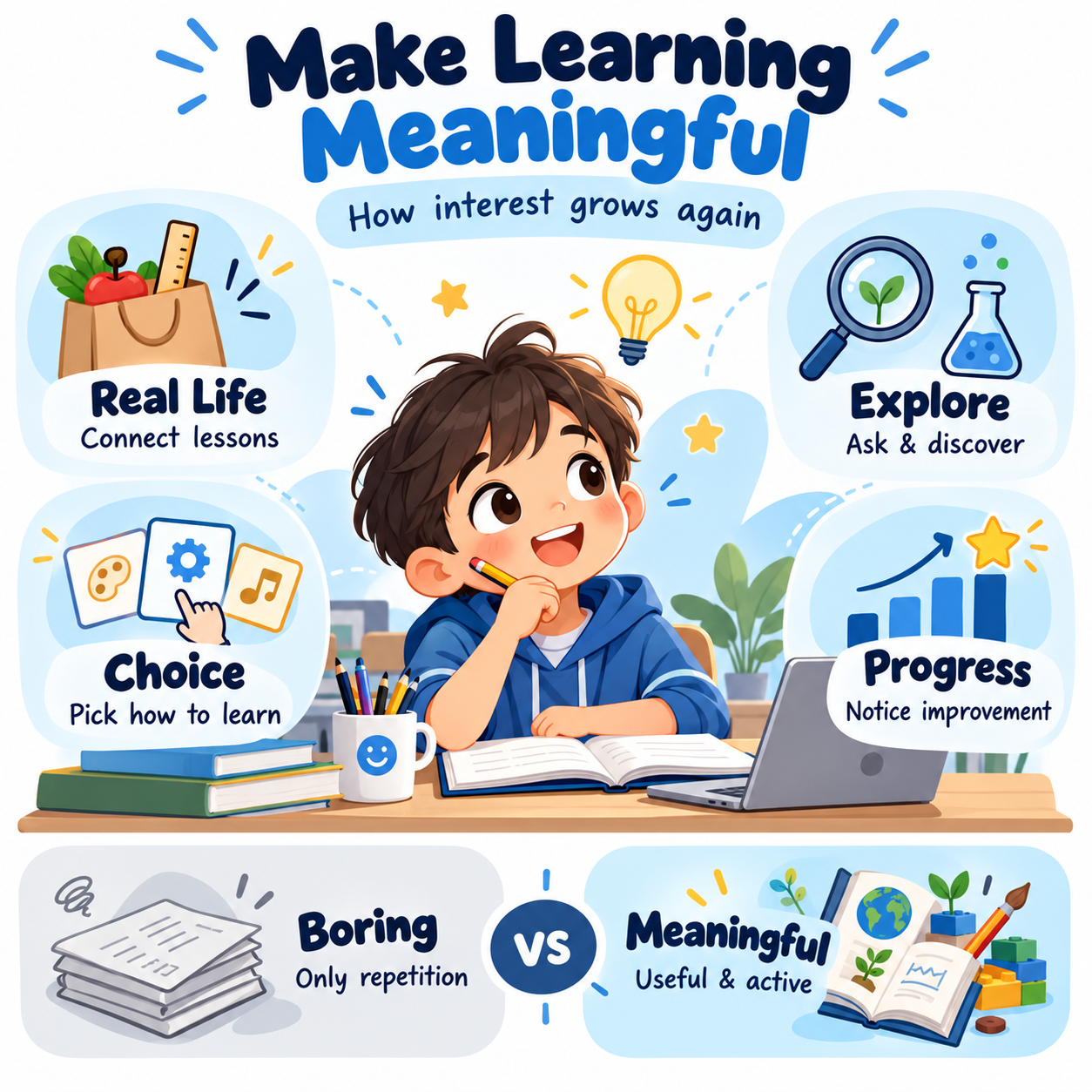
1. Connecting Lessons With Everyday Life
Abstract ideas can become easier to understand when children encounter them in familiar situations.
For example, fractions may appear complicated in textbooks, but dividing a pizza into equal portions can help children visualise the concept.
Similarly, measuring ingredients introduces practical mathematics, while observing plant growth provides opportunities to explore scientific ideas.
The OECD's Unlocking High-Quality Teaching report highlights meaningful contexts and real-world connections as approaches that can support students' cognitive engagement.
These connections help children recognise that classroom knowledge can have applications beyond examinations.
2. Encouraging Curiosity Through Exploration
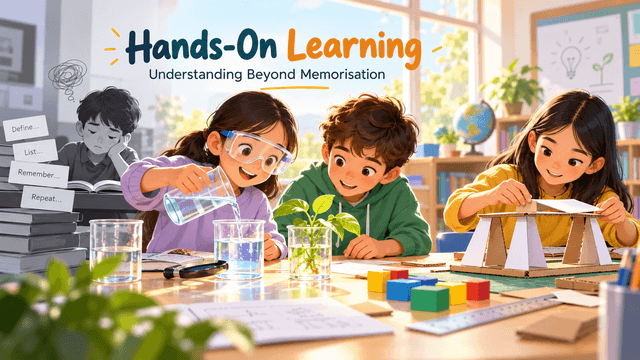
Children may become more interested when they have opportunities to investigate questions rather than only memorise answers.
For example, instead of simply learning that plants require sunlight, students can observe plants growing under different light conditions and discuss the results.
Such activities encourage children to ask questions, compare observations and explore explanations.
However, practical activities are most useful when children understand what they are supposed to learn. Experiments and projects should support clear learning objectives rather than serve only as entertainment.
3. Helping Children Recognise Their Progress
Sometimes, children lose motivation because they cannot recognise how much they have improved.
Parents and teachers can help by drawing attention to specific achievements.
A child who previously struggled with multiplication might now calculate a shopping bill independently. Recognising this improvement helps them understand the value of their efforts.
Encouraging children to reflect on what they have learned can also help them identify areas where additional practice is needed.
How Parents Can Make Learning More Relevant at Home
Parents do not need expensive educational materials or complicated activities to make learning meaningful.
Small changes in everyday conversations can help.
Understand What Your Child Finds Difficult
Instead of immediately correcting a child who says a subject is boring, ask what makes it uninteresting.
Is the lesson confusing? Does it involve too much repetition? Or does the child struggle to understand its purpose?
Their answers can help parents distinguish between a lack of interest and a need for additional academic support.
Connect Subjects With Familiar Experiences
Use situations your child already enjoys to introduce academic ideas.
For example:
- Mathematics: Calculate cricket scores, shopping discounts or travel expenses.
- Science: Observe plants, explore shadows or discuss everyday weather changes.
- Language: Encourage storytelling, reading instructions or writing short messages.
- Environmental Studies: Discuss waste segregation, recycling and water conservation.
The goal is not to turn every activity into a lesson, but to help children notice where their knowledge becomes useful.
Give Children Some Choice
Allow children to choose between suitable learning activities or decide which subject to study first.
Older children might select a project topic related to their interests.
Having some control over learning can encourage greater participation, provided children still receive appropriate guidance and structure.
Appreciate Understanding, Not Just Marks
Instead of discussing only examination results, ask children to explain something new they have learned.
Recognise their efforts when they solve unfamiliar problems, ask thoughtful questions, or improve their understanding.
If a child continues losing interest across several subjects, discussing the situation with teachers may help identify underlying difficulties.
Why Teaching Methods Matter in Keeping Students Engaged
Schools play an important role in helping children understand the purpose of their lessons.
Teachers can connect academic concepts with familiar experiences through classroom discussions, practical demonstrations, group activities, and thoughtfully designed projects.
For example, a lesson on budgeting can combine mathematics with everyday financial decisions. A science activity involving recycling can connect environmental concepts with local concerns.
These experiences should complement explanations, reading, and regular practice rather than replace them.
When comparing schools, parents can ask how teachers make difficult concepts understandable and how they support students who appear disengaged.
Such questions provide useful insight into the learning environment beyond academic results.
How Presidium's Learning Approach Connects Lessons With Real Life
When parents search for the Best School in Gurugram, understanding how schools connect academic lessons with practical experiences can be an important consideration. Presidium School, Sector 40, Gurgaon, is associated with the wider Presidium educational network, whose published curriculum philosophy emphasises subject-based, theme-based and project-based learning.

The network describes using familiar experiences, meaningful activities and real-world problems to help children understand academic concepts. Its curriculum information also highlights experiential learning and encourages students to ask questions and explore answers. These approaches illustrate how learning can become more relevant to children's everyday experiences. For families comparing options for a Top School in Gurugram, asking how these methods are implemented at the specific campus can provide a clearer understanding of its teaching practices.
Conclusion
Children do not need every lesson to be entertaining, but understanding why something matters can help them engage more meaningfully with learning.
Parents can encourage this by listening to children's concerns, connecting subjects with everyday experiences and recognising progress beyond examination scores.
Rather than simply asking children to study harder, it may be more useful to help them discover what their learning allows them to understand, explore and achieve.
For more information on similar schools, check out this list of the best schools in Gurugram.

















 as a preferred source on