






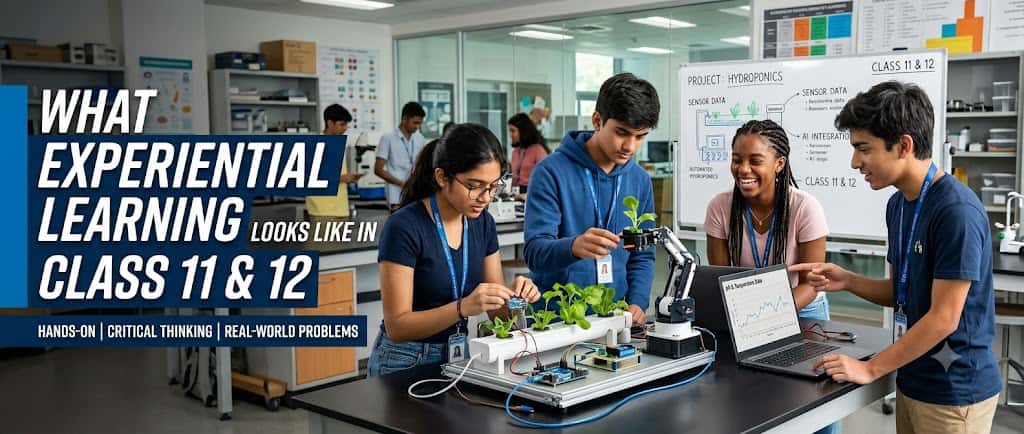

Every parent wants experiential learning in the school curriculum; that's almost a given at this point. But it matters even more once a student hits Class 11 and 12. These two years aren't really about boards and subject streams anymore, or at least they shouldn't be. A lot is happening underneath that: choices about what to study further, what kind of person a student is becoming, decisions that stick around longer than any exam result.
Parents evaluating schools in Gurgaon are picking up on this too, and a lot of them are asking different questions now, less about pass percentages, more about what students are actually doing with their time in school. The Beacon School has shaped its senior programme around this idea, in which real experience sits alongside academics rather than being something that comes after. Here's what that actually looks like once you get past the brochure language.
Also Read: How Professional Coaching Improves Sports in Schools
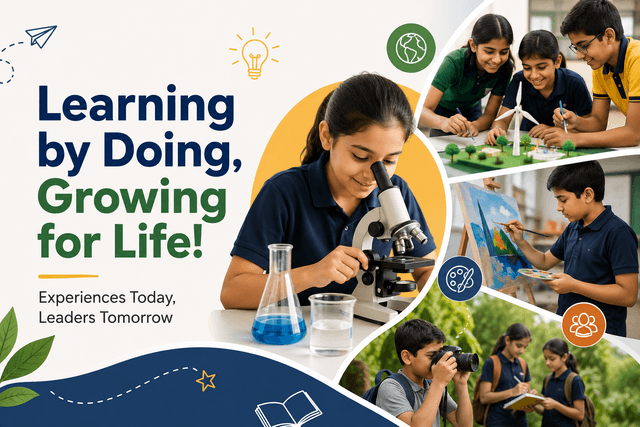
How Learning by Doing Looks Like in the Senior Years
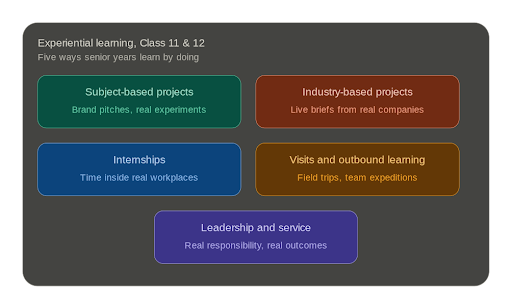
Subject-Based Projects
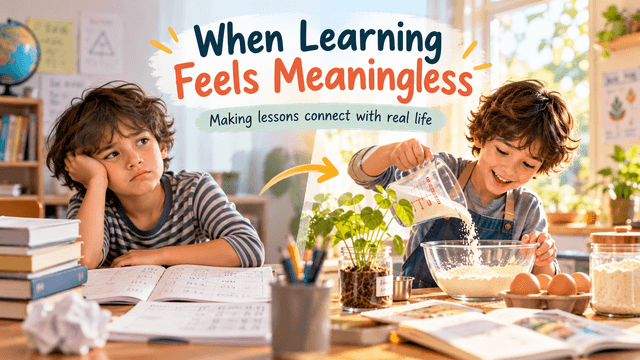
- In commerce, instead of just learning marketing through terms and definitions, students are given a project to build a brand of their own, from naming it to presenting a full marketing plan around it
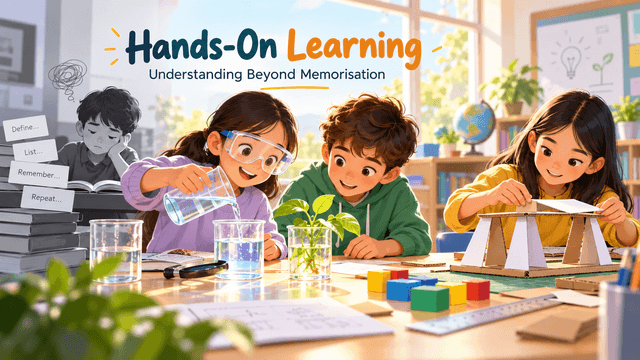
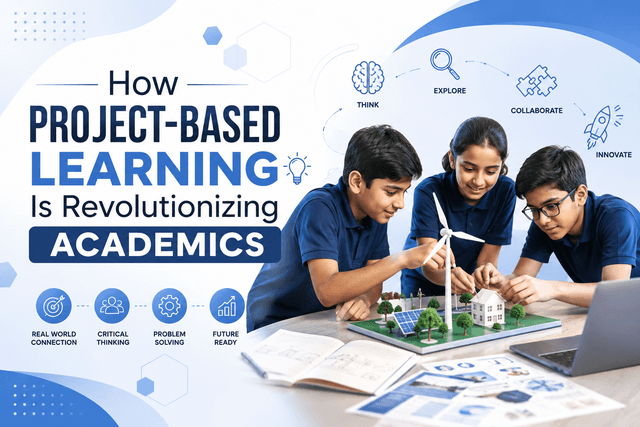
- In science, chapters like chemical reactions or environmental studies turn into small real experiments: water purification, waste segregation, energy efficiency projects around the school campus
- In arts and humanities, a historical event is explored through a mock debate, a short documentary, or a creative project instead of a plain textbook essay
Industry-Based Projects
- Students work on live briefs or problems given by actual companies or professionals, not hypothetical case studies
- They get exposure to how decisions are made in a real workplace, deadlines, feedback, revisions, the works
- Some projects are done in collaboration with mentors from the industry, giving students a sense of what a career in that field actually looks like
- The outcome isn't just a grade; it's a presentation, a pitch, or a report that has to hold up in front of a real audience
Visits and Outbound Learning
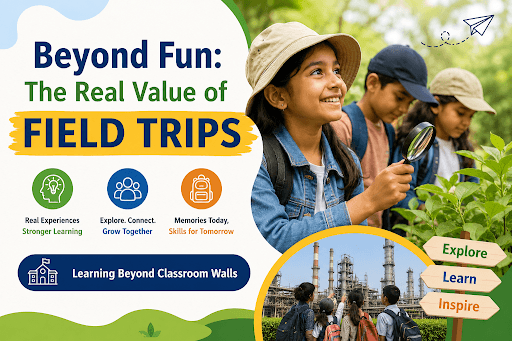
- Field visits tied directly to what's being taught: a factory visit for a chapter on production, a market visit for a chapter on consumer behavior
- Outbound trips and expeditions that push students into unfamiliar situations where they have to think on their feet and work as a team
- Rural immersion or community-based visits that expose students to realities beyond their usual environment
Peer Learning and Leadership Projects
- Students who understand a concept well are asked to teach it to their classmates, which tests their own understanding in a different way
- Leadership responsibilities in student-led initiatives or community projects, where students are accountable for real outcomes, not just a title
Also Read: Why Experiential Learning is Transforming Modern Education
Inside The Beacon School's Senior Programme
At The Beacon School, Class 11 and 12 students actually get a choice between CBSE and IGCSE. That alone tells you something about how the school thinks, because most schools just pick a board and expect every student to fit into it, regardless of what they're aiming for later.
The experiential side isn't something added on top of academics here either; it runs through it. Outbounds, internships, and industry-based projects are part of the actual structure of Class 11 and 12, not a once-a-year event. A commerce student building and pitching a brand, a science student running an experiment tied to a real problem instead of just a lab manual diagram- this is the kind of thing that happens as part of the regular flow, not as something separate from "real school."
Their Gap Year Programme is worth mentioning too, mostly because you don't see it often, even among the best schools in Gurgaon. Rather than pushing students straight from board exams into a college application, there's a structured year built around career exploration, independent projects, and mentorship. It gives students room to actually think through a decision that usually gets rushed.
Then there's the leadership piece. Community work isn't treated like a checkbox activity squeezed in for a certificate. It's framed as something ongoing, which changes how students engage with it. There's a difference between attending a leadership workshop and actually being responsible for running something, even something small.
Between the choice of board, the Gap Year, and the way experience is woven into everyday academics, the senior programme at Beacon seems less concerned with getting students through boards and more focused on who they become right after.
For more information regarding this and the other schools in the nearby area


 as a preferred source on