








A child comes home from school and says, “I know the answer, but I don’t want to speak in front of everyone.” Another knows exactly what to buy with their pocket money but has never thought about saving some of it. Someone else spends hours on a phone but has never stopped to wonder why one video keeps appearing after another.
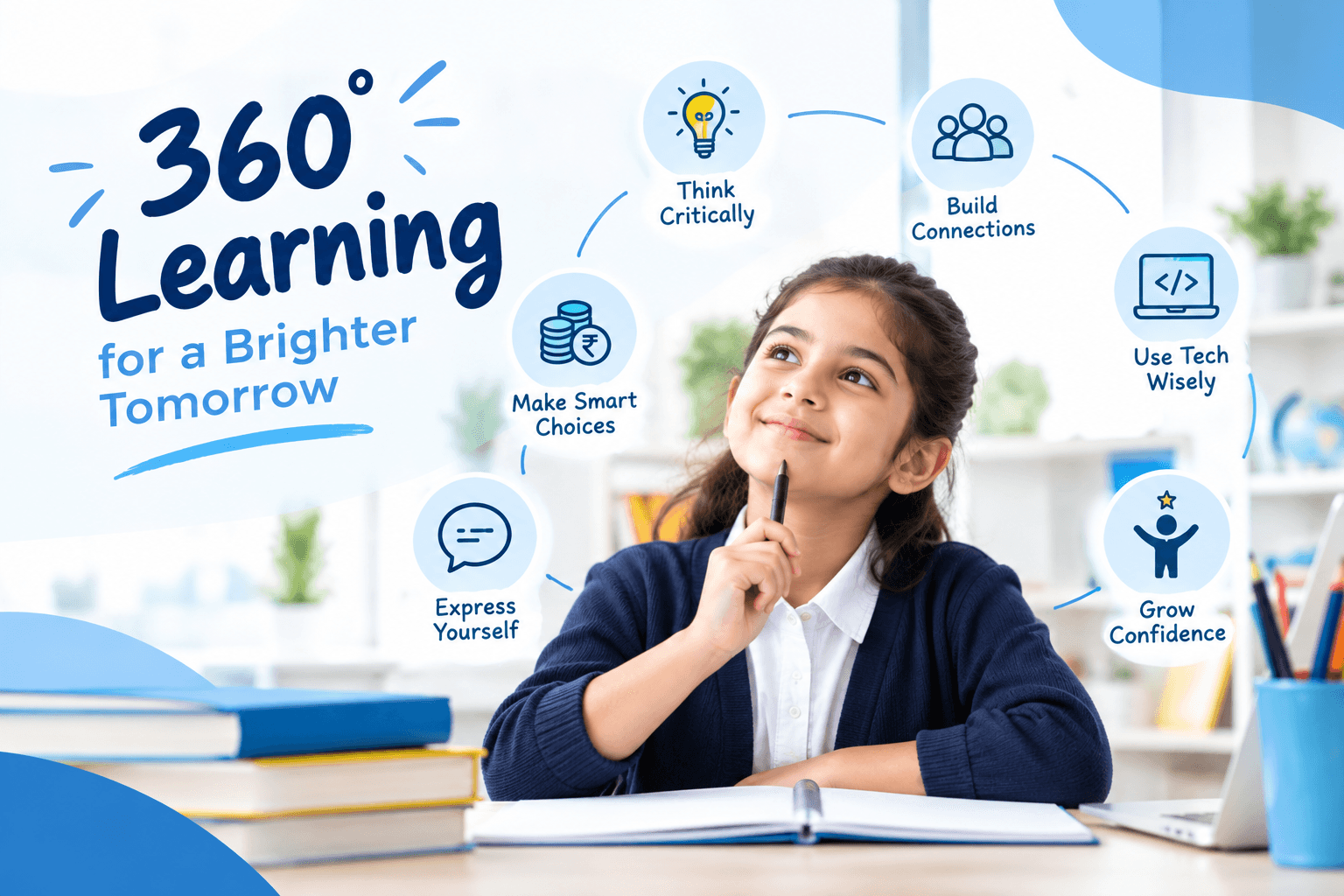
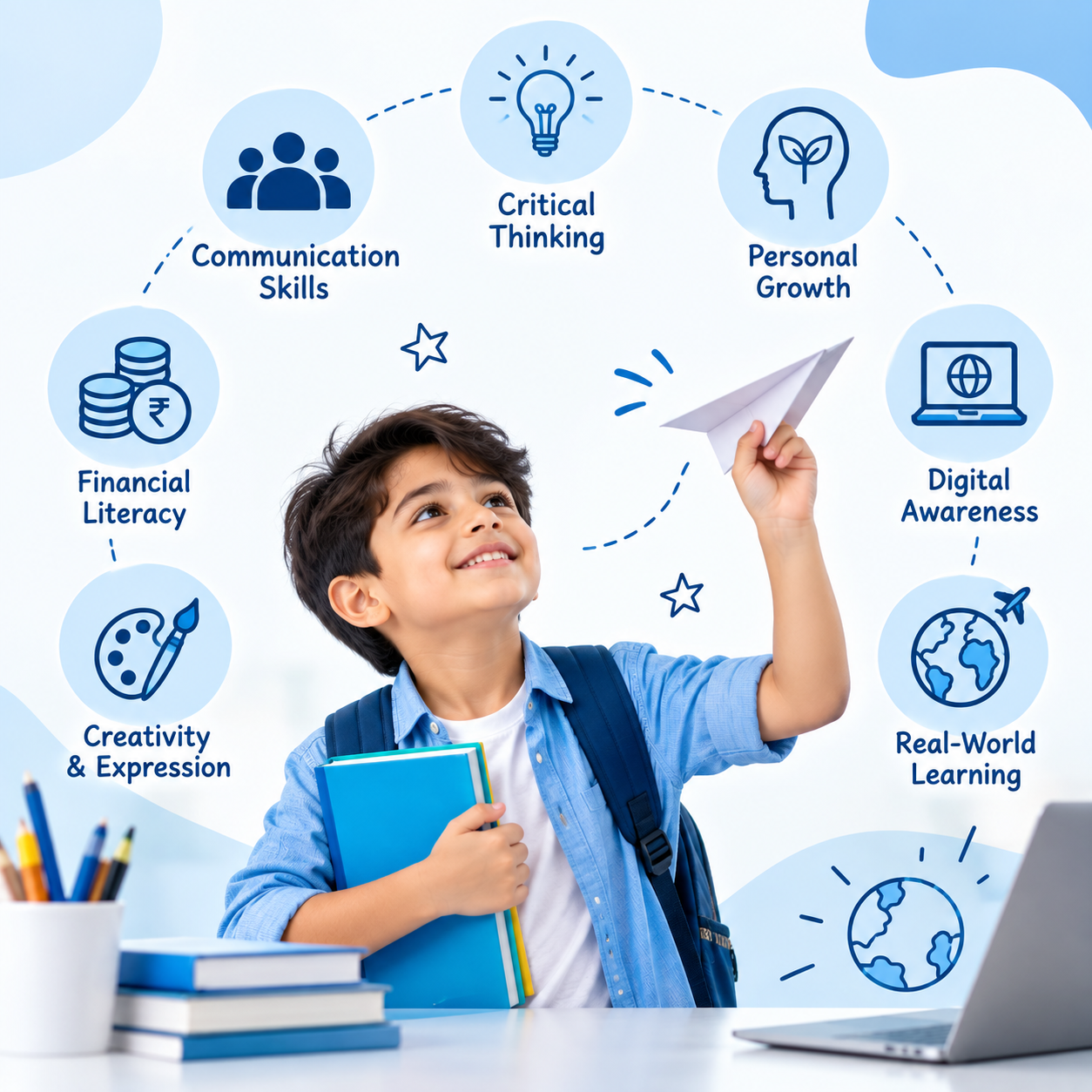
All three children are learning. They simply need to learn things that do not always fit into a chapter at the end of a textbook. This is where a 360 learning experience becomes important. School is not only preparing children for the next examination. It is also where they slowly learn to think independently, express themselves, handle money, use technology sensibly, work with others, and make sense of the world around them.
We will see how this 360 learning experience is explored by the students at one of the Schools in Gurgaon, The Navriti School. We will also understand how the school is using this approach in a way to upskill their kids in a holistic way.
Also Read| Learning Beyond Textbook: How it looks in schools?
A Good Question Is Sometimes More Valuable Than a Correct Answer
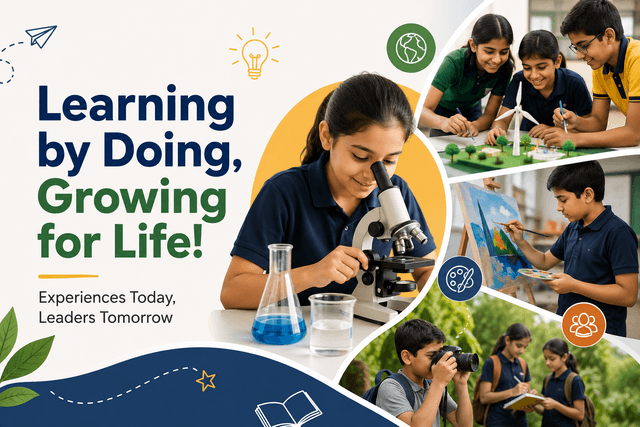
Imagine a science teacher showing children a plant and asking, “What will happen if we stop watering it?” One student may immediately give the textbook answer. Another might say, “Can we actually try it?” That second question is important.
John Dewey's philosophy of education was built around this connection between experience and learning. For him, children did not simply learn by receiving information; they understood things better when they could engage with them.
The same principle works outside science. A child can read about entrepreneurship, but asking them to think of something their classmates might actually pay for creates a completely different kind of learning. A child can learn the meaning of “communication” from a definition, but standing up and explaining an idea to ten classmates makes the lesson real.
A 360 approach creates more opportunities for such moments.
What Happens When School Makes Room for Real-World Questions?
Take financial literacy. Telling a child that “saving is important” may earn a nod and be forgotten by evening. Give them ₹500 and ask them to plan how they would use it for a class activity; however, suddenly there are questions.
“How much will this cost?” “Can we get it cheaper?” “Should we spend everything?”, “What if we need some money later?” This is learning through a situation rather than a definition.
Mahatma Gandhi's Nai Talim also placed importance on connecting education with practical activity and everyday life. The larger idea remains relevant: children understand many things more deeply when their hands, minds, and experiences are involved together.
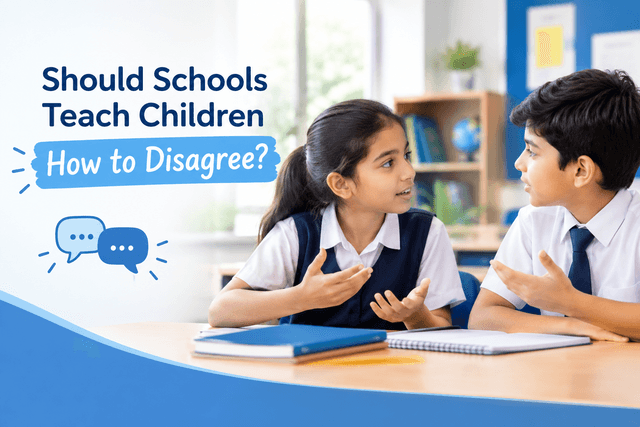
The same applies to communication. A child who has to present an idea, listen to someone disagree with them, and then respond politely is learning something that a worksheet on “communication skills” cannot fully teach.
Children Also Need to Learn How to Navigate the Digital World
For today's children, digital awareness is no longer an optional extra. A child may know how to open an app before they know what an advertisement is trying to make them buy. They may be able to use AI tools without understanding when the information produced by them needs to be checked.
This is why digital learning needs to go beyond teaching children how to operate technology. They need to ask questions such as: Is this information reliable? Why am I seeing this content? Should I share this? What happens to the information I put online? This is where digital wellness becomes part of education rather than simply a conversation parents have at home about screen time.
Different Children Find Confidence in Different Places
There is also something else a 360 learning experience recognises: children do not all shine in the same setting. The child who rarely raises a hand in Mathematics might happily explain an idea during a speaking activity. The student who dislikes writing long answers might become completely absorbed while making something with their hands. Another may discover an interest in technology after experimenting with how AI works.
This idea has roots in several educational philosophies, including Rabindranath Tagore's belief that education should allow children room for curiosity, creativity and exploration rather than confining learning to rigid academic boundaries.
The goal is not to turn every child into a public speaker, entrepreneur or technology expert. It is to give them enough different experiences to discover what interests them and where they need to grow.
Also Read | Experiential Learning and Robotics make Children Curious
How The Navriti School Brings This Approach to Gurgaon
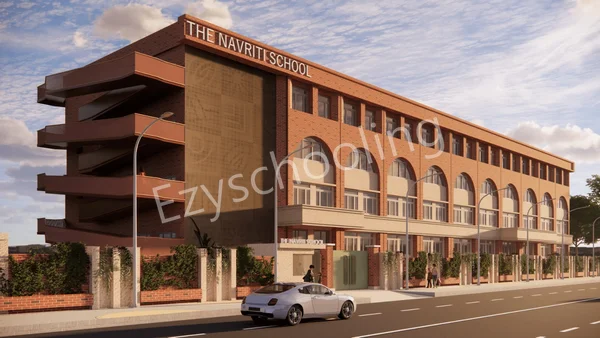
This broader idea of learning can be seen in the programmes offered at The Navriti School in Gurgaon.
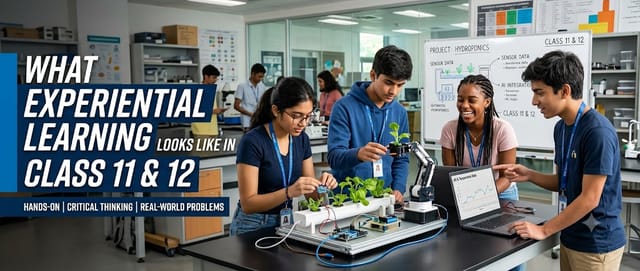
At the Innovation & Exploration Hub, students get a space to experiment, investigate and build rather than only read about ideas. A question such as “Can we make this work differently?” becomes the starting point for exploration.
The Young Entrepreneurs & Investors Club brings financial literacy and leadership into a practical setting. Instead of treating money as something children will understand “when they grow up,” the programme gives them an opportunity to start thinking about entrepreneurship, investment and decision-making earlier.
Then there is SpeakUp & SkillUp, which focuses on communication and public speaking. For a student who has a good idea but gets nervous the moment everyone looks at them, practising that skill repeatedly can make a real difference.
The Digital Wellness Programme addresses the increasingly complicated relationship children have with technology, while the AI Techno Club gives students an opportunity to explore a technology that is already becoming part of everyday life.
What ties these programmes together is not another set of subjects. It is the idea that a child's education can have more than one doorway into learning.
Because School Is Also Preparation for Life
Think about what happens after school. A young person will eventually have to explain an idea during an interview, decide how to spend their first salary, work with someone whose opinion is completely different from theirs, use technology responsibly, and perhaps even create something of their own.
Nobody wants their child to reach that stage knowing only how to reproduce an answer from a textbook. A 360 learning experience does not make academics less important. It gives those academics somewhere to go.
At The Navriti School, one of the CBSE Schools in Gurgaon, the Innovation & Exploration Hub, Young Entrepreneurs & Investors Club, SpeakUp & SkillUp, Digital Wellness Programme, and AI Techno Club bring different pieces of that larger education together. Because sometimes the most important lesson at school is not the one a child writes in an examination. It is the one they eventually use when nobody is giving them the answer.
To know more about other schools in Gurgaon, click on the link below

 as a preferred source on