









Education today is not really limited to just textbooks, classroom lectures, and exam papers anymore. Parents are getting more and more focused on finding schools that can prepare their children for academic results, but also for real-life problems. They want their children to learn not just by staying in the classroom but also by engaging with the world outside class.
This is exactly where experiential learning is important; it has become one of the most useful methods in modern education. So, today we will explore how schools that offer experiential learning can help as one of the prominent schools in Gurgaon, Vasant Valley School follows the same mindset by offering a space where students are encouraged to learn and understand not by memorising books but by experiences.
Also Read| Why Do Children Need Experiential Learning?
What Is Experiential Learning?
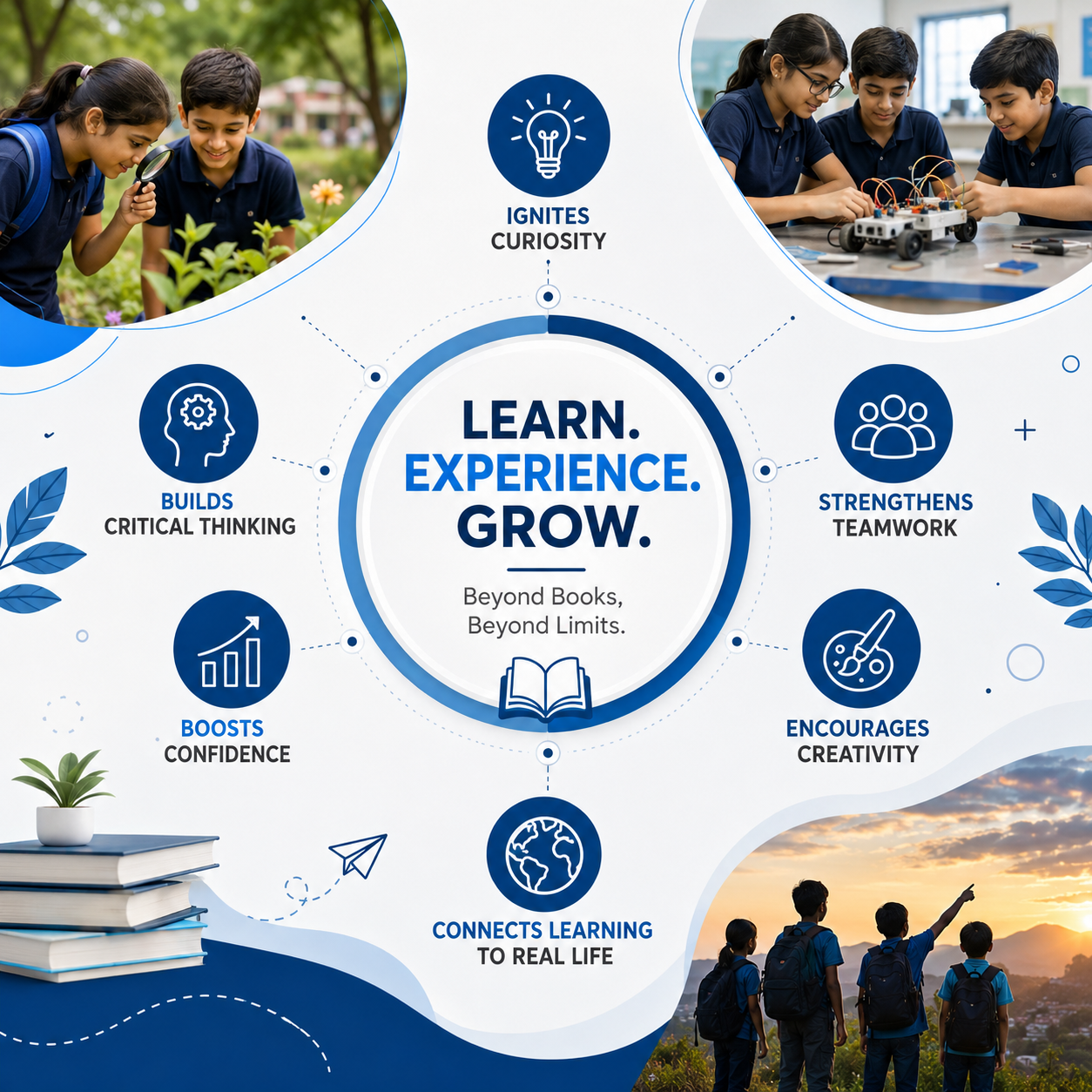
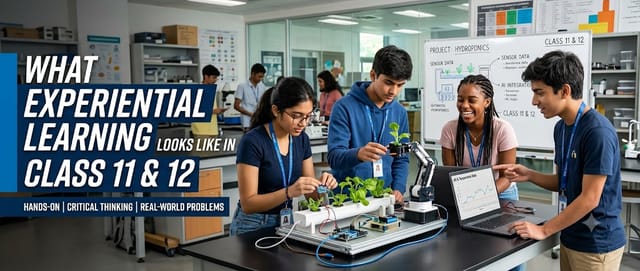
Experiential learning is a student-based approach where learning is done through doing actions, observing actions, reflecting upon actions, and finally applying actions. Instead of passively receiving information, students become active participants in their own educational journey. They start doing rather than just listening.
This approach can include activities such as:
- Conducting science experiments to understand concepts like reflection, absorption, etc.
- Working on interdisciplinary projects that involve group discussions and interaction.
- Participating in debates and discussions to boost confidence for public speaking
- Exploring nature through educational trips and understanding that nature is the best guide.
- Creating art, theatre, and music performances for a creative mind and responsiveness.
- Solving real-world challenges through teamwork to make them better decision-makers.
By connecting classroom concepts with practical experiences, students gain a deeper understanding of what they learn and why it matters.
Benefits of Experiential Learning
Experiential learning offers several advantages that are not limited to academic achievement. It makes them confident, independent decision-makers. Here we have mentioned some of the benefits of experiential learning.
1. Makes Learning More Meaningful
Imagine studying how white sunlight is one of the reasons for the rainbow formation. It will be fascinating. But once you read about it, two things can happen: you would like to know more about the whole process, or since it is just written in a book and you couldn’t imagine how it would happen, your curiosity is totally killed. But what if a teacher actually shows the phenomenon of dispersion of white light into a rainbow? It will instantly drive curiosity. And you will read more and more about it. This curiosity-building makes experiential learning even more beautiful.
2. Develops Critical Thinking and Problem-Solving Skills
The future belongs to individuals who can analyse situations, ask questions, and solve problems efficiently.
Experiential learning gives students opportunities to:
- Explore multiple solutions to a problem
- Think independently instead of relying on others' opinions
- Fact-check evidence before making decisions
- Work on self-improvement
3. Builds Confidence and Independence
Every child gains confidence when they are trusted to take responsibility for their own learning, through presentations, research projects, collaborative assignments, and creative activities. Experiential learning helps students develop:
- Self-confidence
- Leadership qualities
- Decision-making abilities
- Responsibility for their own learning
4. Encourages Better Communication and Teamwork
Success in today’s world doesn’t just rest on individual knowledge; it also really depends on being able to work with other people. This is where experiential learning comes into play as it naturally strengthens important interpersonal skills, including:
- Active listening
- Respect for different perspectives
- Effective communication
- Collaboration and teamwork
- Empathy and mutual support
5. Sparks Creativity and Innovation
Remember, we discussed the example of dispersion of white light. Now imagine a student, out of curiosity, starts thinking, why does only white sunlight disperse into different colours? Can we do this with a torch? Or can we simply create a rainbow by any other source? Or what if water is not here for light dispersion; can any other liquid also do the same? All these questions will come to the minds of the students only if they understand the base and core of any topic. This will eventually build creativity and innovative skills in kids, and hence it will make learning enjoyable.
Also Read| How Experiential Learning Shapes Education
How Vasant Valley School Brings Experiential Learning to Life
At Vasant Valley School, experiential learning is not viewed as an occasional classroom activity; it is an integral part of the school's educational philosophy.
The curriculum encourages students to become active participants in their learning through inquiry, exploration, reflection, and collaboration. Rather than focusing solely on textbook knowledge, students are encouraged to make meaningful connections across subjects and apply their learning in practical contexts.
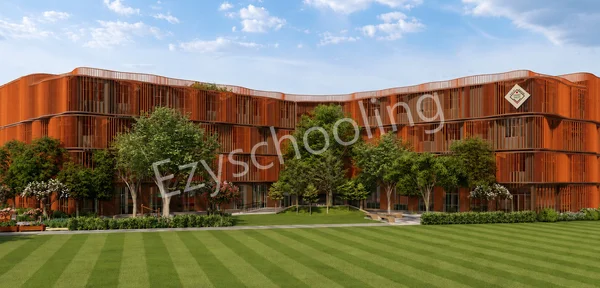
The school's approach is reflected through:
- Inquiry-based classroom discussions that encourage curiosity
- Interdisciplinary learning experiences connecting different subjects
- Opportunities for creative expression through art, music, and theatre
- Collaborative projects that promote teamwork and leadership
- Environmental and community-based learning initiatives
- Sports and co-curricular programmes that contribute to holistic development
By creating an environment where students are encouraged to question, explore, and discover, Vasant Valley School helps learners develop both academic excellence and essential life skills.
A truly experiential learning environment often demonstrates the following characteristics:
- Students actively participate instead of simply listening to lectures.
- Teachers encourage questions and discussions rather than rote memorisation.
- Classroom learning is connected to real-life situations.
- Projects, presentations, and collaborative assignments form a regular part of the curriculum.
- Arts, sports, and co-curricular activities are valued alongside academics.
- Students are encouraged to reflect on their learning and think independently.
For parents seeking an education that balances academic rigour with holistic development, experiential learning offers a meaningful path forward. As one of the schools in Gurgaon, Vasant Valley School fosters an environment where students are encouraged to explore, question, and grow into thoughtful, capable, and compassionate individuals who are prepared not just for examinations, but for life itself.
Want to know more about this school and other schools in Gurgaon






 as a preferred source on