







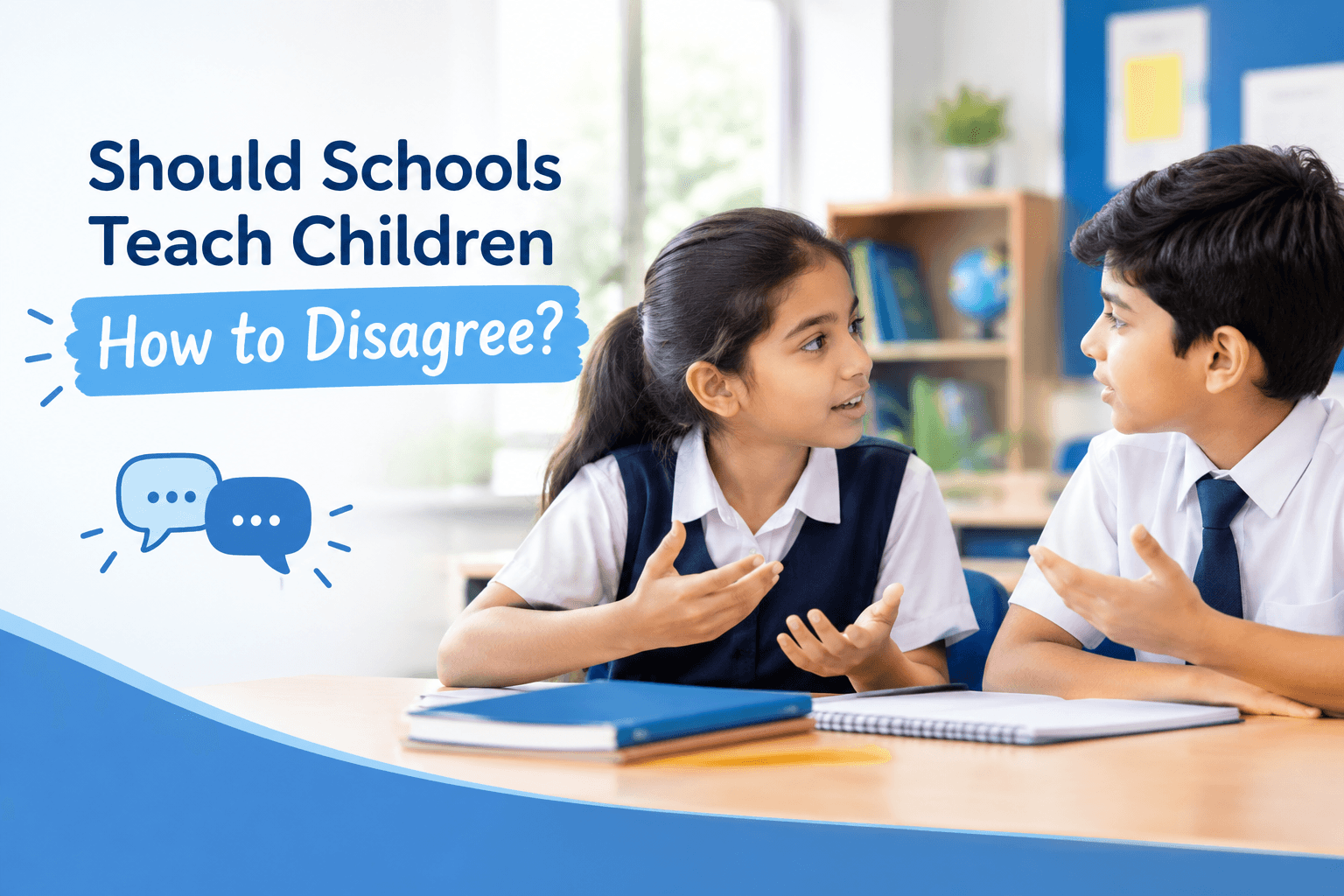

Every parent has probably witnessed this at home. Two children are playing together. Everything is fine until one decides that the rules of the game should change. The other immediately says no. A few sentences later, nobody is listening to anybody.
It is easy to dismiss these moments as childish arguments. But there is something important hiding inside them. Children are constantly learning how to deal with people who don't think like them.
And honestly, that is not an easy skill. We often tell children to be polite, share their things and respect others. But respecting someone does not mean agreeing with everything they say. At some point, a child needs to learn something much more complicated: “I can disagree with you and still respect you.” Perhaps schools have a role to play here. Today we will take one example of one of the best schools in Gurgaon, Presidium School, Sector 40, to understand this better.
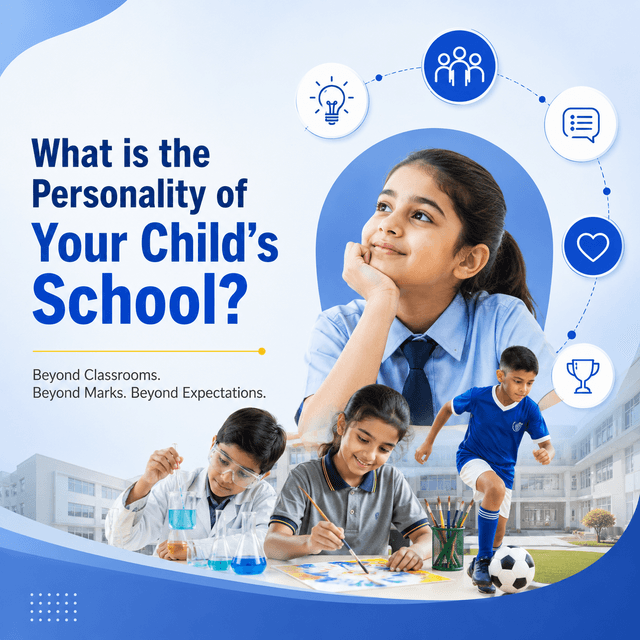
Also Read | Personality of your Child's School decides how your child will become
The Problem With Always Being “Right”
Think about a child who answers a question in class and gets corrected by another student. There are two ways this can go. The child might become defensive: “No, I'm right.” Or they might pause and ask, “Why do you think I'm wrong?”
That second response sounds small, but it represents a completely different way of thinking. It is the difference between protecting an answer and examining an idea.
Psychologist Daniel Kahneman's work on thinking and cognitive biases gives us a reason to be cautious about our own certainty. Human beings are not perfectly rational machines. We make quick judgements, rely on assumptions and sometimes look for information that confirms what we already believe.
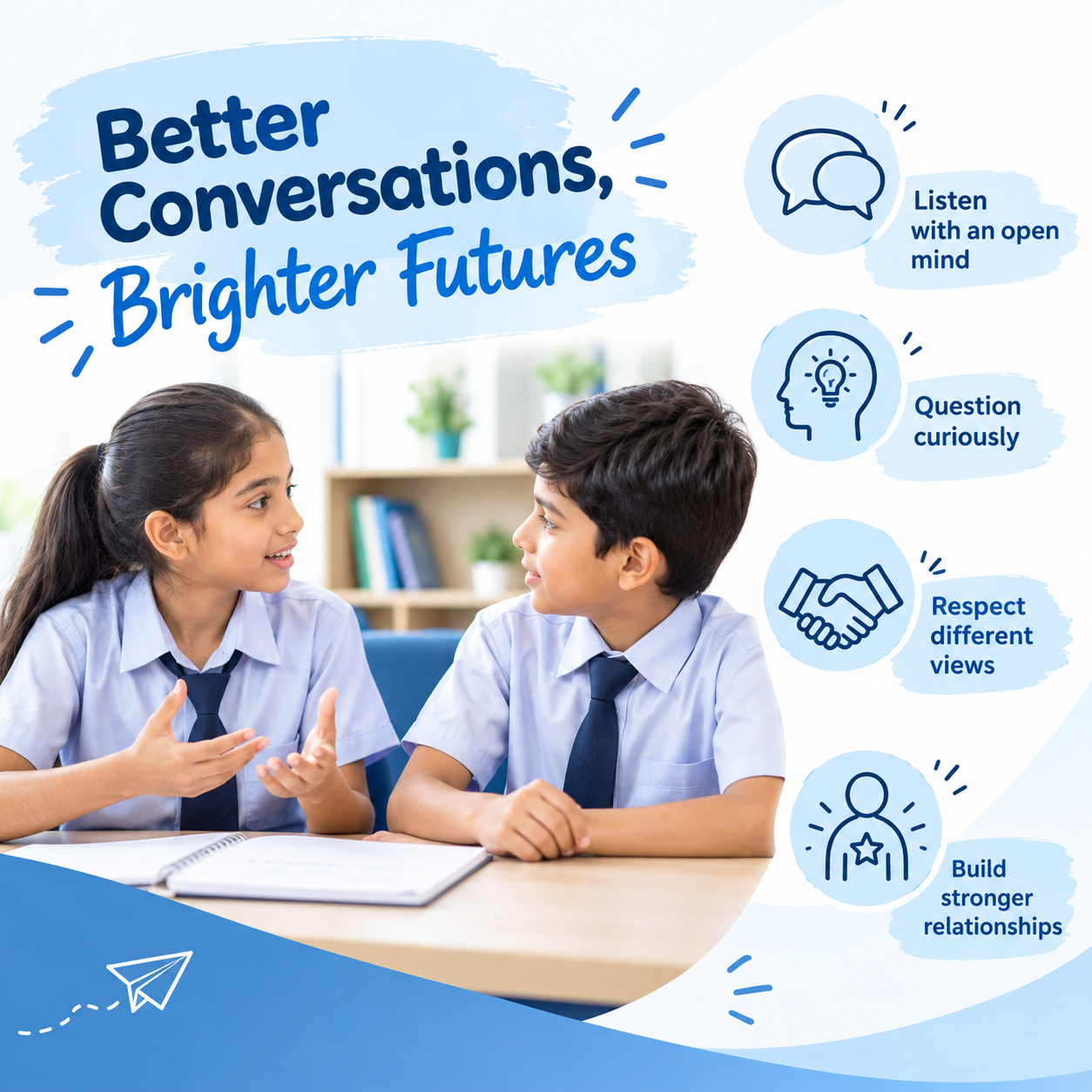
Children are learning these habits too. So perhaps one of the most useful things education can teach is not simply how to form an opinion, but how to check your own opinion.
What Happens When a Child Hears a Different Opinion?
Let's take a very ordinary classroom question: “Should students be allowed to use phones in school?” One child says yes because phones can help with research. Another says absolutely not because they are distracting.
A third says, “Maybe they should be allowed only for certain activities.” There isn't necessarily one magical answer sitting at the back of the textbook. The interesting part is what happens next.
If students are encouraged to explain their reasoning, they have to listen to something they may not agree with. They may discover that the other student has a point. They may strengthen their original argument. Or they may change their mind.
All three outcomes are useful. This is close to the spirit of Socratic questioning, where understanding develops through asking questions rather than simply accepting the first answer offered. Instead of telling a child, “Your opinion is wrong,” we can ask:
What makes you think that? What evidence do you have? Could there be another explanation? What would make you change your mind? These questions don't weaken a child's thinking. They make it deeper.
A Good Argument Is Not a Fight
Children need to learn this distinction early. When someone says, “I don't agree with you,” it does not automatically mean, “I don't like you.” That separation between the person and the idea is one of the foundations of healthy disagreement.
A parent might see it during something as simple as choosing a family movie. One child wants an action film, another wants animation. Instead of immediately stepping in and choosing for them, imagine asking both children to explain their choices and find something they can agree on.
It may take longer. But they are practising negotiation, listening and compromise without even realising it. These are not skills that suddenly appear when a child enters the workplace at 22. They are built through hundreds of ordinary interactions much earlier.
What Dewey Got Right About Education
American philosopher and educator John Dewey had a particularly interesting view of education. He did not see learning as simply filling a child's mind with information. He believed experience and participation were central to how children learn.
That idea feels especially relevant here. A child can read ten rules about respectful communication and still interrupt everyone during an argument. Another child may learn it by actually participating in a discussion where they have to listen, respond and reconsider.
The second child has experienced the problem. And experience can be a stubborn but effective teacher. This is also where David Kolb's experiential learning cycle fits naturally. Experience is followed by reflection, understanding and another attempt. In other words, children don't just need to know how to disagree; they need opportunities to try, get it wrong, think about what happened and try again.
Sometimes, Changing Your Mind Is a Victory
This may be one of the hardest lessons for children — and adults.
We often praise confidence. We tell children to stand up for themselves and speak their minds. Those are useful qualities, but there is another side to confidence that receives less attention: being secure enough to say, “I hadn't thought about it that way.”
The philosopher Karl Popper's idea of falsifiability also offers an interesting way to think about this. Good ideas should not be protected from questioning. They should be open to being tested. While children obviously don't need a philosophy lecture on Popper, the underlying habit is valuable: What evidence could show me that my assumption is incomplete?
Also Read | Why learning through events and activities is important at schools
How Presidium School, Sector 40, Gurgaon Creates Space for This Kind of Learning
At Presidium School, Sector 40, one of the best CBSE schools in Gurgaon, activities such as debates, Youth Parliament and student leadership provide children with opportunities to express viewpoints, listen to opposing perspectives and participate in discussions around wider issues. The school's public-speaking programme includes debate as part of developing students' ability to organise and communicate their thoughts, while its Youth Parliament gives students an opportunity to engage with public issues and different viewpoints. Its Students' Council also gives students a role in representing their peers and participating in school life.

For a child, these experiences can quietly teach something that no chapter on “good behaviour” ever could. Other people will not always agree with you. You will not always agree with them either. That is okay. What matters is whether you can stay curious when someone challenges your thinking, listen without immediately becoming defensive and speak without putting the other person down.
Maybe that is the kind of confidence we should want for children — not the confidence to always have the last word, but the confidence to listen, question, disagree and still walk away respecting the person sitting across the table.
To know more about other schools in Gurgaon, click on the link below



 as a preferred source on