







A student in Gurgaon may spend the morning discussing a robotics project and the afternoon arguing with a classmate about whether technology actually makes life easier. Somewhere in London, another student may be having a similar conversation, only from a very different point of view.
Neither student needs to be right. Sometimes, the useful part of learning is simply discovering that someone else sees the same question differently.
This is one reason parents looking at Schools in Gurgaon are increasingly interested in what happens beyond the syllabus. International exposure, when done well, is less about giving children a list of countries to know and more about giving them people, ideas and problems that are unfamiliar.
Also Read| How Academic Excellence in Schools Can Impact Students' Future?
Children Learn Differently When Someone Challenges Their View
Children are naturally influenced by their surroundings. The neighbourhood they grow up in, the language they speak, the festivals they celebrate, and even the problems their families discuss at home shape how they understand the world.
Then comes a student from another background who says, “But why do you think that?” It can be a surprisingly powerful question.
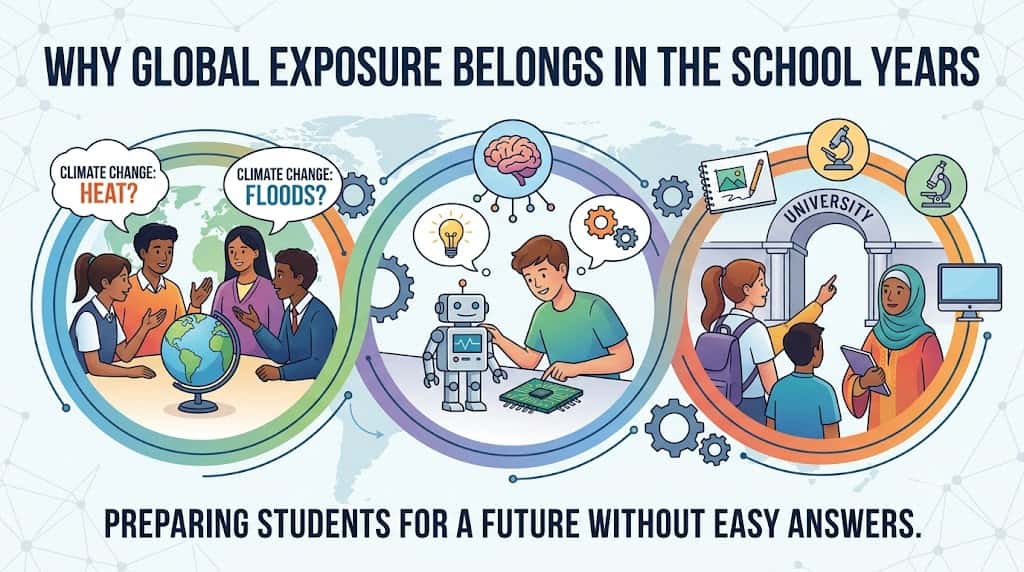
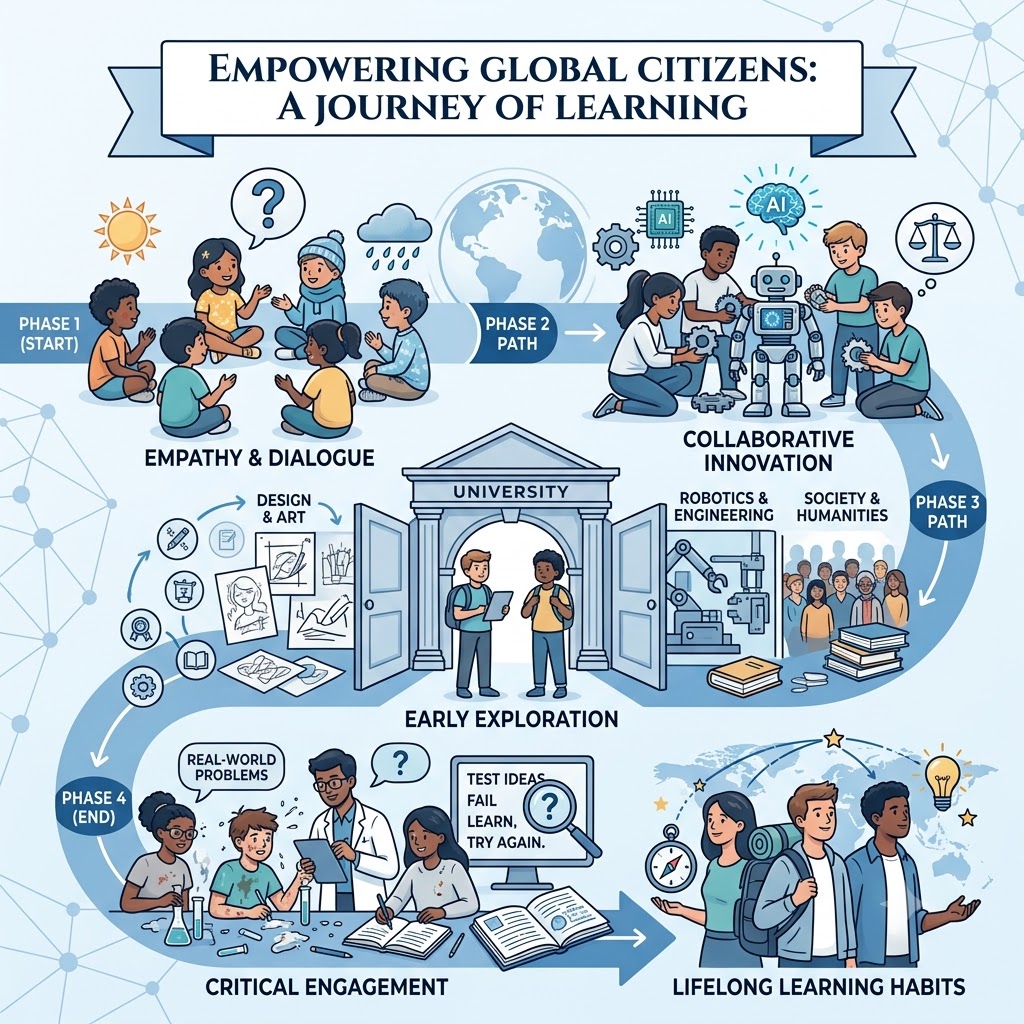
A conversation about climate change, for example, sounds different when students compare the environmental concerns of their own communities with those of children elsewhere. One may talk about extreme heat. Another may talk about flooding. Someone else may be more concerned about transport or access to clean energy. The topic remains climate change, but the classroom suddenly has several versions of the same story.
That kind of exchange develops something a textbook cannot easily teach: the habit of looking at an issue before deciding what to think about it.
John Dewey's ideas around experiential learning fit naturally here. Children tend to understand an idea better when they have something concrete to experience, question, or discuss. A conversation with someone from a different cultural background can become one such experience.
Research Gives Curiosity Somewhere to Go
There is a big difference between asking a child to “learn about AI” and giving them a problem where AI might actually be useful.
Take robotics. A student building a simple machine may begin with a technical question: How do we make this work? But once the project develops, other questions appear. Could it help someone with a disability? Would it be affordable? What happens if the machine makes the wrong decision?
The project has quietly moved beyond coding. It now involves design, mathematics, ethics and human behaviour. Collaborative research can create more opportunities for this kind of thinking. When school students get exposure to researchers or university communities working on current questions, they see something that ordinary lessons sometimes hide: real research is messy. People test ideas, get things wrong, change direction, and try again.
For a teenager, seeing that process can be reassuring. Not knowing the answer immediately is no longer a sign that they are “bad” at a subject. It can simply be the beginning of investigation.
Cultural Diversity Is More Than a Celebration Day
Schools often celebrate diversity through food, clothing, music, and festivals. These are enjoyable ways of introducing children to different cultures, but there is another side to diversity that matters even more.
It is learning how to sit with a different opinion. A student may find that another child approaches family, education, success, or even classroom discussions differently. The instinctive response may be to compare: We don't do it that way.
With enough interaction, that sentence can become a question: Why don't we do it that way? That change may seem small, but it is an important part of growing up.
Rabindranath Tagore's educational philosophy placed considerable value on connecting learning with the wider world. His ideas were rooted in the belief that education should not make a child feel separated from life outside the classroom. In today's connected world, that principle feels particularly relevant.
University Exposure Can Start Before College
University often appears to students as something that happens after school: choose a course, fill out applications, and move on.
Early interaction with universities can make the picture less abstract. A student interested in drawing might discover that design has links with technology, fashion, architecture, and communication. A teenager fascinated by machines may encounter research in robotics that goes far beyond what is taught in a regular science class. Another student interested in society may discover that questions they debate with friends can become subjects of serious academic research.
These encounters do not have to decide a child's career. In fact, they shouldn't. Their value lies in helping students discover possibilities they may not have considered otherwise.
Also Read| How "Differentiation" can help in unlocking the child's true potential
How is Delhi Public School, Gurgaon Implementing this Approach?
Delhi Public School, one of the top schools in Gurgaon, gives students several opportunities to engage with ideas, cultures and learning environments beyond their immediate surroundings. The school has conducted international exchange programmes with partner schools in countries including Denmark, Spain, Germany, Poland and France. These programmes have included virtual interactions, reciprocal visits, cultural activities and research-based projects, allowing students to learn directly from peers in other countries rather than only reading about different cultures in textbooks. For example, its Danish exchange involved students working together on themes such as social inclusion and environmental protection, while its Spanish exchange included exposure to the Spanish education system, art, science and design.
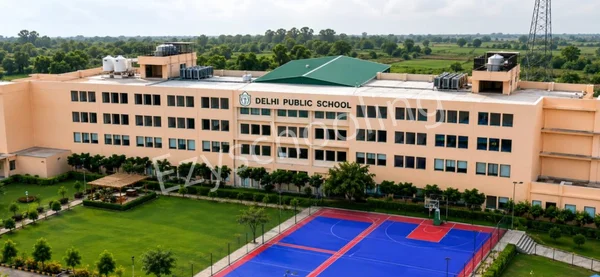
The global exposure also extends into the school's academic and co-curricular ecosystem. Its Model United Nations programme introduces students to global issues while developing research, public speaking, problem-solving and consensus-building skills. The school also offers TEDx Youth, an IT and robotics-focused NODE club, science clubs and other student-led programmes. Its published university acceptances include institutions across India, Europe, Australia and Canada, giving students visibility into different higher-education pathways.
If you want to know more about this school and others in the nearby area, Visit
 as a preferred source on