







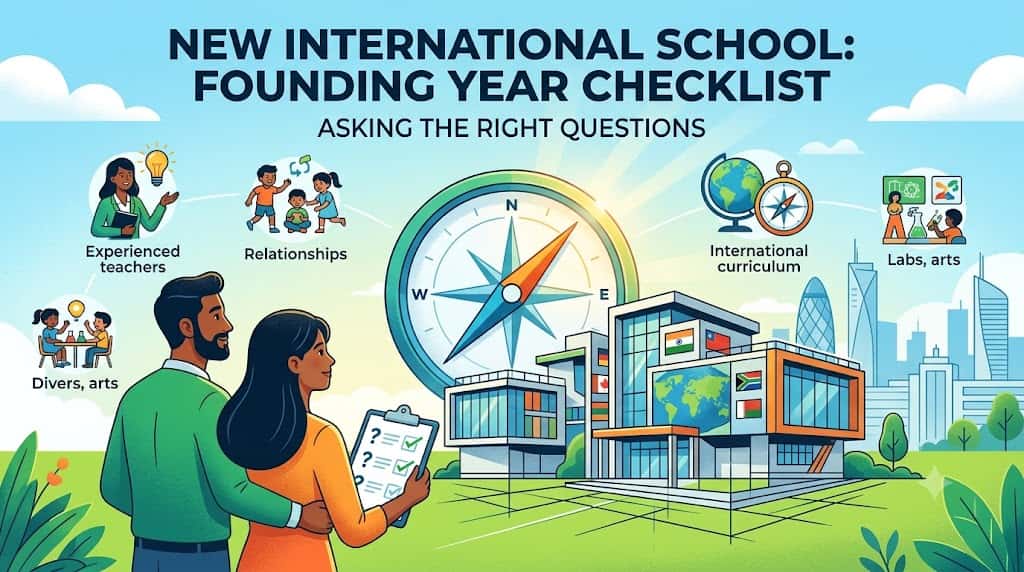

When parents explore the Top Schools in Gurgaon, a new international school can be hard to ignore. A fresh campus, modern facilities, an international curriculum and a new community can all sound exciting. But when the school is entering its founding year, parents naturally have a few more questions. How experienced are the teachers? How will the school build its culture? What will the first batch of students experience?
These questions do not mean that a new school is a risky choice. They simply mean that parents need to look beyond the brochure and understand what everyday school life will actually look like.
1. Look Beyond the New Campus and Check the Learning Environment
A brand-new campus can look impressive, but the building itself is only one part of a child's education. Parents should ask how classrooms, laboratories, libraries, sports spaces and technology will actually be used for learning.
For example, a science lab is useful when a child gets to test an idea rather than simply watch a demonstration. A technology room becomes meaningful when students use coding or robotics to solve a problem instead of only attending occasional workshops.
The physical environment also deserves attention. Research on classroom environments has linked factors such as lighting, acoustics, temperature and indoor air quality with aspects of teaching, learning and short-term academic performance, although the evidence does not establish that every physical factor directly improves long-term academic results.
Parents can therefore ask:
|
What to check |
What parents should find out |
|
Classrooms |
Are they designed for discussion, group work and focused learning? |
|
Labs and technology |
Will students regularly use them as part of lessons? |
|
Sports and arts |
Are these part of the timetable or only optional activities? |
|
Safety |
How are student movement, supervision and emergencies managed? |
|
Daily routine |
What does an ordinary school day actually look like? |
A useful test is simple: “Show me what my child's Tuesday will look like.” It often tells you more than a list of facilities.
2. Ask Who Will Teach Your Child and How Relationships Will Be Built
In a founding year, parents may focus heavily on the curriculum. That is important, but the person standing in front of the child every morning matters just as much.
Imagine two classrooms teaching the same mathematics topic. In one, the teacher explains the formula and moves on. In the other, the teacher notices that several students are struggling, changes the example and gives them another way to approach the problem. The syllabus may be identical, but the learning experience is not.
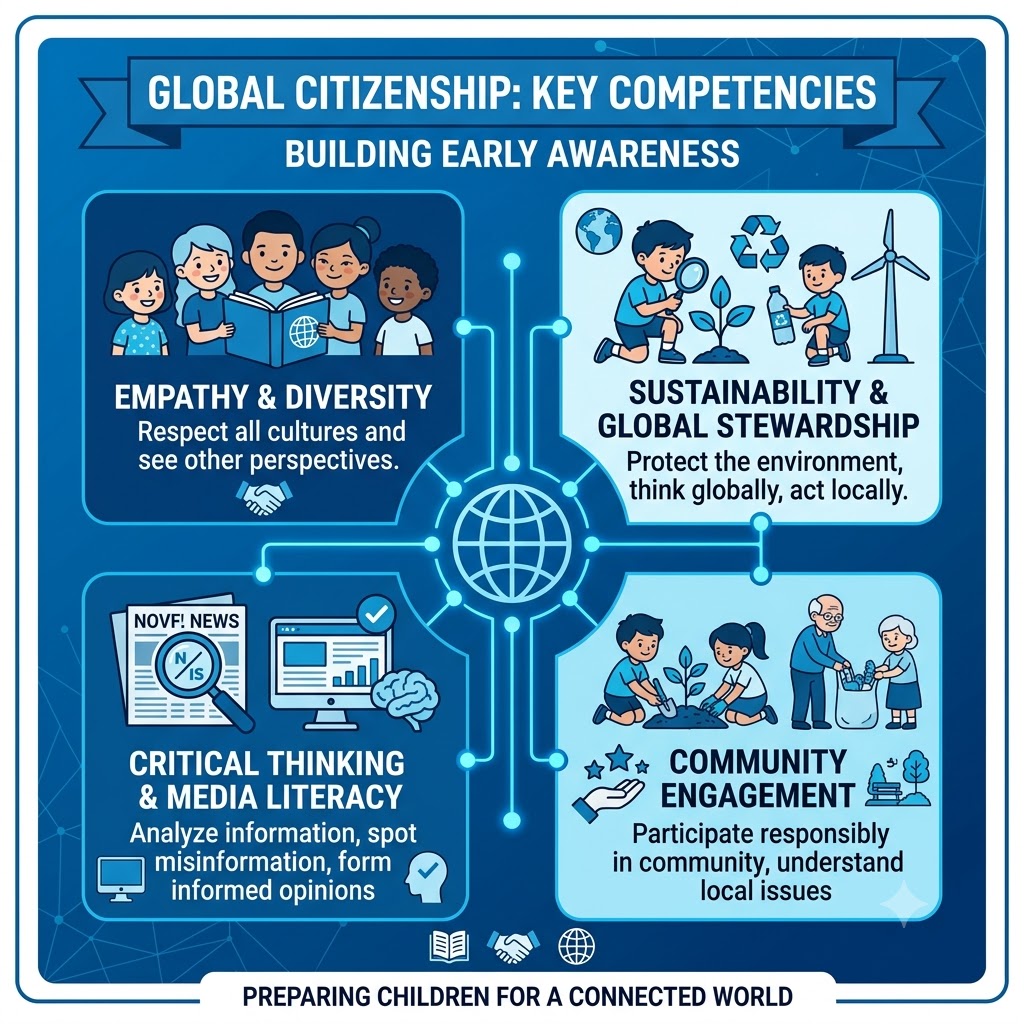
Research has consistently highlighted the importance of teacher-student relationships. A 2025 systematic review covering 26 meta-analyses and approximately 2.64 million pre-K–12 students found significant relationships between teacher-student relationships and outcomes including academic achievement, motivation, engagement, school belonging and wellbeing.
For a new school, parents can ask:
- Who are the teachers, and what experience do they bring?
- How does the school support new teachers in understanding its educational approach?
- How frequently will parents receive feedback?
- Who will a child approach when they are struggling academically or socially?
- What systems are in place to help children form friendships?
The last question is easy to overlook. Research on school transitions shows that relationships with teachers and peers can strongly shape how children experience a new school.
3. Understand What “International” Actually Means
The word international can mean very different things from one school to another. Parents should therefore look at the curriculum, assessment system and future pathway rather than choosing a school simply because it has an international label.
A useful comparison could look like this:
|
Area |
Questions parents can ask |
|
Curriculum |
Which curriculum will my child follow at each stage? |
|
Assessment |
How often are students assessed, and how is progress reported? |
|
Languages |
Which languages can children learn, and from what age? |
|
Technology |
Is technology used as a learning tool or mainly as a facility? |
|
Global exposure |
Will students engage with different cultures, ideas and perspectives? |
|
Future pathway |
What qualifications and university routes does the school prepare students for? |
Think of it like buying a train ticket. Knowing that the train is “international” is not enough; you also want to know where it goes, when it gets there and where you can change trains.
Parents should also check whether the school's planned senior years are already operational or will be introduced gradually. This becomes particularly important when a new school is starting with younger year groups and expanding over time.
4. Ask What the Founding-Year Experience Will Really Be Like
Being part of the first cohort can offer children something that an established school may not: the chance to help create traditions, clubs, student leadership systems and the culture of the new community.
But parents should also understand what is still developing.
Before admission, it is worth asking:
- Which programmes are available from the first year, and which will be introduced later?
- How will student feedback be collected?
- What will the parent-school communication system look like?
- How will the school respond if a planned programme needs to change?
- What support will children receive while the community is still taking shape?
Also Read| Why Multi‑Sensory Learning Matters in Schools?
How can Queen Elizabeth’s School, Gurugram be the best school for your Child?
For parents considering the Best Schools in Gurgaon, Queen Elizabeth's School, Gurugram is one example of a new international school taking shape around these questions. The school opened its Gurugram campus in August 2026, beginning with EY1 to Year 9 and planning to expand through Year 13. Its stated pathway includes an International Curriculum leading to IGCSE and A Levels, while its programmes include coding, AI, extended reality, esports, global citizenship and pastoral support. The school also offers day, weekly and full boarding options, giving families different residential models to consider.
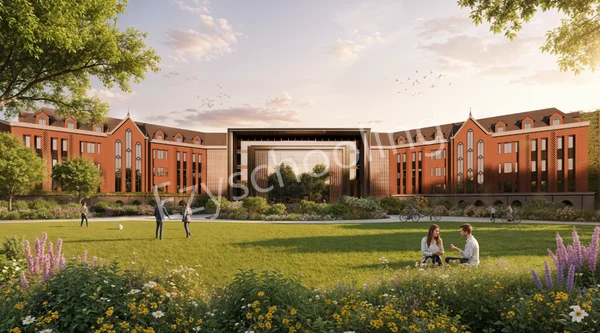
Choosing a founding-year school is ultimately less about whether everything is already familiar and more about whether parents understand what the school is building. A beautiful campus may attract attention, but curriculum clarity, teachers, safety, relationships, daily routines, and future pathways will shape a child's actual experience.
So, before filling out an admission form, visit the campus, ask detailed questions, and request a picture of an ordinary school day. The right questions can help parents judge whether a new school fits their child's needs, rather than simply choosing it because everything looks new.
Want to know more about this school and other schools in Gurgaon


 as a preferred source on