





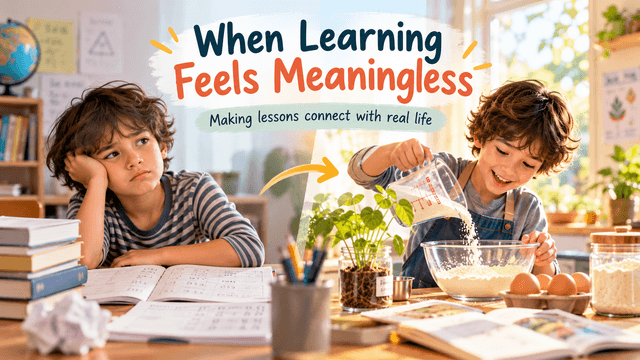
Your child can explain evaporation perfectly from their science textbook. They know that water changes into vapour when heated. But when you ask why wet clothes dry faster on a windy day, they struggle to answer.
This is something many parents notice. Children may remember scientific definitions and score well in examinations, yet find it difficult to connect those lessons with everyday situations.
For parents exploring Top Schools in Delhi, understanding how children learn science beyond textbooks is an important part of evaluating education.
Why Is Reading About Science Different From Experiencing It?
Textbooks help children understand scientific concepts, but reading about something is different from observing it happen.
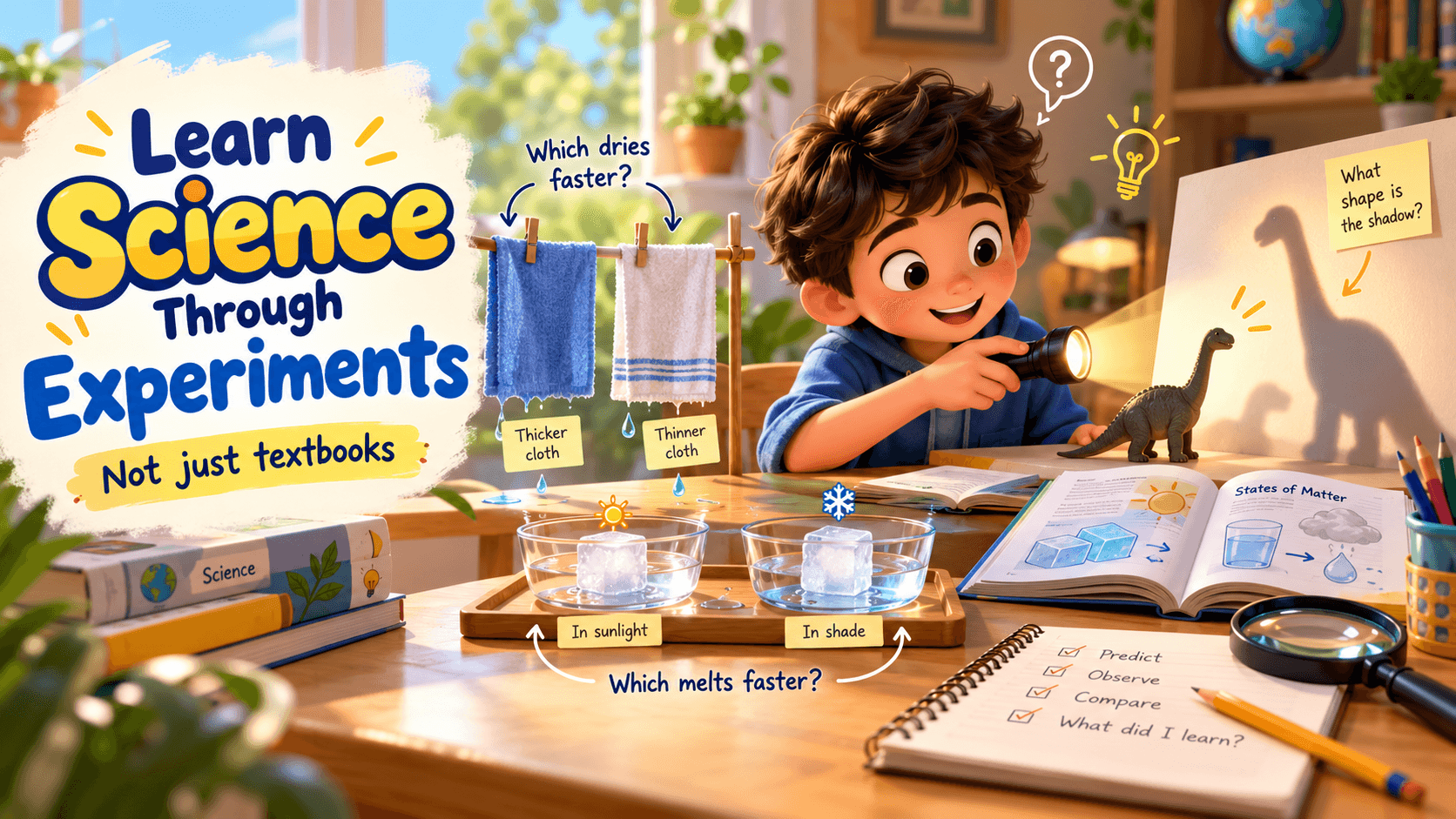
Consider a child learning about shadows. A textbook explains that shadows form when an object blocks light. However, when children place objects near a light source and change their positions, they can observe how shadows change in size and direction.
The concept becomes easier to understand because they have seen it happen.
This approach is supported by India's National Curriculum Framework for School Education 2023, which encourages hands-on learning and connecting scientific knowledge with real-world observations.
Experiments also give children opportunities to ask questions that may not arise while reading.
Why did the shadow become longer? What happens when the light moves closer?
Such questions encourage children to explore the reasoning behind scientific concepts rather than simply remembering explanations.
What Do Children Actually Learn When They Conduct Experiments?
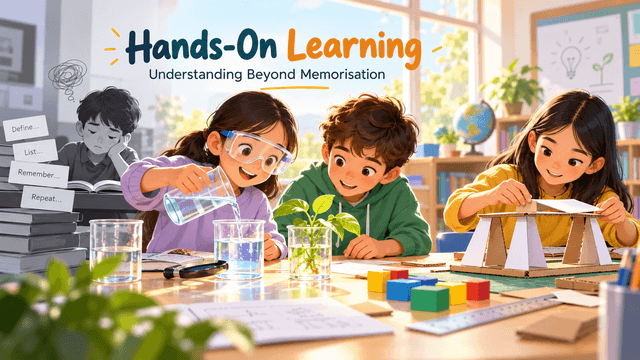
Experiments involve more than following instructions and observing results. They introduce children to important parts of scientific thinking.
Imagine a classroom activity where students are asked to investigate how water affects seed germination.
Some seeds receive sufficient water, while others receive very little. Students observe the changes over several days.
During this activity, children practise several skills:
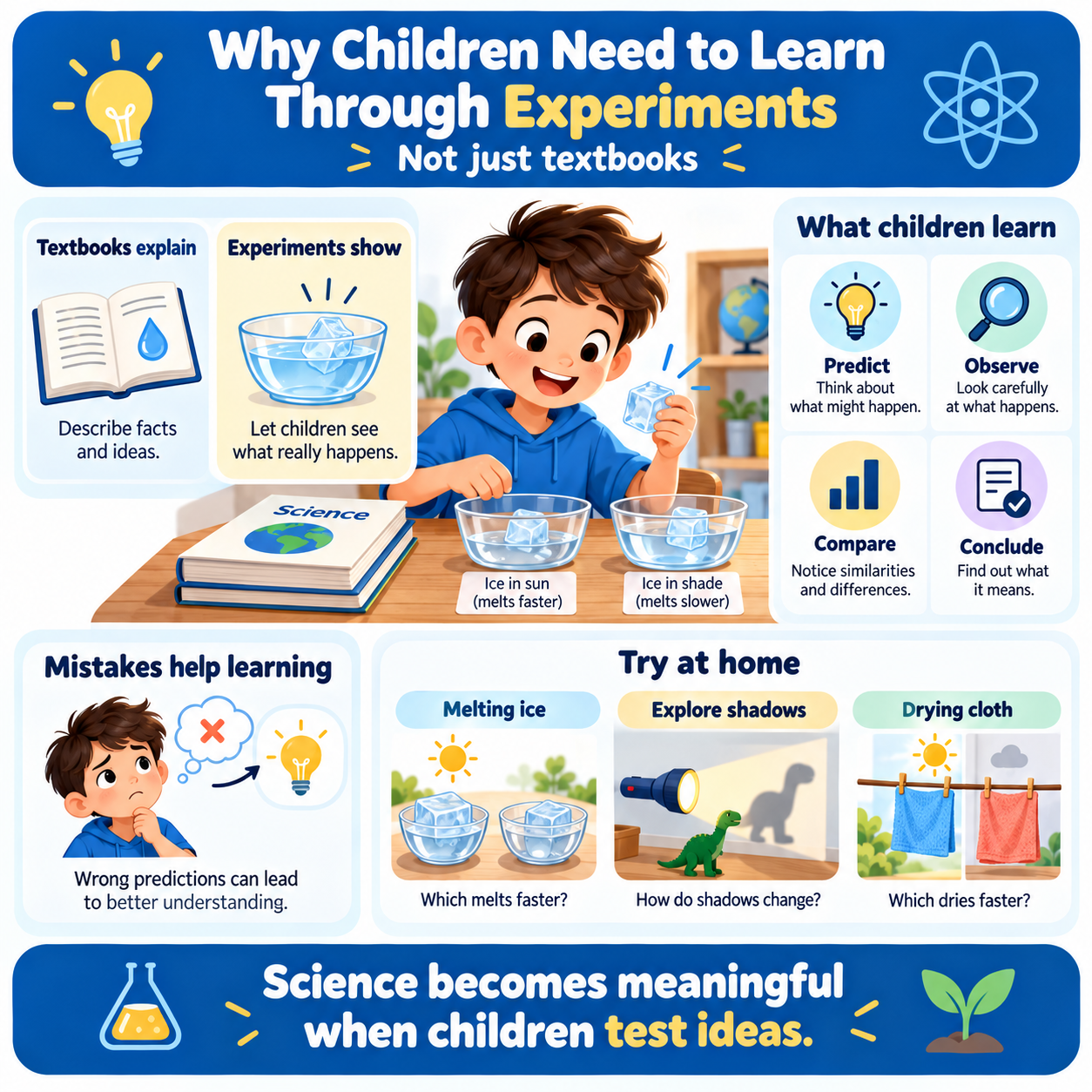
- Making predictions: They think about what might happen before beginning the experiment.
- Observing carefully: They notice changes in the seeds instead of assuming every seed will behave identically.
- Comparing results: They examine whether their observations match their original predictions.
- Drawing conclusions: They use evidence to explain what happened and consider other factors that might have influenced the results.
These activities also teach patience. Scientific observations do not always produce immediate answers.
According to the Education Endowment Foundation's guidance on improving secondary science, children often develop incorrect assumptions about scientific concepts. Teachers can help them reconsider these assumptions by presenting evidence and discussing their observations.
Experiments become particularly useful when children understand both what happened and why it happened.
Why Should Children Be Allowed to Make Mistakes During Experiments?
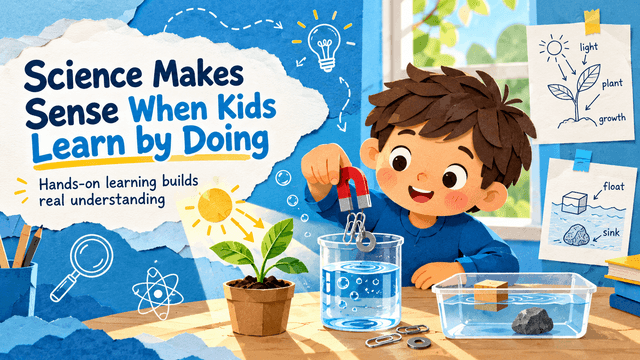
Imagine a child predicting that every heavy object will sink in water.
During an experiment, they notice that a large wooden block floats while a much smaller metal object sinks.
Their prediction was incorrect, but this creates an opportunity for learning.
Instead of immediately providing the explanation, a teacher might ask, "What is different about these two objects?"
The child begins examining other factors, including the materials and how the objects interact with water.
This process helps children understand that a wrong prediction is not necessarily a failure. It can be the starting point for a better explanation.
However, experiments need proper guidance. Simply allowing children to explore without discussing the results may leave misunderstandings unresolved.
The important part is helping them connect their observations with accurate scientific knowledge.
How Can Parents Encourage Scientific Thinking at Home?
Children do not need expensive science kits or laboratory equipment to explore everyday scientific concepts.
Parents can encourage curiosity through simple, safe activities.
Observe melting ice: Place two ice cubes in different locations, such as a shaded room and a warmer spot. Ask your child to predict which will melt faster and explain the results.
Explore shadows: Use a torch and a small object to observe how changing the light's position affects the shadow. Encourage your child to describe what changes.
Investigate drying: Place two equally damp pieces of cloth in different conditions and compare how quickly they dry.
The goal is not to turn every activity into a formal science lesson.
Parents can simply ask three questions: What do you think will happen? What did you observe? Why do you think that happened?
These conversations encourage children to explain their ideas and consider different possibilities.
Adult supervision and age-appropriate materials are essential, especially when an activity involves water, heat or electrical equipment.
Understanding Practical Learning at PP International School, Pitampura
When choosing among the Best Schools in Delhi, parents can consider how schools balance textbook learning with practical understanding. PP International School (PPIS), Pitampura, Delhi, is one of the schools parents may explore while evaluating educational options for their children.

Understanding how a school approaches science education can help parents ask meaningful questions about classroom discussions, experiments and opportunities for students to explore concepts. The aim is to understand whether children are encouraged to connect academic knowledge with everyday experiences rather than focusing only on memorising information.
Conclusion
Science education should not require children to choose between textbooks and experiments. Both have important roles in learning.
Textbooks provide explanations, while carefully planned experiments help children observe, question and understand those explanations.
When children are encouraged to explore ideas, discuss unexpected results and ask thoughtful questions, science becomes more than a collection of facts to remember.
It becomes a way of understanding the world around them.
To know more about other schools in Delhi, click on the link below

 as a preferred source on