







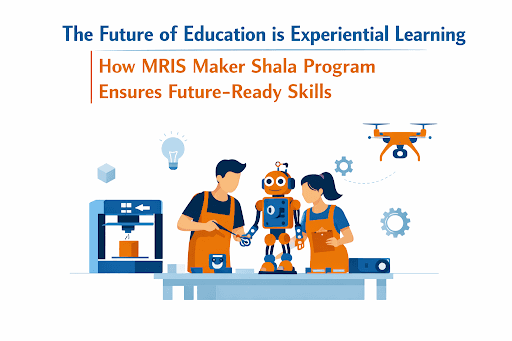

When it comes to the future of the current young generation of humans and how we are going to change in the coming decades, one very common question that every modern parent asks is what their career will look like. But what if the education that your child might be taking does not even exist yet? To be fair, this particular sentiment has been holding true for a long time. In this fast-moving, technology-driven world, the point of education has been ever-evolving. In fact, in an article published by The Times of India, multiple jobs that exist now in our times are something that we couldn't even imagine a decade ago.
However, the problem is that the jobs that the students are preparing for might not exist in the future. In many classrooms, learning is still confined to textbooks, lectures, and examinations. And thus the question that we all should be asking is whether our children are preparing for the future or for the upcoming tests. But on a fair note, we are seeing a change in the Indian education system, where it is slowly evolving.
Through this article, we wanted to talk about Experiential Learning. We’ll get into the need for experiential learning and how it helps give a student a better approach to learning. We’ll also take an example of one of the best schools in Faridabad, Manav Rachna International School, Sector 14 and how the school’s Maker Shala lab is creating a futuristic education where students don’t just focus on learning but on exploring overall.
Addressing a Gap
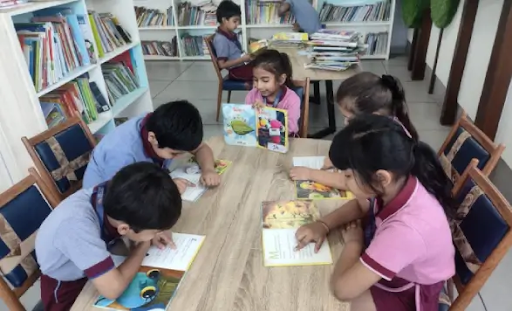
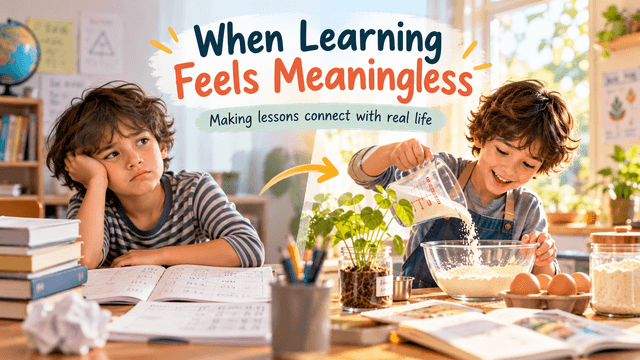
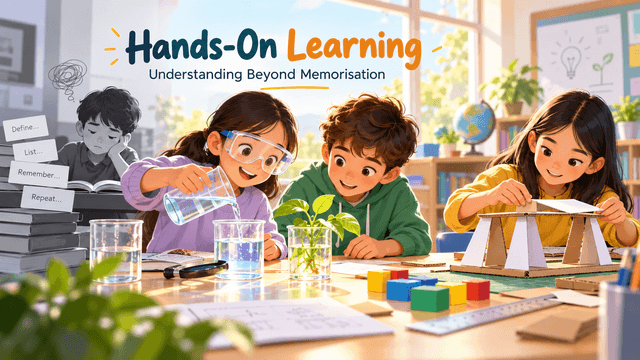
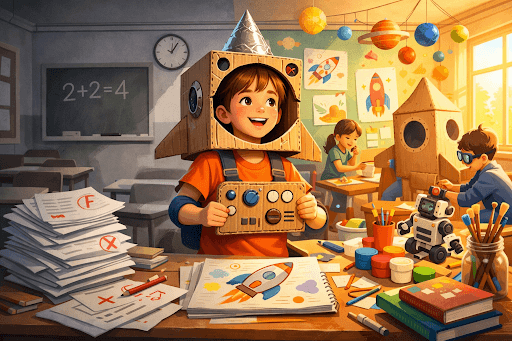
In the past, the idea was simple: theoretical education was prioritised. Students were supposed to remember the things that they had studied, and then all they had to do was regurgitate the same thing in the exam. There was very little scope for understanding what you were studying, and because of this, we as students lacked the practical knowledge that could help us apply the knowledge in the real world.
For instance, suppose we remember what the speed of light is and also memorize the definition of light-years, but did we really understand what it meant? Probably not. The idea that it takes 8 minutes for the sun’s light to reach Earth is something that many of us realized much later in life. That is the impact that rote learning had on our education.
This system might have worked when things were simpler, and technology was not so advanced. But now, more than ever, the world needs problem solvers and people who not only know the formulas but also how to solve the problem.
Read Further| Inclusive Learning Through SEN Support
Experiential Learning: A Shift to the Modern World
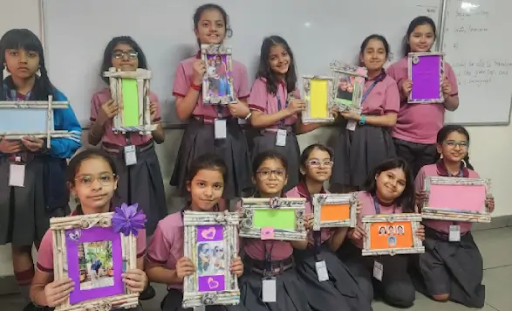
Experiential Learning, also called ‘Learning by Doing’, is exactly what it sounds like, i.e., Learning by experiencing. Developed in the 1980s by David A. Kolb, an American educational theorist, it is a widely recognized and influential framework that describes how people learn through experience. David Kolb described the ideal process of learning in a four-step Experiential Learning Cycle:
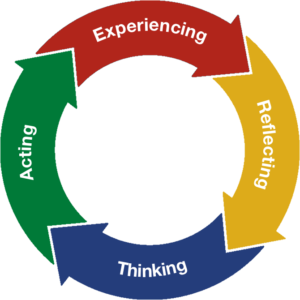
- Experiencing (Concrete Experience): Learning begins when a learner uses senses and perceptions to engage in what is happening now.
- Reflecting (Reflective Observation): After the experience, a learner reflects on what happened and connects feelings with ideas about the experience.
- Thinking (Abstract Conceptualization): The learner engages in thinking to reach conclusions and form theories, concepts, or general principles that can be tested
- Acting (Active Experimentation): The learner tests the theory and applies what was learned to get feedback and create the next experience.
Experiential Learning Styles
The way in which a person navigates the learning cycle changes due to various factors such as personality, educational specialization, professional career, culture, and adaptive competencies. The theory describes nine different ways of navigating the learning cycle: the Experiential Learning Styles. Learning styles are different from other typologies that describe inherent traits. Instead, Learning styles are habits or steady states of learning and living involving a preference for some modes of learning and underutilization of others.
This makes understanding your own process an exceptional way of building self-awareness and having a choice about what you might do to meet situations more effectively. We tend to lead with our preferred style and default to it when we are on autopilot or under stress. However, no one uses only one learning style. Everyone has “backup” styles that make them more flexible in managing different types of situations. Learning flexibility, the ability to use all nine learning styles, is very beneficial.
Flexible learners are more flexible in life, more effective in making changes, more mature, and they even report being happier. Learning styles also provide a framework for understanding others whose approaches are different from yours. Being aware of your own learning style tendencies and knowing the preferred approaches of those with whom you interact helps foster stronger relationships, an appreciation for deep diversity, productive outcomes, and effective teamwork.
Also Read| Holistic Learning in an IB Environment
Experiential Learning – In Classrooms
Now, for those who have found success in the traditional classroom, it is vital to explain the difference that sets Experiential Learning from traditional. And so let’s take an example of what Experiential Learning looks like inside a classroom.
Suppose in a classroom of Environmental Science, in a traditional structure, the students would be taught about how to prevent wastage of water through theoretical means and steps, like closing the tap after use.
However, under Experiential Learning, the students begin by understanding the water wastage in real life, maybe in their community itself. They begin by identifying the problem, observing water usage patterns and researching existing solutions.
Their next move will be to design a system, maybe a smarter irrigation model that optimises water usage. This involves applying concepts from science and mathematics, using technology to build a prototype, and testing its effectiveness.
The process does not end with the first attempt. Students refine their design, troubleshoot issues, and improve functionality. Along the way, they learn not just subject matter, but also how to think, collaborate, and innovate.
Such experiences stay with students far longer than traditional lessons because they are actively involved in creating knowledge rather than passively receiving it.
MRIS Maker Shala brings Experiential Learning to Life
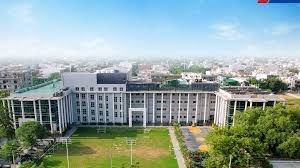
A true example of bringing the learning to life can be seen from one of the top CBSE schools in Faridabad, Manav Rachana International School, Sector 14. The Maker Shala program of the school is an example of how experiential learning can be embedded into everyday education. Designed as a hands-on learning ecosystem, the program focuses on enabling students to engage with real-world challenges through design, innovation, and problem-solving.
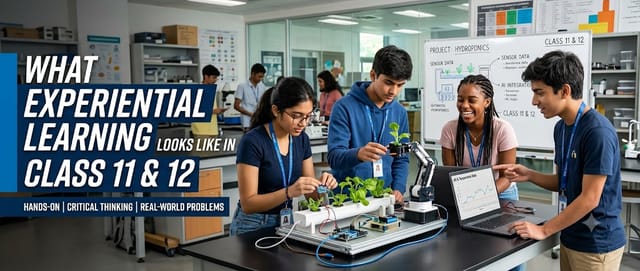
Within Maker Shala, students work on interdisciplinary projects that go beyond textbook learning. They are encouraged to explore areas such as health, sustainability, and technology, often aligning their work with real-world needs and global challenges.
The program provides access to tools and resources that allow students to move from ideas to prototypes. Whether it is building a functional model, designing a solution, or experimenting with new technologies, the emphasis remains on active participation.
Importantly, the process values iteration as much as outcomes. Students are given the freedom to experiment, make mistakes, and refine their work—an approach that fosters both confidence and resilience.
By integrating such experiences into the learning journey, Maker Shala ensures that students are not just acquiring knowledge but also developing the skills required to apply it effectively.
Preparing for What Lies Ahead
As the world continues to evolve, education must move beyond traditional boundaries. The focus can no longer remain solely on academic achievement; it must expand to include the development of skills, mindsets, and experiences that prepare students for an uncertain future.
Experiential learning offers a pathway to achieve this transformation. By bridging the gap between theory and practice, it equips students with the ability to think critically, solve problems, and adapt to change.
In this context, initiatives like Maker Shala of MRIS Sector 14 represent more than just a shift in teaching methods, they signal a broader reimagining of what education can and should be.
For more information on this and other similar schools in the area, check out this list of the best schools in Faridabad.


 as a preferred source on