









Middle school is a transformative stage in a child’s educational journey. It is the bridge between the foundational years of primary schooling and the more specialized, demanding years of high school. Equally important is the cultivation of skills that prepare learners to think deeply, understand themselves better, and engage meaningfully with the world. Reflective learning stands at the heart of this developmental process.
Reflective learning is about looking back at what has been taught, making sense of experiences, connecting ideas, questioning assumptions, and using those insights to make informed choices. For middle school students, this process becomes a powerful tool for fostering critical thinking, building self-awareness, and achieving a deeper understanding of concepts, skills that will serve them for life.
In this article, we’ll explore how MRIS Sector 14, one of the best schools in Faridabad, integrates reflective learning into its middle school curriculum, fostering critical thinking, self-awareness, and deeper understanding. From inquiry-driven lessons to real-world applications under the IB MYP framework, we’ll see how the school equips students with the mindset and skills needed to excel both academically and personally.
Also Read | Nurturing Individual Potential: Inside Special Education ProgramWhy Reflective Learning Matters in Middle School

At the middle school level, learners begin to form their own opinions, challenge ideas, and recognize that knowledge is interconnected rather than compartmentalized. Reflection enables them to:
-
Develop Critical Thinking: Instead of passively receiving information, students actively question it. They learn to weigh evidence, consider multiple perspectives, and arrive at reasoned conclusions. This analytical habit strengthens problem-solving abilities and encourages intellectual independence.
-
Enhance Self-Awareness: Reflection prompts students to examine their strengths, areas of improvement, learning preferences, and emotional responses. By doing so, they gain a clearer sense of who they are as learners and as individuals, enabling them to set realistic goals and work towards them with confidence.
-
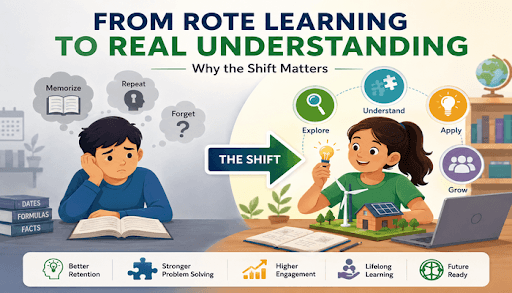
Achieve Deeper Understanding: Reflective practices encourage learners to go beyond memorizing facts. They connect classroom concepts to real-world skills making knowledge more meaningful and applicable. This leads to lasting understanding rather than short-term retention.
Integrating Reflective Learning: Effective Strategies
In progressive middle school classrooms, reflective learning is not an occasional exercise but a continuous habit seamlessly woven into daily lessons. One of the most effective methods is inquiry-based learning, where students are encouraged to ask questions, investigate topics from multiple perspectives, and explore solutions rather than passively receive information. This approach naturally sparks reflection, as learners revisit their initial questions, analyze their process, and assess the relevance of their findings.
Another key approach is interdisciplinary learning, which helps students connect ideas across subjects instead of viewing them in isolation. This is further supported by Approaches to Learning (ATL) skills, which guide students to evaluate how they manage time, collaborate with peers, and communicate effectively. Reflection is built into these skills, enabling learners to become more strategic and self-aware.
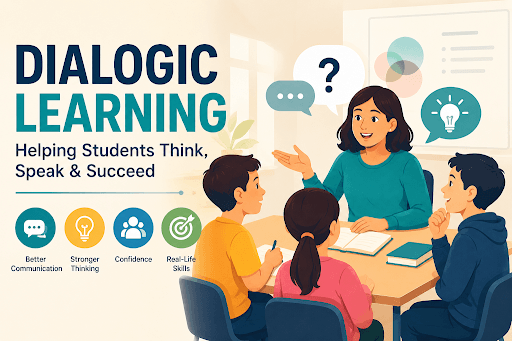
Equally powerful are real-world applications and student-led reflections such as journals, portfolios, and peer feedback sessions. Projects tied to community service, sustainability, or entrepreneurship push students to consider the impact of their learning beyond the classroom. Collaborative discussions and peer reviews further expand their thinking, as hearing different viewpoints prompts them to reassess and refine their own understanding. Together, these strategies create a dynamic learning environment where reflection becomes a natural part of growth.
Fostering a Reflective Mindset Through the IB MYP Framework
The MYP ensures that students develop not only academic knowledge but also life skills that prepare them for a globalized world. Let's explore how:
-
Interdisciplinary Units: Students explore themes that cut across subject boundaries, encouraging them to connect ideas and reflect on the relationships between disciplines.
-
Service as Action: Reflection is central to community projects in the MYP. Students identify a need, plan their actions, carry them out, and then reflect on the outcomes.
-
ATL Skill Development: The MYP’s focus on Approaches to Learning ensures that reflection is embedded into skill-building.
-
Personal Project: One of the highlights of the MYP is the personal project, where students choose a topic of interest, conduct research, create a product or outcome, and reflect on the entire process.
The Impact of Reflective Learning on Students
When reflective learning becomes a regular part of school life, students begin to approach education with a renewed sense of ownership. Instead of passively absorbing information, they engage with it: questioning, connecting, and applying what they learn. This active involvement sparks greater curiosity and motivation, making lessons more meaningful.
A reflective approach also strengthens essential life skills such as problem-solving, adaptability, and emotional intelligence. By examining their own thought processes, students learn to identify what works, what doesn’t, and how to adjust their strategies. This ability to adapt turns challenges into opportunities for growth.
Over time, the benefits extend far beyond academic success. Reflective learners develop a growth mindset, understanding that mistakes are stepping stones, not roadblocks. They carry forward the resilience, self-awareness, and critical thinking skills that will serve them in higher education, careers, and personal life.
Check Out | Lifelong Learning Starts Young: How Schools Can Instill a Growth Mindset EarlyMRIS Sector 14: Transforming Middle School Education Through Reflective Learning
Established in 2007, MRIS Sector 14, Faridabad, is one of the best IB schools in Faridabad, known for its innovative teaching methods, state-of-the-art facilities, and focus on holistic development. The school nurtures young minds to become confident, curious, and compassionate learners ready to thrive in a dynamic world.
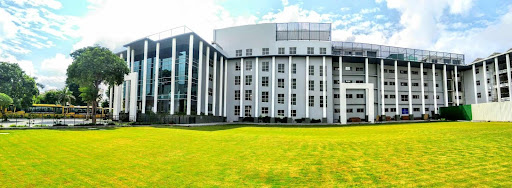
At MRIS Sector 14, reflective learning is not just an add-on to the curriculum, it is an integral part of the school’s educational philosophy. The institution embraces a student-centered approach, encouraging learners to actively participate in shaping their own academic journey. Teachers design lessons that go beyond rote instruction, incorporating inquiry-based activities that challenge students to think critically, analyze diverse perspectives, and connect their classroom learning to real-life contexts. This focus helps learners develop a habit of questioning and evaluating ideas rather than simply accepting them.
One of the key ways MRIS Sector 14 brings reflective learning to life is through its integration of the International Baccalaureate Middle Years Programme (IB MYP). Interdisciplinary units encourage students to explore concepts that cut across subjects, while Approaches to Learning (ATL) skills help them evaluate their own learning strategies, time management, and collaboration. The school also emphasizes Service as Action, where learners undertake meaningful community projects, reflect on their experiences, and understand their impact on society. These opportunities cultivate not only academic knowledge but also empathy, responsibility, and global awareness.
Additionally, MRIS Sector 14 ensures that students have multiple platforms for reflection, from personal learning journals to digital portfolios and peer feedback sessions. Collaborative discussions are encouraged, allowing learners to share their perspectives and refine their understanding through dialogue. The school’s supportive environment fosters a culture where making mistakes is seen as a valuable part of growth, and students are empowered to take ownership of their learning. As a result, graduates leave MRIS Sector 14 not only with strong academic foundations but with the mindset and skills needed to thrive in an ever-changing world.
For more information on this and similar schools in the area, check out this list of the best schools in Faridabad.












 as a preferred source on