




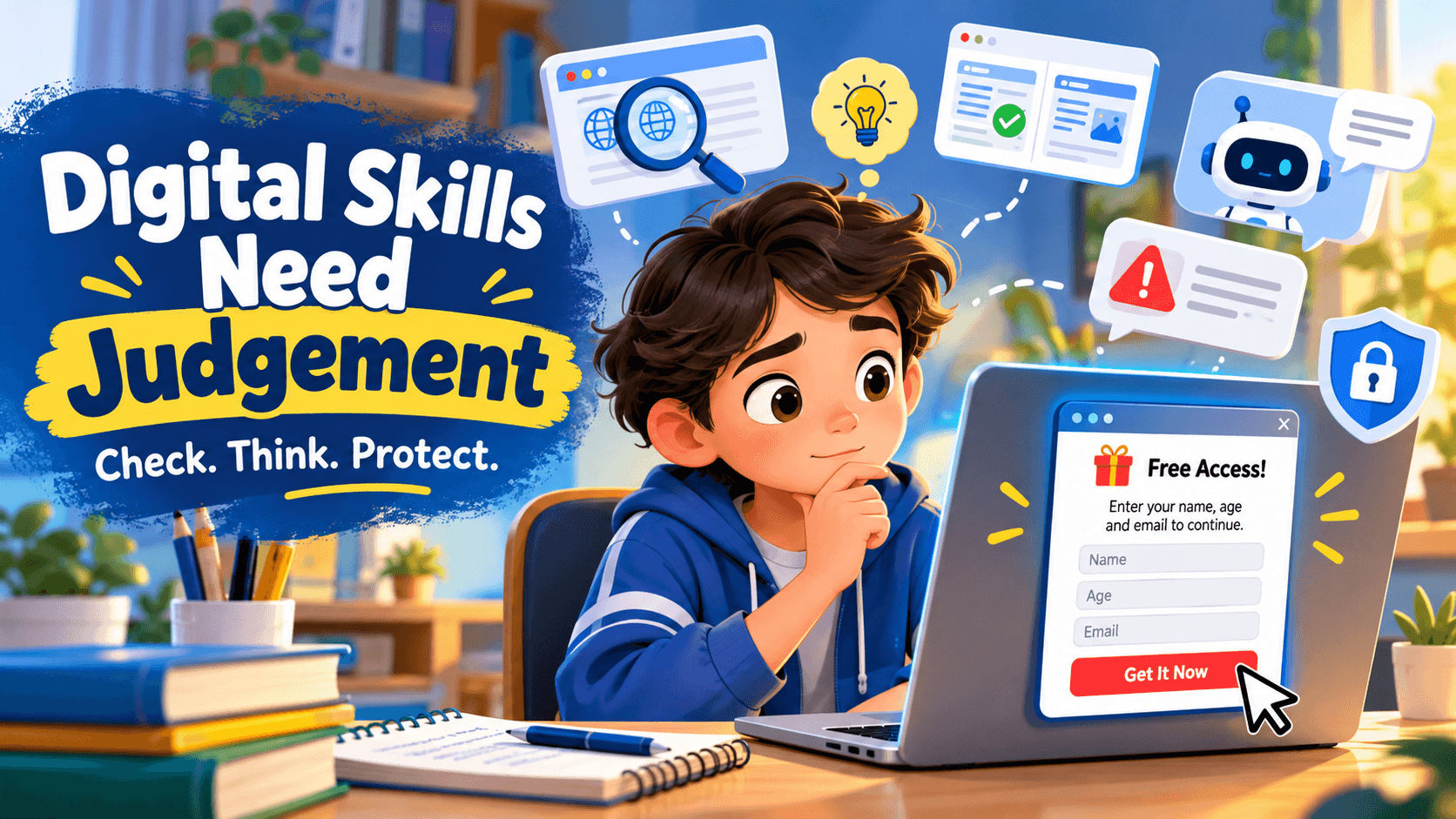

Your child can create presentations, search for homework answers, and use learning apps without assistance. But one afternoon, they receive a message offering free access to an expensive educational platform. The message asks for their name, school details, and mobile number. They are ready to submit everything without checking whether the offer is genuine.
Knowing how to use technology does not always mean knowing how to use it responsibly.
For parents exploring Top Schools in Bangalore, including Clarus International School (CIS), Kadugodi, Bangalore, understanding the difference between computer skills and digital judgement is an important educational consideration.
Why Are Computer Skills Different From Digital Judgement?
Computer skills help children operate devices, create documents, use applications, and complete digital assignments.
Digital judgement involves deciding whether information is reliable, whether an online activity is appropriate, and when personal information should remain private.
Consider a student researching climate change for a school project. Two websites provide completely different explanations. Both have colourful graphics and convincing headlines.
A child with technical skills may copy information from whichever website appears first. A child developing digital judgement is more likely to question the source and compare the information before using it.
UNESCO's guidance on media and information literacy highlights the importance of critical thinking and responsible digital participation.
Children need opportunities to practise these skills alongside learning how technology works.
The goal is not to make children suspicious of everything online, but to help them become thoughtful users.
How Can Children Recognise Misleading Online Information?
Children encounter information through websites, videos, advertisements, and messages shared by friends or family members.
Not everything they encounter is accurate.
A video might claim that a particular food can improve memory overnight. It may include impressive images and confident explanations without providing reliable evidence.
Children can learn to question such claims through a few simple habits:
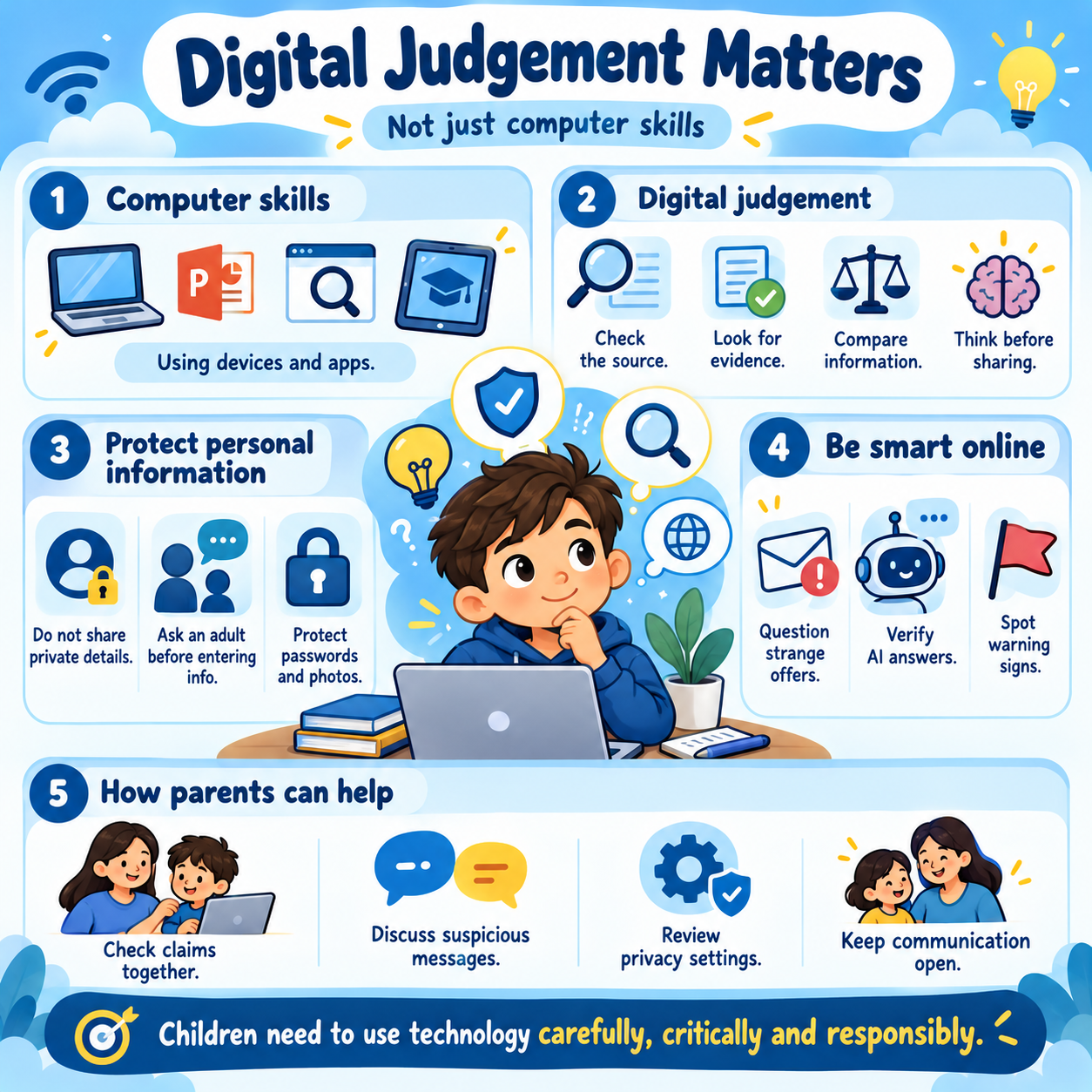
- Check the source: Who published the information? Is it a recognised educational institution, government organisation, or credible publication?
- Look for evidence: Does the claim provide facts, research, or explanations that can be checked?
- Compare information: Do other reliable sources report the same thing?
- Notice warning signs: Are there exaggerated promises, misleading headlines, or requests to share information immediately?
UNICEF's research on digital misinformation explains that children can encounter misleading information and may also unknowingly share it with others.
The growing use of artificial intelligence makes verification equally important. An AI-generated answer may sound convincing while containing incorrect facts.
Children should understand that a confident answer is not necessarily a correct one.
Why Should Children Think Before Sharing Personal Information?
Imagine a child completing an online quiz that promises a free certificate.
Before showing the result, the website requests their full name, home address, school name, and parent's phone number.
The child may assume these details are necessary because the website looks professional.
This is where digital privacy becomes important.
Children should learn that personal information has value and should not be shared simply because a website requests it.
UNESCO's media and information literacy guidance emphasises protecting personal information, understanding digital footprints, and making informed privacy decisions.
Parents can explain that passwords, home addresses, contact numbers, and private photographs require particular care.
Children should also understand that sharing information about friends or classmates without permission can affect someone else's privacy.
A useful habit is asking a trusted adult before entering personal details on unfamiliar websites.
How Can Parents Build Digital Judgement Without Constant Monitoring?
Parents naturally want to protect their children online. However, restrictions alone do not teach children how to make decisions when adults are unavailable.
Small conversations during everyday technology use can help.
Check an online claim together. If your child finds an unusual fact, ask where it came from and whether another reliable source confirms it.
Discuss suspicious messages. Show children how to recognise unexpected offers, unknown senders, and requests for sensitive information.
Review privacy settings. Explain who can see their photographs, posts, and account details.
Question AI-generated answers. Encourage children to verify important facts rather than copying responses immediately.
Keep communication open. If something online makes a child uncomfortable, they should feel able to tell a trusted adult without fearing immediate punishment.
For example, when a child receives an unfamiliar link, ask what makes it trustworthy or suspicious.
The aim is to develop judgement through discussion, not fear.
Understanding Digital Learning at Clarus International School
For parents comparing the Best Schools in Bangalore, understanding how schools introduce technology can be an important consideration. Clarus International School (CIS), Kadugodi, Bangalore, includes computer literacy and basic coding in its published Preparatory Stage curriculum for Grades 3–5. While these subjects introduce important technical skills, parents can also consider how children learn to question digital information, protect personal details, and make responsible choices online. Such questions help families understand the wider digital competencies children may need as technology becomes part of everyday learning.

Conclusion
Being comfortable with technology is only one part of digital readiness.
Children also need to recognise unreliable information, consider privacy risks, and understand when to seek guidance.
Parents can support these skills through regular conversations, practical examples, and opportunities to make thoughtful decisions.
The aim is not simply to raise children who know how to use devices, but children who can use them carefully and responsibly.
For more information on this and similar schools, check out this list of the best schools in Bangalore.









 as a preferred source on