







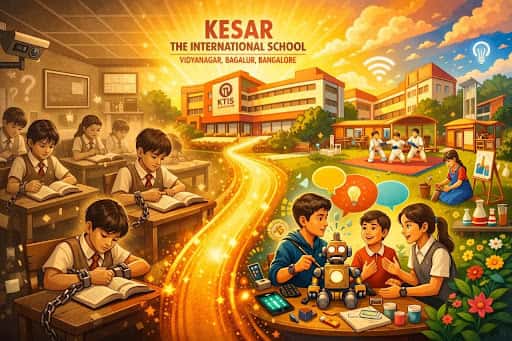

Your child scores 95 in every test. Teachers love them. Report cards are spotless. And yet, something feels missing. They hesitate when a question goes slightly off-script. They freeze when there's no "right answer" to pick from. Is that intelligence, or is that conditioning?
It is a question more parents are quietly sitting with, and one that most schools are simply not designed to answer. We have built an education system that is exceptionally good at producing children who perform, but are we raising children who can truly think?
In this article, we explore the silent gap between smartness and training, what genuine learning actually looks like, the signs that a school is nurturing independent thinkers, and how Kesar The International School, one of the best schools in Bangalore, is choosing to approach this differently.
Also Read | Stage-Wise Growth from Foundational to Secondary: A Deep Dive into the Academic Structure at KTIS
The Child Who Passes Everything But Understands Little
There is a version of school success that looks impressive from the outside and feels hollow from the inside. A trained child has memorised the steps. A smart child understands why those steps exist and what to do when they don't work.
Research in developmental psychology has long established that rote performance and conceptual understanding are two very different cognitive outcomes. When schools optimise purely for marks, they often, without meaning to, reward the former over the latter.
The cost shows up later, in college, in careers, in life, when there are no multiple-choice options left, but knowing the importance of holistic. And what’s that? Check out the next section.
What "Holistic Education" Actually Means?
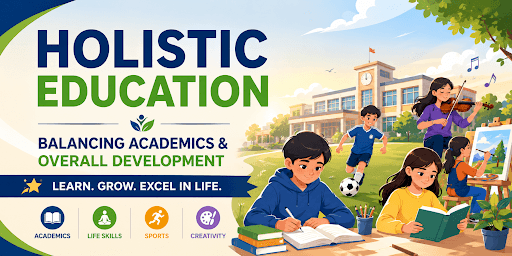
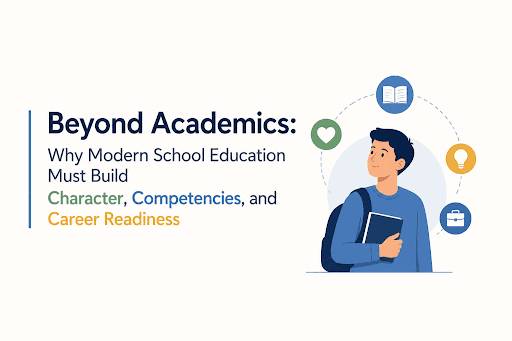
The phrase holistic education has been used so often it has nearly lost its meaning. But strip away the brochure language, and what it truly points to is this: a child being developed as a whole person - emotionally, intellectually, physically, and culturally.
Real holistic education does not treat a child's curiosity as an inconvenience to the syllabus. It builds environments where questions are welcomed, where failure is part of the process, and where a child's identity is not tied entirely to their GPA.
The question every parent should ask is not "does this school offer extracurriculars?" but rather, "does this school see my child as more than their marks?" How will you analyse that? Check out the signs that your right schools should have (waiting to be decoded in the next section).
The Signs That a School Is Raising Thinkers
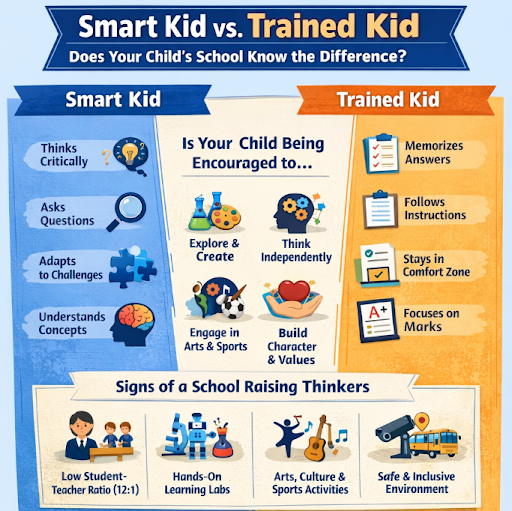
Not every school that claims to be progressive is actually building thinkers. Here are the markers that genuinely matter and what to look for when evaluating a school for your child:
-
Low student-teacher ratio
When a teacher has fewer children to manage, they can actually see each child. Individual attention is not a luxury, but is the foundation of meaningful learning. A ratio like 12:1 is a strong indicator that each student is being watched, heard, and guided closely.
-
Hands-on, lab-based learning
Children understand concepts far more deeply when they experience them, not just read about them. Science labs, robotics labs, computer labs, and language labs are not facilities, but are pedagogical commitments.
-
Space for the arts, movement, and culture
Dance, music, drama, and art are not distractions from academics. According to studies in educational neuroscience, creative engagement strengthens cognitive flexibility and emotional intelligence skills that no exam can fully measure.
-
Safety structures that go beyond walls
A child cannot think freely if they do not feel safe. GPS bus tracking, CCTV, student tracking apps, and accessible infrastructure are signals that a school takes the whole child seriously.
-
Values-based learning embedded into daily life
Schools that build ethical, self-aware students do not do it through a single "moral science" period. It is woven into how teachers speak, how conflicts are resolved, and how the school community functions.
Not interrupting your excitement, but what outcome will the life of your child have if culture and curiosity walk parallel? Adventurous right? Let’s check it out.
What Happens When Culture and Curiosity Walk Into the Same Classroom?
There is a growing conversation in Indian education about what to preserve and what to evolve. Many parents feel caught between schools that are culturally rootless and schools that are academically outdated. The assumption that you must choose one is false.
The schools doing this well understand that Indian cultural heritage, its emphasis on discipline, community, and values, is not in conflict with global competencies like critical thinking, digital fluency, and collaborative problem-solving. These things can, and should, live together. And, here you go with the school that has been building the deep thinkers for years.
Check Out | A Five-Pillar Model for Future-Ready Education at Kesar International
Meet the School That Builds Thinkers, Not Just Toppers - Kesar The International School (KTIS), Bangalore
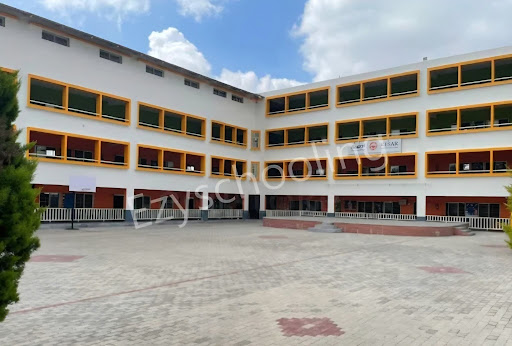
Nestled in Vidyanagar, Bagalur, Kesar The International School (KTIS) is a CBSE co-educational day school operating under the MVM Group of Institutions, offering classes from Nursery to Class 10. What distinguishes it is not a single feature in isolation, but how its building blocks fit together into a coherent educational philosophy.
A Curriculum Built for Understanding- KTIS integrates global perspectives, digital learning, and hands-on experiences into its curriculum. The approach is rooted in research-based practices that prioritise conceptual clarity over mechanical repetition, preparing students for a world where the ability to think adaptively matters far more than the ability to recall.
Infrastructure That Enables Real Learning- The school is equipped with smart classrooms, a robotics lab, science lab, computer lab, and language lab spaces designed to make learning tangible. AC classrooms with WiFi, a library, playground, auditorium, and cafeteria create an environment where children are comfortable, stimulated, and supported.
A 12:1 Student-Teacher Ratio- With a student-teacher ratio of 12:1, KTIS ensures that no child disappears into the crowd. This level of individual attention is where the gap between a trained child and a thinking child begins to close, because a teacher who knows the child can challenge them in ways a syllabus alone never could.
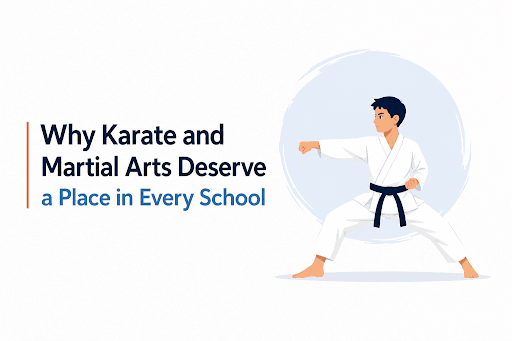
Values, Culture, and the Whole Child- KTIS draws on Indian cultural traditions, including rituals like Vidyaarambh, while equipping students with the leadership and ethical grounding needed in a global context. Extracurricular activities, including debate, music, dance, drama, art and craft, skating, taekwondo, karate, yoga, and gardening, ensure that a child's development extends far beyond the classroom.
Safety, Access, and Inclusion- The school features CCTV surveillance, GPS bus tracking, a student tracking app, a medical room, a daycare, and fully disability-friendly infrastructure, including ramps, elevators, and accessible washrooms. These are not afterthoughts, but reflect a school that takes its duty of care seriously.
Every parent sends their child to school with a quiet hope, not just that they will pass, but that they will grow. That they will come home one day with an idea no one gave them, a question no teacher assigned, a conviction that is entirely their own. That is not too much to ask. It is, in fact, the whole point.
The difference between a smart child and a trained one is not talent. It is the environment they were placed in at the age when it mattered most. Choose that environment carefully.
If you want to know more about this and other nearby day schools, then check out the list of the top Schools in Bangalore.


 as a preferred source on