






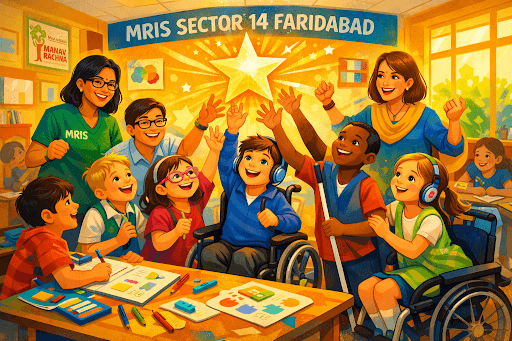

Every parent wants their child to feel seen, not taught. For parents of children with Special Education Needs (SEN), that desire carries a weight most schools are still learning to meet. The right school doesn't just accommodate a child with different learning needs; it genuinely builds around them. In this article, we unpack what inclusive education truly means, why early support changes a child's trajectory, and how Manav Rachna International School, one of the best Schools in Faridabad, has structured its SEN program to serve children with diverse learning profiles.
Also Read | Nurturing Individual Potential: Inside MRIS Sector 14 Faridabad's Special Education Program
Inclusive Education Is a Practice, Not a Policy
Inclusive education is one of those phrases that sounds straightforward until you ask a school to actually demonstrate it. Ramps, elevators, and a disability-friendly washroom are infrastructure necessary, but not sufficient. True inclusion means every child, regardless of how they learn, communicate, or process the world, is given a genuine opportunity to participate, belong, and grow alongside their peers.
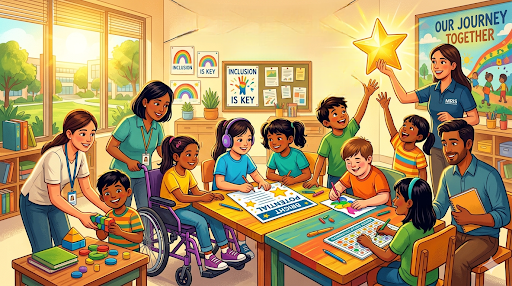
Since the landmark Salamanca Statement in 1994, the United Nations has consistently called on governments to ensure that all children are enrolled in regular schools unless there are compelling reasons otherwise, making inclusive education a fundamental international policy principle. In practice, however, the gap between policy and classroom reality remains wide in most schools. The ones that close that gap do so through people, systems, and intention.
Why Early Identification Is Non-Negotiable?
The most damaging thing a school can do for a child with SEN is to wait. A child who struggles with reading, social interaction, attention, or sensory processing doesn't grow out of it without support, they simply accumulate more confusion and, far too often, a quiet sense of failure. Early identification paired with targeted intervention is what changes the outcome. It is not about labelling a child; it is about giving them the right tools before the absence of those tools causes lasting harm.
This is why parents should look for schools where the conversation about a child's learning profile begins early, is handled with sensitivity, and leads directly to action, not a waiting list.
What a Strong SEN Program Actually Looks Like?
The backbone of any effective SEN framework is a personalised plan, something the child's teachers, parents, and support professionals build together and revisit regularly. It accounts for how the child learns best, where the gaps are, and what the realistic goals look like for that individual. Without this, a school is simply applying the same intervention to different children and hoping for the best.
Beyond individual plans, what separates a functional SEN program from a truly strong one is the team behind it. A dedicated group of special educators, occupational therapists, speech therapists, counsellors, and ABA professionals, working in coordination, not in silos, is what allows a child to receive consistent, layered support across academic and emotional dimensions.
What Parents Should Ask Any School?
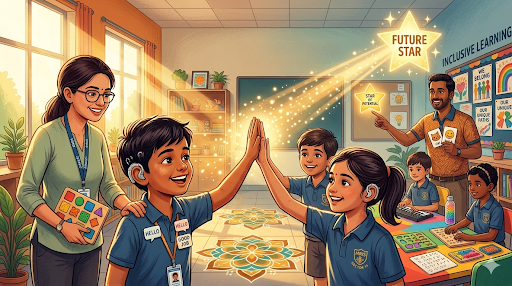
Whenever you are shortlisting a school, raise these questions with every school you evaluate among the best CBSE schools in Faridabad: Does the school have a dedicated, multi-disciplinary SEN team? Are individual learning plans created in collaboration with parents? Is the wider classroom community sensitised, not just the support staff? And critically, does inclusion happen in the main classroom, or only in a separate resource room? The answers to these questions will tell you far more than a brochure ever could.
Check Out | The Fusion of Learning and Innovation at MRIS Senior Wing
SEN Support at MRIS Sector 14, Faridabad
Manav Rachna International School (MRIS), Faridabad - established in 2007, affiliated with both CBSE and the IB Board, and ranked among the best schools in Faridabad, has developed a comprehensive SEN program designed to address not just a child's academic gaps, but their social, emotional, and psychological needs as a whole.
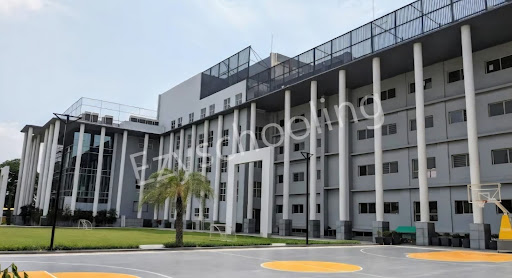
The program includes counsellors, special educators, an ABA therapist, and an occupational therapist, all working toward a holistic and inclusive setup for children with special needs. Inclusion is at the heart of the school's educational philosophy, with special needs students integrated into mainstream classrooms wherever possible, and teachers trained to use differentiated instruction to ensure every child can participate and succeed.
The SEN Department at MRIS-14 is dedicated to filling learning gaps by making children comfortable and addressing diverse needs through a sensitised team of professionals. Children benefit from modified surroundings, adapted question papers, tailored worksheets, curriculum flexibility, one-to-one remedial sessions, and classroom interventions, all designed to support them within a regular mainstream school setup. Special educators use multi-sensory aids to address the needs of all learners.
What makes this particularly meaningful is that support is not pulled away from the child's peer environment. The goal is always reintegration and belonging, not a parallel, separate experience. Occupational therapists at MRIS-14 provide a nurturing environment to help children achieve the skills needed to participate in and become independent in everyday activities, through therapy plans that are individually tailored to each child's unique needs.
The school also ensures that support extends beyond the classroom walls. Counselling sessions are held with students, parents, and teachers together, building awareness and shared language around each child's journey, and equipping families with the tools they need to continue that support at home.
A strong SEN program is built on collaboration between educators, therapists, and parents, ensuring that support is not isolated but integrated within the mainstream classroom. This approach allows children to learn, interact, and grow alongside their peers, fostering a true sense of belonging.
Schools that embrace inclusion focus on individual progress rather than a one-size-fits-all benchmark. They create spaces where children feel understood, supported, and capable.
For more information on this and other similar schools in the area, check out this list of the best schools in Faridabad.



 as a preferred source on