








While traditional sports such as football, basketball, and cricket continue to play an important role in student development, martial arts are emerging as powerful tools for holistic growth. While the Martial arts themselves have multiple avenues, it is particularly Karate and Taekwondo that are seen as the preferred sports when it comes to schools.
Karate is often misunderstood as merely a combat sport. In reality, it is a discipline that combines physical fitness, mental strength, self-control, and character development. For students navigating the challenges of academics, social interactions, and personal growth, martial arts can become a foundation for lifelong confidence and resilience.
As schools continue to focus on creating well-rounded learners, introducing structured martial arts programs has become more relevant than ever. And that is why, through this article today, we wanted to talk about the need of the hour and how it helps students. We’ll also get into it with an example of one of the best schools in Greater Noida West, the Ramagya School, and how it has been creating champions of Taekwondo.
Building Discipline Through Practice
One of the greatest benefits of karate in schools is the emphasis on discipline. Every session teaches students the importance of following instructions, respecting their coaches, and maintaining focus throughout training.
Unlike many recreational activities, karate follows a structured progression system where students advance through dedication and consistent effort. This helps children understand that success is earned through persistence rather than instant results.
The values learned on the training mat often translate into better classroom behavior, improved time management, and stronger academic commitment.
Also Read | Importance of School-Life Balance
Building Confidence and Teaching Respect
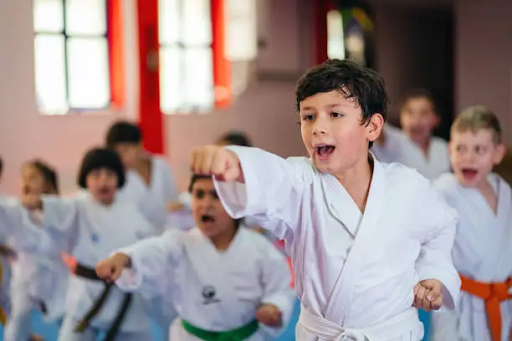
Many students struggle with self-doubt, anxiety, or fear of failure. Martial arts training helps address these challenges by creating opportunities for continuous achievement.
Each new technique mastered, belt earned, or challenge overcome reinforces a student's belief in their abilities. Over time, this confidence extends beyond sports and influences classroom participation, leadership skills, and social interactions.
Karate also teaches students how to remain calm under pressure, helping them develop emotional control and mental resilience—qualities that are valuable throughout life.
While mental health and confidence are built, the sport also teaches a vital core principle of respect. It is a core principle of every martial art. Students learn to respect their instructors, peers, opponents, and themselves.
This culture of respect helps create a positive environment where children learn sportsmanship, empathy, and accountability. They understand the importance of using their skills responsibly and resolving conflicts peacefully whenever possible.
In a school setting, these lessons contribute significantly to character building and help shape responsible young citizens.
From getting kids moving to learning self-defense
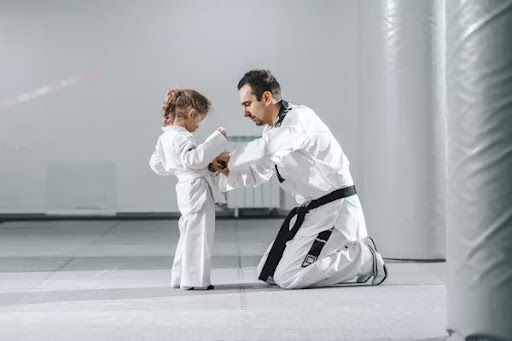
Screen time is up. Outdoor play is down. Most schools are well aware of this and are trying to find solutions that actually work. The challenge is that not every child thrives in team sports. Some kids don't want to compete for a spot on the football team or feel exposed in a group PE class.
Martial arts sidesteps a lot of that. It's individual enough that a quieter, less athletic child can participate fully without feeling like a weak link. And physically, the benefits include flexibility, coordination, cardiovascular fitness, and body awareness, all of which improve with consistent training.
While martial arts are primarily about discipline and personal growth, they also equip students with practical self-defense knowledge.
Understanding basic defensive techniques can increase awareness, confidence, and personal safety. More importantly, students learn conflict avoidance strategies and the importance of making responsible decisions in challenging situations.
This balance between self-protection and self-control makes karate one of the most valuable extracurricular activities available in schools today.
Read Further| Importance of CSR in Schools for Social Responsibility
What schools actually gain
A structured martial arts program isn't just a sports offering. It's a character development program with a physical component. Schools that invest in it tend to see benefits that go beyond the sports field — calmer classrooms, stronger peer relationships, and students who are better equipped to handle pressure.
It also sends a message to students: that the school cares about who they are becoming, not just what grades they're earning.
An Example of Ramagya School
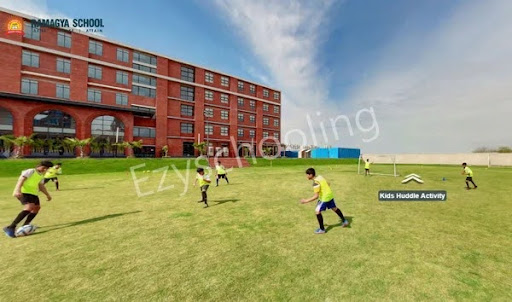
Among the schools actively promoting martial arts excellence, Ramagya School has established itself as a strong advocate of sports and holistic development.
The institution has consistently encouraged students to participate in karate and taekwondo competitions, providing professional coaching, structured training programs, and opportunities to compete at district, state, and national levels. Over the years, Ramagya students have earned numerous medals and accolades across prestigious championships.
A recent achievement that further highlights the school's commitment to sporting excellence came at the CBSE North Zone 1 Taekwondo Championship, where students Jiya Tomar and Bhanu Pratap secured first positions and won gold medals in their respective categories. Their performances showcased exceptional skill, determination, and competitive spirit. The accomplishment was achieved under the guidance of Coach Pradeep Kumar, with support from the school's leadership and sports department.
The school's success is not limited to a single event. Ramagya has repeatedly demonstrated strong performances across multiple taekwondo and karate championships, earning gold, silver, and bronze medals at district, state, and national levels. These achievements reflect a culture where sports are treated as an essential component of education rather than an optional activity.
By combining academic excellence with world-class sports opportunities, Ramagya continues to create an environment where students can pursue their passions, build confidence, and achieve success both inside and outside the classroom.
Conclusion
Karate and martial arts offer far more than physical training. They teach discipline, confidence, resilience, respect, and leadership—qualities that every student needs to thrive in today's world. As schools strive to prepare students for life beyond academics, martial arts programs have become an increasingly valuable part of modern education.
Schools like Ramagya demonstrate how investing in structured martial arts training can produce not only skilled athletes but also confident and disciplined individuals. Their championship victories stand as proof that when schools prioritize holistic development, students are empowered to achieve excellence in every arena of life.
For more information on this and other such schools in the area, click here












 as a preferred source on