







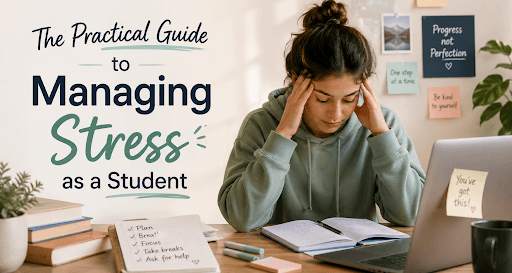
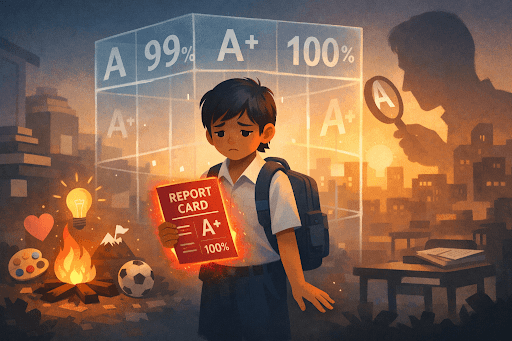
It’s 9 PM. Dinner half-eaten. Textbooks open. A child staring blankly at a wall, and a parent standing in the doorway, not sure whether to speak or simply close the door. The pressure makes the student feel even more lost, under-confident, doubting themselves, and questioning their capabilities with tons of insecurities.
An NIH 2025 study further found that depression affects 25.92% of school-going adolescents, with anxiety at 13.70%. These are not alarming numbers on a page. These are children sitting in classrooms near you.
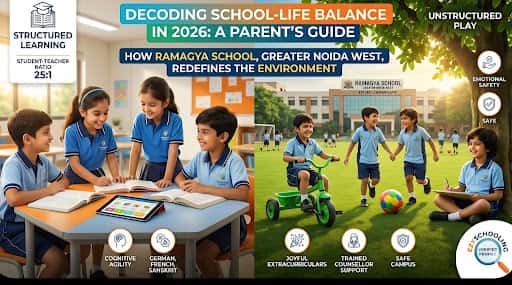
It’s time to unpack why school-life balance has become the defining parenting conversation of 2026, and how one of the best schools in Greater Noida West, like Ramagya School, is redefining the environment.
Also Read | How CSR in Schools Shapes Students into Responsible Citizens | Ramagya School, Greater Noida West
Balance" Is Not a Buzzword, But a Biology Requirement
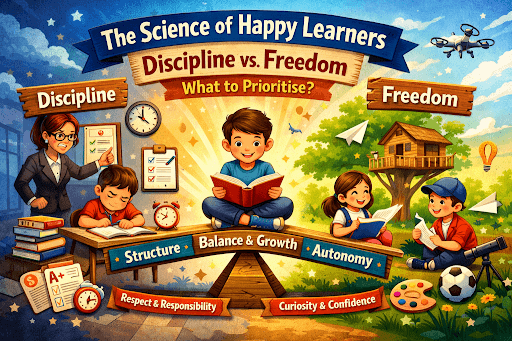
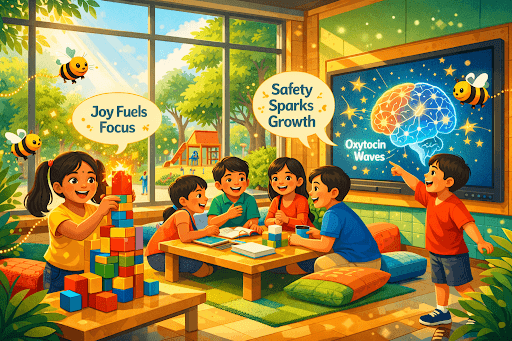
Most parents hear "school-life balance" and picture fewer homework pages or an extra hour of cricket. But what neuroscience is telling us goes far beyond schedules. A child's developing brain, particularly between ages 6 and 16, requires three things in equal measure: structured learning, unstructured play, and emotional safety. Strip away any one of these chronically, and the neurological cost is measurable and lasting.
The dangerous part is that children rarely say so. They act it out, in irritability, in withdrawal, in that blank stare that no amount of asking "Are you okay?" seems to reach. Understanding this is the first step. But understanding why 2026 specifically has raised the stakes is what makes this conversation urgent.
Why This Year Is Different From Every Year Before It
The concern about pressure on children is not new. What is new is the weight children are carrying into school each morning. Post-pandemic schooling handed an entire generation a two-year gap in social and emotional development. Today, those children sit in classrooms still recalibrating, and yet the academic system has not slowed down; it has accelerated, determined to "make up for lost time."
Layered on top is the quiet pressure of social media comparison, the anxiety of competitive board exams, and homes where both parents are working full-time with little margin left for presence. India still does not have an integrated, whole-school mental health framework for its 265 million enrolled children.
That gap does not disappear, but shifts entirely onto parents and the schools they choose. Which is exactly why learning to read your child's early signals is no longer optional.
Reading the Signs of Your Child’s Behaviour
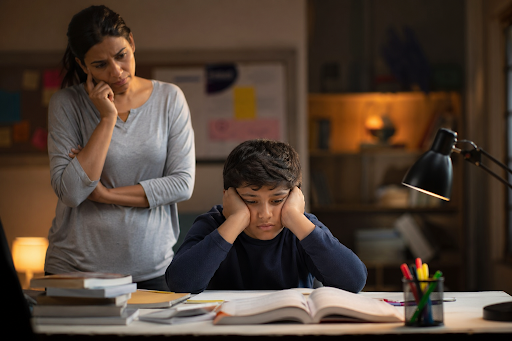
Most parents miss the early warnings not because they are inattentive, but because the warnings themselves are masters of disguise. They don't arrive as a crisis, but can tell a different story. A shrinking appetite or sudden overeating, especially around exam periods, is often the body's first quiet protest against chronic stress. A growing resistance to school, from mild morning complaints to recurring stomachaches, is rarely laziness, but is often a child asking for help in the only language available to them.
Losing interest in things they once loved is a clinical marker for low mood that gets dismissed far too often as "just a phase." And disrupted sleep too much, too little, or lying awake at 11 PM reflects a nervous system that has simply forgotten how to rest. None of these signals, taken alone, is a reason to panic.
But when they appear together, week after week, the parent who notices early is the one who changes what happens next, and what happens next almost always depends on where the child spends seven hours of their day.What a School Owes Your Child in 2026?
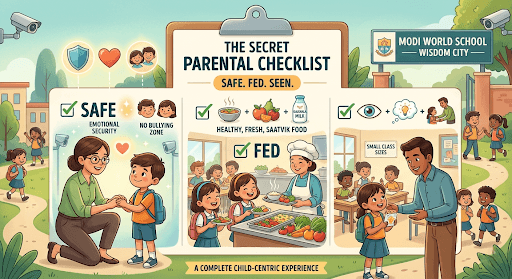
A school is not simply an academic delivery system. Research from Frontiers in Public Health (2025) explicitly flags that India lacks integrated whole-school mental health approaches, and that this absence directly fuels rising anxiety and depression in adolescents. A school that genuinely supports balance looks like a student-teacher ratio where a teacher can notice when a child has been quieter than usual for a week.
It looks like extracurriculars that are joyful, not resume-fillers. It looks like a trained counsellor, not a teacher wearing two hats. And it looks like a culture where a child feels safe enough to say, "I'm not okay today." Knowing this changes how a parent evaluates schools, and a platform like Ezyschooling makes that evaluation significantly more honest.
Rather than relying on brochures or second-hand reputation, parents can explore verified profiles, fees, student-teacher ratios, facilities, and languages, and make decisions rooted in real data, not anxiety.
Check Out | Where Safety Meets Learning: Building Secure Campuses for Confident Children.
Where Your Child Gets to Be a Child First - Ramagya School, Greater Noida West
For parents who have been looking for the school life balance, Ramagya School at Knowledge Park V is worth a close look. Established in 2005, affiliated with CBSE, and spread across a 3-acre campus, the school is built at a scale that physically allows for the breathing room the balance of conversation demands.
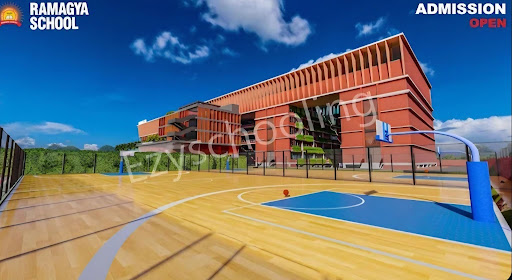
It accommodates students from Toddler through Class 10 with a student-teacher ratio of 25:1, meaningful enough for teachers to know a child beyond their roll number. The curriculum is delivered in English and spans Hindi, German, French, and Sanskrit, building cognitive agility well beyond rote learning.
Focused on safety, Ramgya School, Greater Noida West, shows how strong learning grows alongside care for students. While lessons matter, so does feeling secure each day at school.
Conclusion
Your child is not a rank. They are a person becoming someone, and the environment you choose for them, the conversations you protect at home, and the signs you refuse to dismiss will quietly shape who they are allowed to be. Start with the right question. The right school, and the balance it makes possible, tends to follow.
For more information on this and other such schools in the area, click here




 as a preferred source on