








A 2023 UNICEF report found that nearly 1 in 3 children globally shows limited empathy by the time they reach adolescence. Researchers link this directly to reduced community exposure during school years. That number should make every educator pause.
Schools today carry a responsibility beyond academics. They shape how young people see the world and their role in it. When a school builds community service into its culture, students grow in ways that no textbook can achieve. They learn empathy, leadership, and the value of giving back.
Corporate Social Responsibility, or CSR, in schools is no longer a side activity. It has become a core part of how forward-thinking schools educate children. One of the best schools in Greater Noida West, Ramagya School, has made this a defining part of its identity. In this article, we explore why CSR matters in school education, how it shapes student character, and how Ramagya School brings this vision to life through its dedicated initiatives.
Also Read | The ‘Manubharva’ Philosophy: How Ramagya School Transforms Students into Carriers of Human Wisdom
Why Schools Must Go Beyond the Classroom
Education is not just about scoring marks. It is about preparing students for life in a real, complex world. Schools that limit themselves to textbooks produce knowledgeable students, but not necessarily wise or compassionate ones.
Character Grows Through Real Experiences
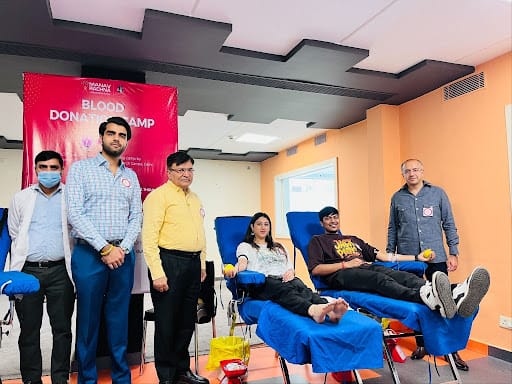
Reading about kindness is very different from practising it. When students visit elderly homes or clean a park, they feel the true weight of their actions. A study published in the Journal of Youth and Adolescence (2019) found that students who participated in structured community service scored significantly higher on emotional intelligence assessments than those who did not. These experiences build emotional depth that classroom lessons simply cannot replicate. A child who has handed food to a hungry peer understands hunger differently than one who has only read about it.
Social Awareness Starts Early
Children who engage with their community at a young age develop a natural sense of responsibility. They begin to notice inequality, environmental issues, and the needs of others around them. According to a report by Learning for Justice (formerly Teaching Tolerance), students exposed to social awareness programs before age 12 are twice as likely to volunteer regularly as adults. Early habits of service quietly become lifelong values.
The Role of CSR in a Student's Development
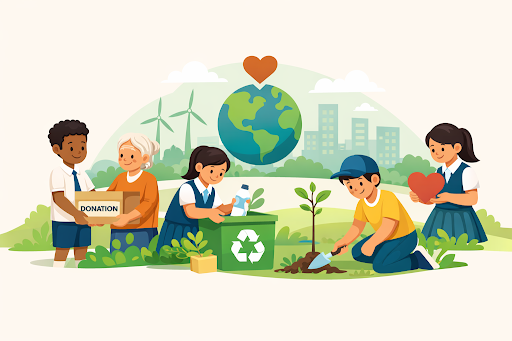
CSR activities in schools serve a clear purpose. They connect students to the world outside their school gates and teach them that their actions carry meaning.
Building Empathy in Young Minds
When students interact with underprivileged children or support animal shelters, they practice empathy in its truest form. They step outside their comfort zone and develop a deeper understanding of others' lives.
Developing Leadership Skills Through Service
Service-based activities place students in real leadership roles. They plan drives, coordinate teams, and take ownership of outcomes. These experiences prepare them for leadership far more effectively than theory alone.
Strengthening Teamwork and Communication
CSR projects rarely involve just one student. They require students to work together, communicate clearly, and solve problems. These are skills that employers and society value highly.
Also Read | From Kindergarten to Class 10: Complete Development in Every Child
Age-Appropriate CSR: A Smarter Approach
Not every student is ready for every kind of social work. Schools that design CSR activities by age group ensure that the experience is meaningful and manageable for each child. A layered approach also ensures that students grow steadily in their capacity for empathy and action.
Junior Students Learn Giving and Caring
Younger students respond well to activities like toy drives, park clean-ups, and hygiene education programs. These tasks are simple but carry real impact. For example, when a Grade 3 student packs a hygiene kit for an underprivileged child, they understand scarcity in a way no lesson plan can teach. They learn that giving is a habit and not a one-time act. Schools that build this habit early are planting seeds of generosity that grow quietly over a lifetime.
Middle Schoolers Take on Bigger Responsibilities
As students grow, their capacity for social understanding grows too. Activities like peer tutoring, tree planting, and visiting senior citizens challenge them to think beyond themselves. A middle school student who tutors a struggling classmate learns patience and communication far faster than any textbook exercise can teach. Similarly, a student who visits an old-age home begins to understand loneliness, time, and human connection in a deeply personal way. These are not small lessons. They stay.
Senior Students Drive Real Change
Older students are ready to mentor, lead environmental campaigns, and take on community welfare programs independently. At this stage, CSR moves from guided participation to genuine initiative. For instance, a Grade 11 student leading an awareness drive on water conservation is not just completing a school activity. They are practicing civic leadership.
Check Out | Integrating Social Responsibility into Student Life
Ramagya School, Greater Noida West: Building Compassionate Leaders
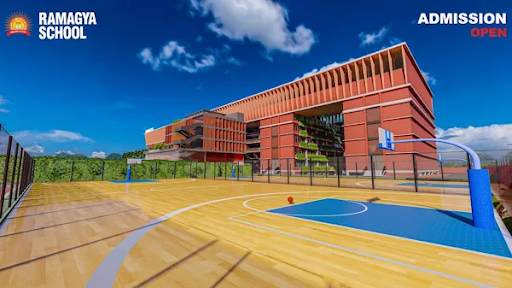
One of the best CBSE schools in Greater Noida West, Ramagya School stands among India's top institutions, recognised by Forbes India and India Today for its innovative and values-driven approach to education. The school's philosophy, rooted in the meaning of its name — Ra (Light), Ma (Self), Gya (Inner Wisdom) reflects its deep commitment to developing students who are not just academically strong but also socially responsible.
Ramagya School's CSR initiative is a structured, school-wide program that runs across all age groups. Junior students lead hygiene drives and clothing donations in underserved communities. Middle school students support animal shelters, plant trees, and celebrate the birthdays of school support staff to build gratitude and empathy.
Senior students run tutoring programs, environmental campaigns, and outreach activities in old-age homes. These are not random acts of kindness but planned programs tied to the United Nations' 17 Sustainable Development Goals. The school also runs the Ramagya Foundation under Purusharth Charitable Society, which works in education, health, and women's empowerment. A unique initiative called Nishabd promotes the welfare of stray animals, and every Raksha Bandhan, students send rakhis to soldiers of the armed forces as a mark of respect and patriotism.
What makes Ramagya's approach truly effective is that it treats service as a life skill, not an add-on activity. Students at Ramagya do not just learn about compassion — they practice it. They do not just hear about responsibility — they live it.
Conclusion
Ramagya School proves that great education builds great human beings. Its structured CSR programs show students that their actions shape the world around them. Schools that take this path produce graduates who are not only career-ready but also community-ready. That said, making CSR work in schools is not without its challenges. Time constraints, lack of trained facilitators, and inconsistent student participation often weaken even the best-designed programs. The way forward lies in treating service learning as a curriculum subject and not as an optional activity. Schools must track impact, celebrate student effort, and build community partnerships that keep these programs alive year after year. Ramagya School's approach offers a clear model. When service is embedded into a school's identity, as it is at Ramagya, it stops being a task and starts being a value. The students who leave such schools do not just carry degrees. They carry a sense of purpose, and that makes all the difference.
For more information on this and other similar schools in the area, check out this list of the best schools in Greater Noida West

 as a preferred source on