







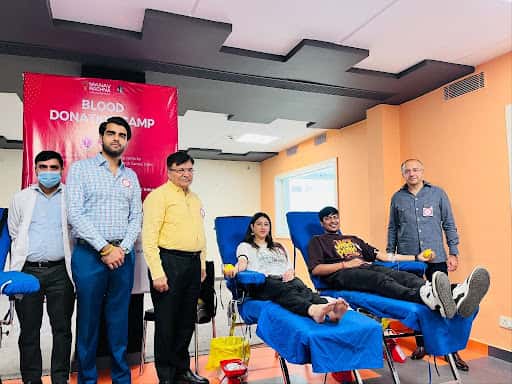

Throughout history, we have seen that a good structure in a school is what creates the future of a civilisation. School is a lot more than just classes and subjects. Schools are the very structure that creates a human being. And thus, these structures need to create a kind, empathetic human who can understand the pain of others and work towards solving it. And a great step towards teaching this sentiment to students is through community service.
And thus it becomes important that schools implement the function of building a better person through community service, by either helping underprivileged communities, participating in environmental drives, supporting social causes, or engaging in outreach programmes. Community service teaches students something that classrooms alone often cannot.
And so to understand the entire perspective on how schools help in building this sentiment in students, we are going to take a look at one of the best schools in Gurugram, Manav Rachna International School, Sector 51. Through this article, we are going to talk about the role that schools play in developing the aforementioned skills and how MRIS is working towards it.
Importance of Community Service in Education
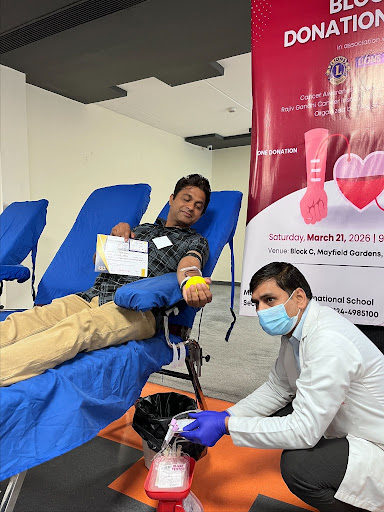
At the very core of this sentiment lies the understanding that education is not just related to personal growth of a human, but also creating citizens of the future who can contribute to the future.
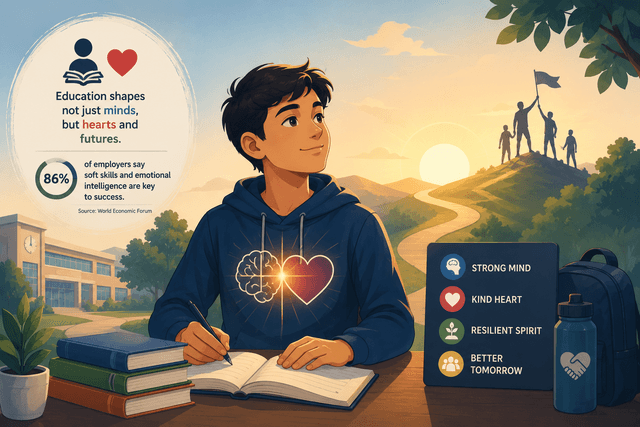
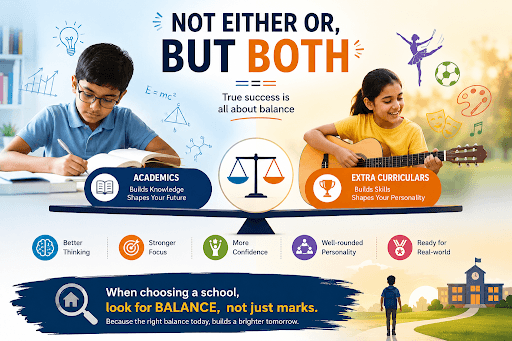
The modern kids grow up in a quick-paced, highly competitive environment that tests them to the core. Problems such as academic pressure, digital distractions, and individual achievement often dominate conversations around success. Now, while academic achievements are important, schools are increasingly recognising that students also need emotional intelligence, empathy, and social awareness to thrive in the real world.
More than that, engaging in community service can help students develop important soft skills, such as leadership, communication, and teamwork, as well as gain practical experience in their field of study. Additionally, volunteering can provide opportunities for students to network, build relationships with community members, and make a positive impact on society, and also learn some life skills that can never be learnt from books unless they experience them.
Read Further| What Parents Should Look for in a Classroom
Moral Sciences through Real World Experience
Moral Sciences have been a very common part of a student’s curriculum. But just the class interactions and lectures cannot be enough to instill the learning that needs to be imbibed into these students.
Community service instills the learning that a textbook might not be able to teach. It introduces children to a variety of situations that encourage them to understand, be kind, and have an emotional range. Whether students are teaching younger children, supporting senior citizens, participating in donation drives, or volunteering for social causes, they begin to recognise the value of human connection.
And so, in a world where social awareness is increasing, understanding and being empathetic are not just necessary skills, but a way of life necessary to create future leaders.
Exposure Creates Better Leaders
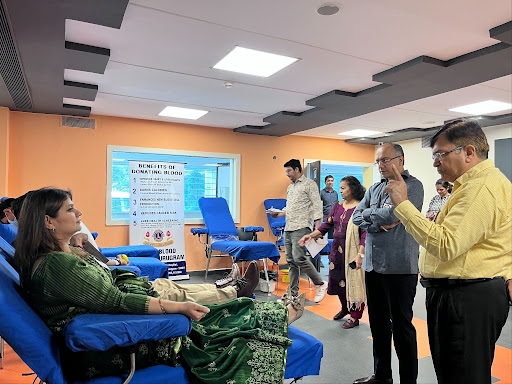
“The sign of a great leader is knowing what to overlook and what to address, who to comfort and who to confront. Leadership is not just vision; it’s reality management.” - Anonymous
Leadership is more than just making decisions; it is a combination of technical skills, emotional intelligence, and perhaps most importantly, social awareness. Social awareness is the ability to perceive, interpret, and act according to social cues, both explicit and implicit. This trait is indispensable for any effective leader aiming to facilitate cohesive teams, encourage productivity, and foster an empowering work environment.
According to a study by the Harvard Business Review, leaders with high emotional intelligence, including social awareness, outperform their peers by 37% in decision-making and team performance. Additionally, research by TalentSmart found that 90% of top performers possess high emotional intelligence, underscoring the importance of social awareness in leadership.
Practical Applications of Social Awareness in Leadership
Conflict Resolution Through Social Awareness
Conflicts are inevitable in any team. Socially aware leaders excel in resolving conflicts by:
- Identifying underlying emotional triggers.
- Navigating difficult conversations with empathy.
- Transforming disagreements into opportunities for growth.
A survey by CPP Inc. revealed that 85% of employees experience workplace conflict, but organizations led by socially aware leaders report a 23% reduction in conflict-related issues.
Motivating and Inspiring Teams with Social Awareness
Social awareness helps leaders personalize their approach. By understanding individual motivations, leaders can:
- Set realistic goals tailored to each team member.
- Celebrate achievements in meaningful ways.
- Research shows that 69% of employees are more productive when their leaders recognize their efforts. Moreover, Gallup data highlights that engaged teams show 21% greater profitability.
Fostering Collaboration and Trust
Trust is the foundation of any successful team. Leaders can foster trust by:
- Building psychological safety, encouraging team members to voice concerns.
- Maintaining transparency in decision-making.
- Demonstrating consistency between words and actions.
Google’s Project Aristotle identified psychological safety as the most critical factor in high-performing teams.
Also Read| Multilingualism for 21st Century Learners
How MRIS Encourages Real-World Learning Through Community Service
At one of the best CBSE schools in Gurgaon, Manav Rachna International School (MRIS), Sector 51, Gurugram, community service is viewed as an important part of holistic education rather than an extracurricular obligation.
The school’s outreach initiatives are integrated into its interdisciplinary curriculum with the goal of nurturing compassionate, balanced, and accountable young global citizens.
By encouraging students to participate in community engagement programmes, MRIS helps learners:
- Develop empathy and integrity
- Build social awareness
- Understand responsibility through action
- Engage meaningfully with the world around them
The focus is not simply on participation, but on helping students grow through authentic experiences. Through these initiatives, students are encouraged to step beyond academic learning and connect with larger social realities—an approach that supports both personal growth and emotional development.
Education Must Extend Beyond Classroom Walls
As education evolves, schools are beginning to realise that preparing children for the future requires more than academic excellence alone.
Children also need exposure to real people, real challenges, and real experiences. They need opportunities to understand society, develop empathy, and learn the importance of responsibility and contribution.
Community service plays a powerful role in making this possible.
Because ultimately, the purpose of education is not only to help children succeed individually, but also to help them become individuals who understand, care for, and contribute positively to the world around them.
For more information on MRIS and other similar schools, check out this list of the best schools in Gurgaon.
 as a preferred source on