








In an era dominated by standardised testing and competitive rankings, the true essence of education—nurturing wisdom, intellect, and moral responsibility—often takes a backseat. The ancient Sanskrit concept of 'Manubharva,' meaning "carrying the wisdom and intellect of humanity," offers a transformative lens through which modern schools can redefine success.
Rather than merely producing high scorers, what if education focused on developing individuals who apply their intellect for societal betterment? Ramagya School, Knowledge Park V, Greater Noida West, exemplifies this philosophy, blending timeless Indian wisdom with contemporary pedagogy to create students who don't just learn—they lead with purpose.
In this article, we explore how the Manubharva philosophy reshapes education, the critical need for personalised learning approaches, and how integrating global consciousness with ancient wisdom creates complete human beings ready to serve society.
Also Read | Where Inner Light Meets Academic Excellence
Understanding Manubharva—Beyond Academic Excellence
The concept of Manubharva challenges conventional educational metrics by asking a fundamental question: Are we preparing students to be custodians of knowledge or mere consumers of information? This ancient philosophy goes beyond grades and percentages to focus on intellectual responsibility and moral grounding.
The Ancient Roots of Intellectual Responsibility
The term 'Manubharva' derives from two Sanskrit elements: 'Manu,' representing human intellect and consciousness, and 'Bharva,' meaning carrying or upholding responsibility. Together, they form a powerful educational mandate—students must become bearers of wisdom who apply their knowledge for humanity's benefit. The National Education Policy 2020 explicitly states that education must develop "good human beings capable of rational thought and action," aligning remarkably with these ancient principles.
From Knowledge Acquisition to Wisdom Application
Traditional schooling treats education as a transaction: input curriculum, output results. Manubharva flips this model entirely, asking students not just "What do you know?" but "How will you use what you know to serve others?" This shift transforms learning from passive reception to active contribution, creating individuals who see education as a responsibility rather than a privilege.
The Crisis of Modern Education: Why Wisdom Matters Now
Modern education systems face an unprecedented challenge—producing academically excellent students who struggle with emotional resilience, ethical grounding, and real-world problem-solving. This disconnect between scholastic success and life preparedness demands urgent attention.
When Success Metrics Miss the Human Element
Contemporary schooling operates on a factory model where standardisation trumps individuality. Students move through identical curricula, face identical assessments, and receive identical instruction regardless of their unique needs or talents. A 2023 study by the National Council of Educational Research and Training revealed that 68% of Indian students experience significant academic stress, while NIMHANS research shows mental health concerns among adolescents have surged by 40% in the past five years.
The Emotional Intelligence Deficit
Academic excellence without emotional intelligence creates a dangerous imbalance. Students may excel in examinations but struggle with empathy, self-awareness, and interpersonal relationships. They know how to solve complex equations but not how to navigate conflict, manage stress, or contribute meaningfully to their communities. This gap between intellectual capacity and emotional maturity undermines education's fundamental purpose.
Reclaiming Education's Original Purpose
Education originally meant drawing out potential, not pouring in information. The Manubharva philosophy reclaims this lost vision by centring character development, mindfulness practices, and community engagement alongside academic achievement. When schools measure success not just by test scores but by how well students understand their purpose in life, education transforms from transaction to transformation.
Personalised Learning: The Foundation of Individual Wisdom
Every child possesses unique strengths, learning paces, and emotional needs. Yet traditional classrooms often treat diversity as an inconvenience rather than an opportunity. Personalised learning approaches recognise that one-size-fits-all education fundamentally fails our children.
Why Individual Attention Changes Everything
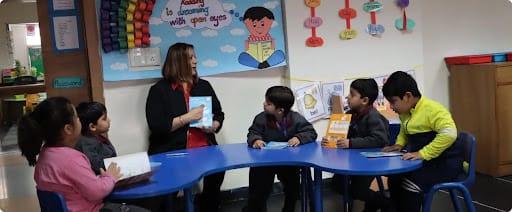
Research from the Central Board of Secondary Education indicates that personalised learning approaches improve student engagement by up to 35%. When teachers know each student deeply—their interests, challenges, dreams, and fears—instruction becomes meaningful rather than mechanical. Individual Education Plans benefit all learners by creating customised roadmaps that identify strengths, address challenges, and honour individual learning styles.
Beyond Academics: Nurturing Complete Individuals
Personalised education means understanding whether a student learns better through visual aids or hands-on experiments, whether they need emotional support or intellectual challenge, and whether they thrive in groups or independent work. This deep knowledge allows teachers to become mentors, classrooms to become communities, and learning to become a journey of self-discovery rather than a race.
The Teacher's Role in Personal Growth
When class sizes remain manageable and teachers invest in knowing each student individually, something remarkable happens. Students feel seen, valued, and understood. This emotional security creates the psychological safety necessary for taking intellectual risks, asking questions, and embracing challenges rather than fearing failure—the very foundation of genuine learning.
Integrating Global Consciousness with Local Action
The United Nations' 17 Sustainable Development Goals provide a framework for addressing humanity's most pressing challenges. Progressive schools worldwide embed these goals into curricula, moving beyond theoretical discussion to practical implementation, creating what educators call "glocal" awareness.
The UN's Sustainable Development Goals in Classroom Practice
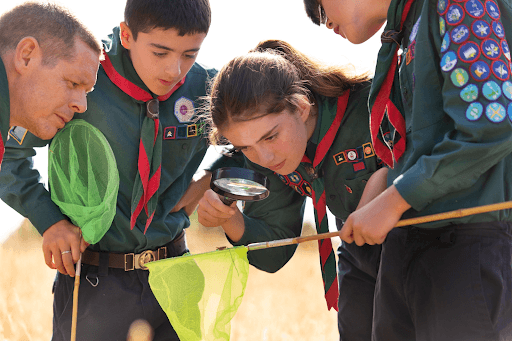
When students participate in community service projects aligned with SDGs, they develop the ability to think globally while acting locally. Whether organising hygiene education outreach, leading environmental conservation drives, or supporting marginalised communities, these experiences cultivate skills no textbook can teach—compassion, leadership, and understanding that privilege carries responsibility.
From Theory to Practice: Real-World Impact
Age-appropriate community engagement transforms abstract concepts into concrete understanding. Junior students teaching hygiene practices to underserved children learn more about public health than lectures could convey. Middle schoolers supporting animal shelters develop empathy and responsibility. Senior students mentoring younger peers build leadership skills while reinforcing their own knowledge. These experiences answer the Manubharva call directly—students become active bearers of wisdom who contribute meaningfully to society.
Check Out | Beyond Four Walls: How WisdomWood High Reimagines Campus as Curriculum
Ramagya School, Greater Noida West: Where Manubharva Comes Alive
Modern education needs living examples of how ancient wisdom integrates with contemporary pedagogy. Schools that successfully blend tradition with innovation, character with academics, and individual attention with community consciousness demonstrate that Manubharva isn't theoretical—it's achievable.
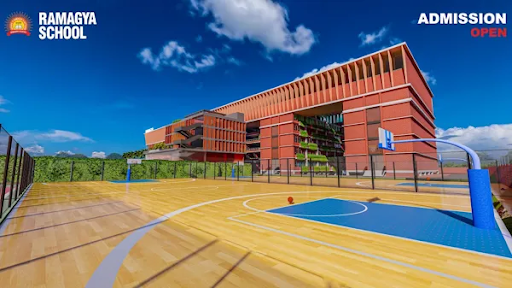
Established in 2005, Ramagya School operates from a 3-acre campus in Knowledge Park V, Greater Noida West, affiliated with CBSE. The school's name embodies its philosophy: 'Ra' (light), 'Ma' (self), and 'Gya' (inner wisdom)—a trinity guiding every educational decision toward holistic student development.
Education Today ranked Ramagya #1 in India for "Individual Attention to Students," validating its personalised learning approach. Forbes India featured it among the Top 30 Great Indian Schools, while the Times School Survey placed it #3 in Noida. India Today Conclave honoured it as "The Reformers of Indian Education" for innovative pedagogy.
What distinguishes this institution is its integration of Transcendental Meditation, Geeta Shlokas, and manifestation techniques to develop an 'EK-AAGRAT' mindset. This prepares students for righteous, mindful, ethical living through daily practices woven into the school day, operating on four foundational pillars:
- Mental Health: Dedicated counselling builds emotional resilience
- Sports Excellence: Professional coaching develops physical strength and team spirit
- Transcendental Meditation: Daily practices cultivate inner calm and focus
- Bhagavad Gita Wisdom: Ancient teachings guide ethical decision-making
Every student receives an Individual Education Plan (IEP), ensuring their unique potential and learning pace are honoured. Faculty members, each with over 15 years of experience and regular participation in international seminars, maintain cutting-edge pedagogical practices while respecting individual differences.
Ramagya's commitment extends into tangible action through age-appropriate community care programs aligned with all 17 UN Sustainable Development Goals. Junior students conduct hygiene outreach, middle schoolers support animal shelters through 'Nishabd' initiative and engage with senior citizens, while senior students mentor peers and lead environmental initiatives through the Ramagya Foundation's work across education, health, and women empowerment.
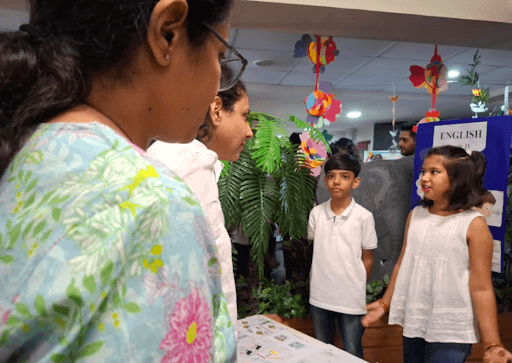
The school's vision, "Light My Inner Voice," manifests in developing 'Ramagyans'—students embodying emotional stability, cultural rootedness with global awareness, and resilience in transforming challenges into opportunities. Specialised programs like Raz-Plus for literacy, STREAM Innovation labs, Design Thinking workshops, and a Student-Driven Cabinet practising democratic leadership aren't add-ons but integral components producing complete human beings.
After two decades, Ramagya demonstrates that Manubharva isn't confined to philosophical texts but is a living educational philosophy preparing students to carry forward human wisdom—not as passive recipients of knowledge but as active contributors to humanity's collective wisdom.
Education that nurtures wisdom alongside knowledge creates leaders who don't just succeed—they serve. Choosing schools that embrace holistic philosophies like Manubharva ensures children develop not just intellect but character, not just ambition but purpose, not just success but significance. The ancient call to become carriers of human wisdom has never been more urgent than in our complex, interconnected world.
For more information on this and other such schools in the area, check out this list of the best schools in Noida Extension.
 as a preferred source on