









For decades, schools have been defined by their four walls—classrooms with blackboards, desks in rows, and learning confined to textbooks. But what if the campus itself could teach? What if playgrounds built problem-solving skills, natural spaces nurtured emotional intelligence, and corridors sparked curiosity at every turn?
This philosophy of "campus as curriculum" is transforming progressive education. At WisdomWood High, Begur Lake, Bangalore, this isn't just theory—it's the foundation of everything. The CBSE-affiliated school has transformed its infrastructure into what they call "the third teacher," where intentional design actively shapes learning, character, and capability.
In this article, we explore how thoughtfully designed campuses influence student development, the psychology behind spatial learning, and why modern education is moving beyond traditional classroom boundaries.
Also Read | How Experiential Learning Shapes Education
The Evolution of Learning Spaces in Modern Education
The way we design schools reveals what we value in education. For over a century, classroom architecture remained largely unchanged—rows of desks, a teacher's podium, four walls containing knowledge. This industrial-age model prioritised efficiency and uniformity over engagement and creativity. Today, educators worldwide are questioning this approach.
From Passive Spaces to Active Learning Environments
School infrastructure once served a simple purpose: shelter students while teachers delivered lessons. Modern educational psychology challenges this assumption. Neuroscience reveals that environments significantly impact cognitive function, memory retention, and emotional well-being. Natural light improves concentration, flexible seating supports collaboration, and access to nature reduces anxiety while enhancing creativity.
The Role of Design in Student Engagement
Progressive institutions now approach architecture as pedagogy. Every design choice—from ceiling height to colour schemes, from outdoor access to furniture flexibility—serves educational goals. This shift reflects a broader understanding: children learn through movement, sensory experience, environmental interaction, and spatial exploration. When campuses support these diverse learning modes, student engagement naturally increases.
What Makes a Campus an Active Teacher?

Not every well-designed school qualifies as an "active teacher." Aesthetically pleasing buildings don't automatically enhance learning. The difference lies in intentionality—whether each space serves clear pedagogical purposes beyond housing students.
Three Pillars of Educational Architecture
Intentionality: Every zone must align with specific learning objectives. A rooftop garden isn't just pleasant greenery—it teaches botany, sustainability, and responsibility through hands-on cultivation.
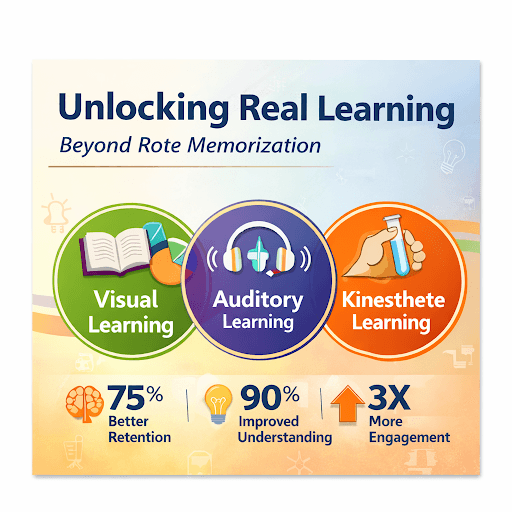
Diversity: Varied environments support multiple intelligences and learning styles. Visual learners thrive in multimedia-rich spaces. Kinesthetic learners need movement-based zones. Reflective thinkers require quiet corners for contemplation.
Integration: The best campuses create interconnected ecosystems where learning flows seamlessly—from classroom to lab, from sports field to nature zone, from maker space back to traditional instruction.
When Infrastructure Becomes Curriculum
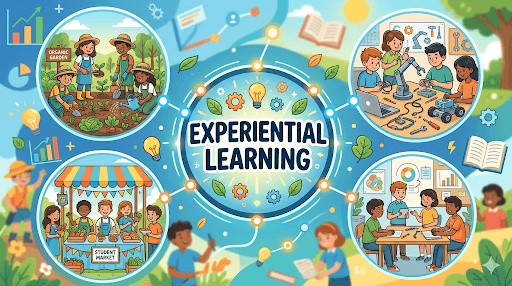
The transformation happens when students stop being passive occupants and become active participants. They don't just walk through a greenhouse—they monitor hydroponic systems, adjust nutrient levels, and troubleshoot growth challenges. Physical engagement deepens conceptual understanding. Abstract theories become concrete when students can see, touch, and manipulate their learning materials within purpose-built environments.
The Psychology Behind Spatial Learning
Human brains evolved in dynamic, complex environments—not static classrooms. Our cognitive systems are wired to learn through spatial navigation, physical manipulation, and environmental interaction.
Embodied Cognition in Practice
Research in embodied cognition demonstrates that physical experiences enhance abstract reasoning. Students who gesture while solving math problems perform better than those who sit still. This isn't about abandoning intellectual rigour—it's recognising that minds and bodies aren't separate. Movement activates neural pathways that support memory formation, creating stronger cognitive associations than passive observation alone.
Environmental Variety and Cognitive Freshness
Monotonous environments lead to mental fatigue. When students spend hours in identical rooms, cognitive engagement naturally declines. Transitioning between spaces—indoor to outdoor, structured to flexible, quiet to collaborative—maintains alertness and motivation. Each new environment triggers fresh attention, helping sustain focus throughout long school days.
Building Learning Ecosystems: Key Components

Modern educational campuses typically integrate several distinct zones, each targeting different developmental areas. The most effective schools ensure these zones work together as cohesive ecosystems rather than isolated facilities.
Innovation and Hands-On Discovery
STEM labs, maker spaces, and technology hubs provide students with tools to transform ideas into reality. These aren't demonstration areas—they're working laboratories where students design, test, fail, iterate, and succeed. Hydroponics systems teach biology and chemistry simultaneously. Robotics workshops combine engineering and programming. Maker spaces with 3D printers empower students to prototype solutions to real challenges.
Athletic and Strategic Development
Sports facilities build more than physical fitness. Team sports teach collaboration and communication. Individual athletics develop discipline and resilience. Strategy games like chess cultivate critical thinking. The key is variety—not every child excels at football, but everyone can find physical activities that suit their interests, from martial arts to tennis.
Nature-Based Learning and Reflection
Access to natural environments provides an essential counterbalance to structured academic intensity. Lake viewing areas, animal care zones, and open-air classrooms reduce stress hormones, improve mood, and enhance creativity. Students who regularly interact with nature demonstrate better focus, reduced anxiety, and improved social behaviours.
Challenges in Creating Purpose-Driven Campuses
Despite growing recognition of spatial learning's value, significant obstacles prevent widespread adoption. Urban schools face severe space constraints, often operating in multi-story buildings with minimal outdoor access. Budget limitations force difficult choices between facilities and programs.
Beyond Infrastructure: The Implementation Gap
Even schools with impressive facilities sometimes fail to leverage them effectively. Infrastructure alone doesn't transform education—teachers must be trained to utilise spaces purposefully, and curriculum must integrate spatial advantages systematically. A science lab with cutting-edge technology remains underutilised if lessons don't incorporate hands-on experimentation. The gap between potential and reality often comes down to institutional culture.
Check Out | How to Raise Confident Problem-Solvers
WisdomWood High: Where Architecture Meets Pedagogy
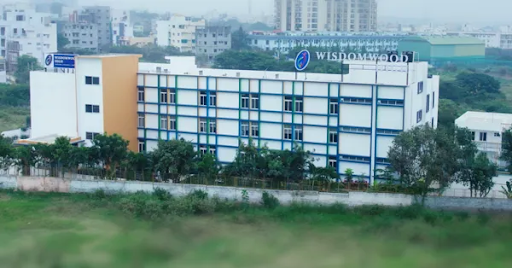
WisdomWood High (WWH), located at Begur Lake in Bangalore, exemplifies the campus-as-curriculum philosophy through its intentionally designed ecosystem. The CBSE-affiliated school has created over 10 experience centres and 30 activity spaces where every corner serves educational purposes, transforming infrastructure into an active teaching tool that complements academics.
The Innovation Hub houses agri-tech and STEM labs featuring signature hydroponics, aquaponics, and aeroponics systems. Students don't merely observe—they manage living ecosystems, adjusting pH levels, monitoring growth cycles, and troubleshooting real agricultural challenges. The adjacent Maker Tinker Space provides materials and tools for student-led prototyping, transforming abstract engineering concepts into tangible innovations.
The Champions' Arena extends beyond typical playgrounds with professional-grade turf and courts for football, basketball, and tennis. What makes it distinctive is the human-scale chessboard that transforms strategic thinking into physical movement, blending cognitive development with active play. Early years' zones ensure age-appropriate challenges, while structured sports programs build discipline, teamwork, and resilience across all grade levels.
The Sanctuary offers what many schools overlook—spaces for reflection and connection with nature. The Lake Viewing Zone provides birdwatching opportunities and quiet contemplation areas that teach patience and observation. The Animal Zone, home to ducks and birds, cultivates responsibility and empathy through daily care routines. Open-air classrooms blur indoor-outdoor boundaries, demonstrating that meaningful learning thrives beyond traditional walls and rigid structures.
Modern education demands more than textbooks and lectures. It requires environments that inspire curiosity, support diverse learning styles, and make abstract concepts tangible through experience. When schools invest in purposeful infrastructure—not just buildings, but true learning ecosystems—students don't simply attend classes. They engage, experiment, discover, and develop into well-rounded individuals equipped for tomorrow's challenges. The question isn't whether campus design matters, but whether we're willing to reimagine what schools can be when every space becomes an opportunity for growth.
For more information on this and other similar schools in the area, check out this list of the best schools in Bangalore.











 as a preferred source on