







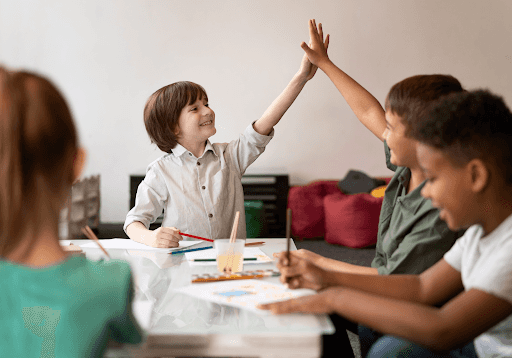

Walk into any traditional classroom, and you'll likely see rows of desks, a blackboard filled with notes, and students scribbling furiously in their notebooks. But does this setup truly prepare them for life beyond exams? The answer is increasingly becoming a resounding no.
Modern education demands more than just memorisation and textbook knowledge. It requires students to think critically, solve real problems, and navigate complex emotional landscapes. Schools across India are beginning to recognise this shift, moving towards experiential models that prioritise doing over memorising. Presidium School, Gurgaon, stands at the forefront of this educational revolution, transforming how students learn, grow, and lead.
In this article, we'll explore the power of experiential learning cycles, the importance of theme-based immersion, the role of emotional intelligence through concepts like NAVRASA, and how social responsibility initiatives are shaping tomorrow's leaders.
Also Read | How to Excel in Sports and Performing Arts
Why Traditional Classroom Learning Falls Short
The education system has long relied on a simple formula: teach, test, repeat. Students sit through lectures, cram information before exams, and promptly forget most of it afterward. This assembly-line approach might have worked in an industrial era, but today's world demands something entirely different.
The Disconnect Between Theory and Application
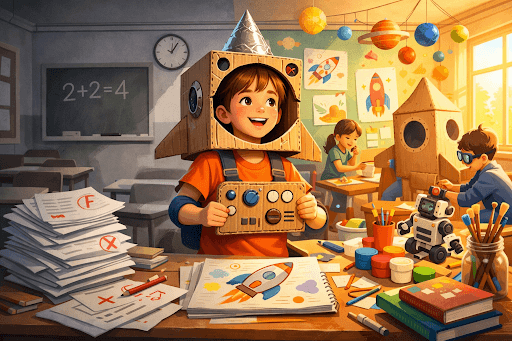
Students spend years learning mathematical formulas, scientific theories, and historical dates. Yet when faced with real-world challenges, many struggle to apply this knowledge. Traditional teaching creates a chasm between knowing and doing. A student might ace a physics exam but feel lost when asked to build a simple circuit.
What Students Actually Need for Tomorrow's World
The World Economic Forum highlights skills like critical thinking, creativity, and emotional intelligence as essential for the future workforce. Experience develops leadership, collaboration, and adaptability, not lectures. Students need opportunities to fail safely, reflect on mistakes, and try again with education that acknowledges them as whole people.
The Power of Experiential Learning: Beyond Books and Blackboards

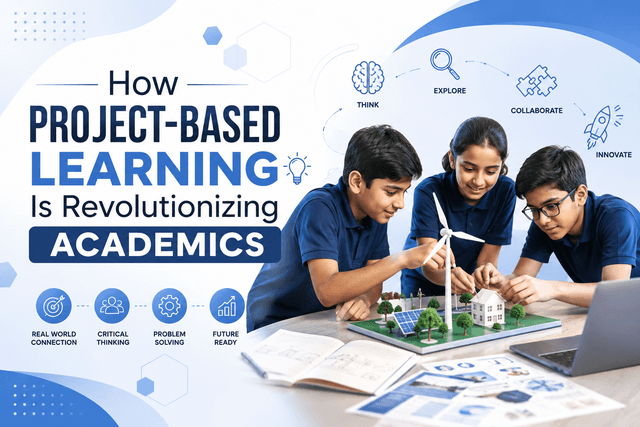
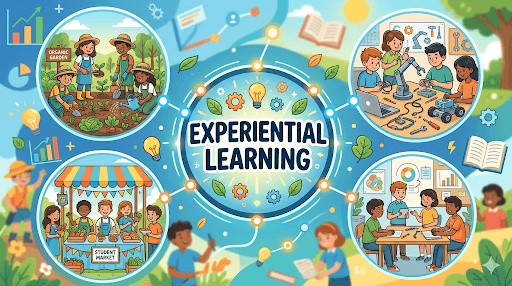
Experiential learning challenges the conventional approach to education. Instead of starting with theory, it begins with experience. Students engage, explore, make mistakes, and then construct understanding from what they've learned. This approach isn't just more engaging—it's neurologically more effective.
Understanding the DO-REFLECT-THINK-APPLY Framework
This four-stage cycle transforms passive recipients into active learners. DO represents hands-on experience where students don't just read about concepts but engage with them directly. REFLECT follows, where students pause to consider what occurred and how they felt. THINK connects experience to concept, making theory emerge from practice. APPLY closes the loop as students use newfound understanding in new contexts.
Real-World Benefits for Student Development
When education follows this cycle, retention rates soar. The National Training Laboratories found that retention from lectures is not as good as when learning by doing. Students develop problem-solving instincts, build resilience through safe failures, and gain confidence when discovering they can figure things out themselves.
Theme-Based Learning: Creating Immersive Educational Experiences
Imagine dedicating an entire week to exploring mathematics through games, puzzles, and real-world applications. Or spending five days immersed in environmental science, combining classroom learning with tree planting and sustainability projects. This method is theme-based learning—creating deep dives that allow students to see connections they'd otherwise miss.
When mathematics week arrives, suddenly geometry appears in art class, statistics in social studies, and patterns in music. Subjects stop being isolated silos and develop interconnected ways of understanding the world. This approach respects how humans naturally learn, creating genuine interest rather than dutiful compliance. Students remember themes for weeks after regular lessons fade.
NAVRASA: Bridging Emotions with Education
Indian classical arts have long recognised what modern psychology is only now confirming: emotions are central to human experience and learning. The concept of NAVRASA—nine The concept of fundamental emotionsoffers a profound framework for emotional literacy. These nine rasas encompass love, laughter, compassion, anger, courage, terror, disgust, surprise, and peace.
When students explore NAVRASA through musical theatre, they learn to recognize emotions in themselves and others. They practice expressing feelings in healthy, creative ways and discover that all emotions have value. This emotional intelligence translates directly into better relationships, improved self-regulation, and enhanced academic performance. Research consistently shows that students with higher emotional quotients perform better academically and exhibit stronger leadership.
Social Responsibility: Education That Extends Beyond Campus Walls
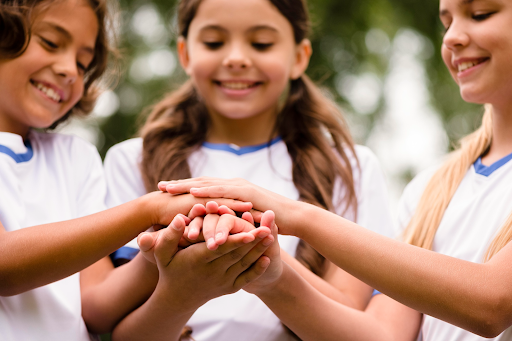
Real leadership isn't cultivated in classrooms alone. It emerges when students engage with the world beyond school gates, confronting real challenges and serving real communities. Community engagement transforms abstract values into lived experiences.
Why Community Engagement Matters
Reading about poverty or disability raises awareness. Visiting special schools and interacting with children with special needs creates empathy—the difference is profound. Community engagement shatters assumptions and stereotypes. Students discover that differently abled children have incredible talents, that elderly people have fascinating stories, and that environmental problems require urgent action.
Types of Social Impact Initiatives
Environmental conservation projects teach stewardship. Tree plantation isn't just beautifying spaces—it's taking responsibility for the planet's future. Visits to old age homes and special schools build compassion and dignity. Cleanliness drives develop civic responsibility, creating citizens who actively work toward collective betterment rather than just following rules.
The Lifemakers Approach: Developing EQ, SQ, and IQ Simultaneously
Traditional education fixates on IQ—intellectual quotient. But success requires broader capabilities. The Lifemakers philosophy recognises three interconnected dimensions: the emotional quotient (EQ) for recognising and managing emotions, the social quotient (SQ) for building relationships and teamwork, and the intellectual quotient (IQ) for critical thinking and reasoning. Programs that develop all three create well-rounded individuals capable of applying intelligence with emotional awareness and social responsibility.
Check Out | Lifelong Learning Starts Young
Presidium School, Gurgaon: Where the DO-REFLECT-THINK-APPLY Philosophy Comes Alive
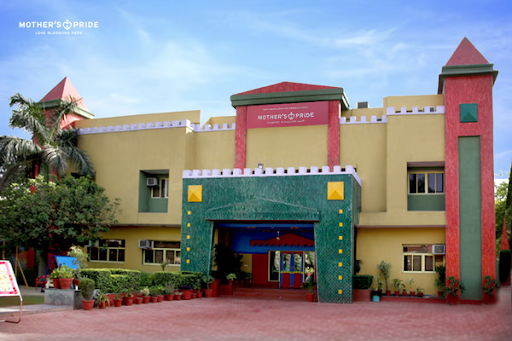
Founded in 2005, Presidium School in Sector 5, Gurgaon, operates under CBSE affiliation, offering education from Nursery to Grade 12. The school's philosophy—"Be What You Want To Be"—centres on creating leaders through holistic development.
The DO-REFLECT-THINK-APPLY cycle is embedded in the daily curriculum. Students implement chapters through practical activities, reflect on experiences, connect theory to observation, and continuously apply learning to new situations.
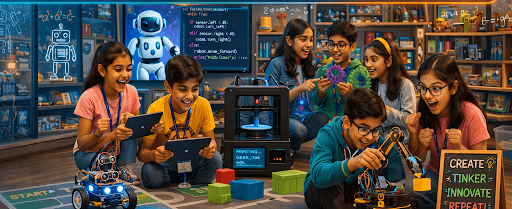
Digital classrooms, science labs, mathematics labs, and robotics facilities provide experiential learning spaces. Science Week showcases projects on biodiversity and renewable energy. Math Week celebrates logical thinking through competitive challenges. Earth Week combines climate workshops with tree plantation drives. Photography, English, and Hindi Weeks immerse students through storytelling, debates, and creative expression.
The NAVRASA musical theatre program brings nine emotions to life through performances and builds stage confidence and emotional intelligence. Stage plays address social issues like global warming, while street plays (Nukkad Natak) tackle substance abuse and gender equality. Role-playing competitions develop public speaking and social awareness.
The Lifemakers Program systematically develops emotional, social, and intellectual quotients through structured activities. Students visit Sparsh Special School, building empathy through personal connections with children with special needs. Annual tree plantation drives and Earth Day celebrations promote environmental responsibility. Festival visits to old homes teach community care, while participation in the Swachh Bharat Mission emphasises civic responsibility.
Presidium's comprehensive approach demonstrates that student empowerment requires more than academics. By combining experiential learning, theme-based immersion, emotional literacy through NAVRASA, and genuine social engagement, the school prepares students not just for exams but for life. Whether students discover passion in robotics, dance, environmental activism, or public speaking, Presidium provides platforms to transform interest into expertise.
Education's purpose extends beyond career preparation. It should cultivate thoughtful, compassionate, capable individuals who can lead, serve, and innovate. Schools that blend rigorous academics with emotional development, practical skills with social responsibility, and individual growth with community consciousness are shaping not just successful students but exemplary human beings.
For more information on this and other similar schools in the area, check out this list of the best schools in Gurugram.


 as a preferred source on