







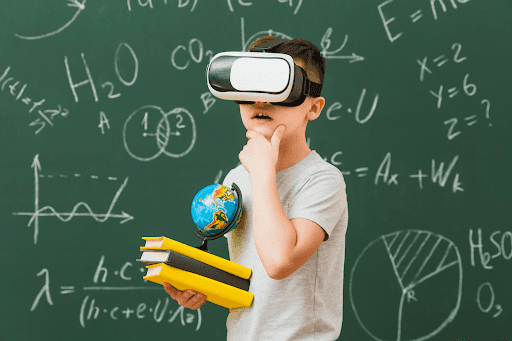

Education in India stands at a crossroads. The National Education Policy 2020 has introduced a revolutionary 5+3+3+4 framework, replacing the decades-old 10+2 system. This shift isn't just about changing numbers—it's about reimagining how children learn, grow, and prepare for an unpredictable future.
Schools across the country are grappling with this transformation. Some are slowly adapting, while others are leading the charge by combining policy changes with technological innovation. MVM School in Devanahalli, Bangalore, represents the latter—a CBSE institution that's bridging traditional values with futuristic learning methods.
In this article, we'll explore how the NEP framework reshapes education, why early technology exposure matters, and how institutions can balance cultural roots with modern demands.
Also Read | From Karate To Coding: How MVM Devanahalli is Redefining All-Round Education
Understanding NEP 2020's 5+3+3+4 Framework

The restructuring of India's educational system emerged from decades of research showing that early childhood experiences shape lifelong learning capabilities. This framework addresses gaps in the traditional 10+2 system while prioritizing holistic development over mechanical learning.
Why India Needed an Educational Restructuring
The 10+2 system served India for generations, but its limitations were evident. Students memorized information for exams, only to forget it weeks later. Critical thinking took a backseat to rote learning. By Grade 11, teenagers were forced into rigid streams—often without understanding their true interests. The Ministry of Education recognized these gaps, leading to the comprehensive National Education Policy 2020 that prioritizes holistic development.
The Foundational Stage: Building Strong Roots
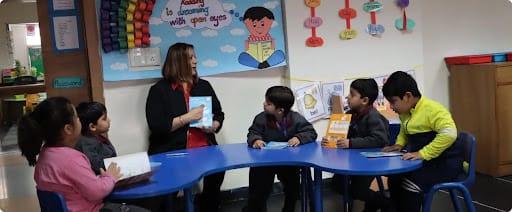
Ages 3 to 8 form the bedrock of a child's educational journey. This five-year period includes three years of pre-primary education followed by two years of early primary learning. The focus shifts to play-based learning, storytelling, and developing basic literacy through activities. The foundational stage emphasizes mother tongue instruction, recognizing that children grasp concepts faster in familiar languages.
The Preparatory Stage: Discovering Interests
Between ages 8 and 11, children transition from play-based learning to structured academics. Subjects aren't treated as isolated compartments—a science lesson might incorporate mathematics, while language classes explore historical contexts. Teachers encourage questions rather than demanding silence. This three-year window is crucial for developing communication skills and collaborative abilities.
The Middle Stage: Deepening Understanding
The middle stage, covering ages 11 to 14, introduces experiential learning in earnest. Abstract concepts from textbooks come alive through experiments, field trips, and projects. Subject teachers work together, showing students how mathematics applies to science and how history influences literature. This multidisciplinary approach mirrors real-world problem-solving.
The Secondary Stage: Preparing for Tomorrow
The final four years, from ages 14 to 18, offer unprecedented flexibility. Students aren't locked into predetermined streams. A teenager interested in architecture can study physics, art, and mathematics together. Vocational courses gain equal importance alongside traditional academics, preparing students for diverse pathways—whether university, polytechnic, or entrepreneurship.
The Role of Technology in Modern Education
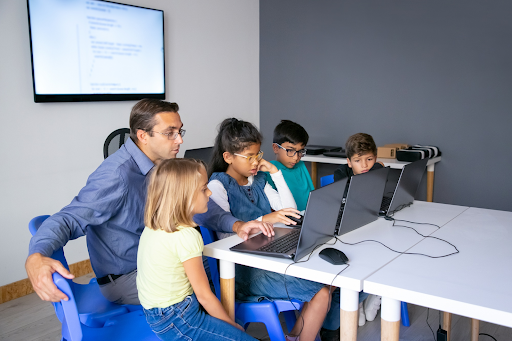
The gap between classroom learning and workplace requirements has never been wider. Modern education must integrate technology not as a special subject, but as a tool for problem-solving across all disciplines.
Why STEM Education Cannot Wait
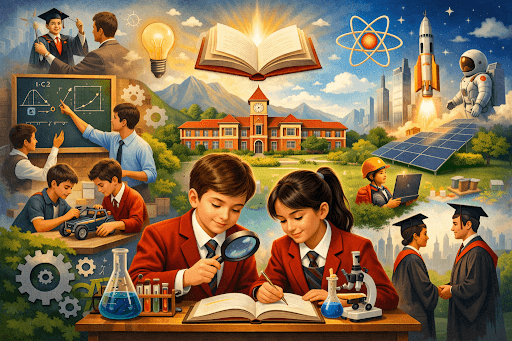
Science, Technology, Engineering, and Mathematics aren't just career paths—they're problem-solving frameworks applicable to every field. Starting STEM exposure early demystifies these subjects, preventing the fear many students develop by high school. Countries leading in innovation share one trait: they introduce children to technology young, not just consuming it but understanding how things work.
From Blackboards to Innovation Labs
Traditional laboratories served their purpose when education meant following prescribed experiments. Today's learning spaces need flexibility—robotics corners where students debug code, 3D printing stations where design ideas materialize, and spaces where failure isn't penalized but celebrated. These environments teach patience, persistence, and collaboration alongside technical skills.
Artificial Intelligence and Young Minds
AI isn't science fiction anymore—it's part of daily life. Children growing up today will work alongside AI throughout their careers. Early exposure helps them understand both capabilities and limitations. Understanding how algorithms work helps students think critically about information they consume online, a crucial skill in an age of misinformation.
Balancing Cultural Roots with Technological Advancement
India's strength lies in its diversity—linguistic, cultural, and traditional. As schools modernize, thoughtful integration ensures technology enhances rather than replaces cultural identity.
Multilingualism as a Cognitive Advantage
Speaking multiple languages isn't just culturally valuable—it's cognitively beneficial. Research shows bilingual children often demonstrate better problem-solving skills. When schools use mother tongue instruction in early years, children build confident foundations. Technology actually supports multilingualism through language apps, voice recognition tools, and digital storytelling platforms that help preserve regional languages.
Community Engagement in Education
Indian families traditionally view education as a community responsibility. The NEP recognizes this, encouraging parental involvement and local community participation. When schools invite grandparents to share traditional stories or local artisans to demonstrate crafts, they bridge generational gaps. Students see technology and tradition as complementary rather than contradictory.
Check Out | From NAVRASA to Real-World Impact
MVM School, Devanahalli: Where NEP Meets Innovation
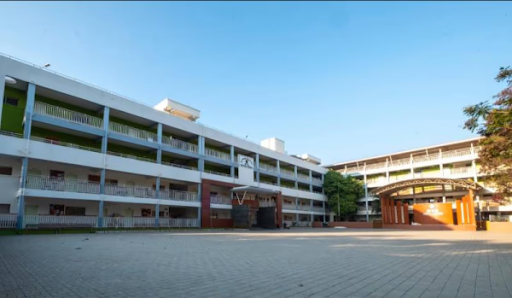
Located in Devanahalli, Bangalore, MVM School operates under CBSE affiliation while fully implementing the NEP 2020 framework across all educational stages. The institution gained recognition with the "All-Rounder CBSE School Award" from the India School of Awards in New Delhi in September 2023.
MVM School's partnership with Cogno Space brings a 700 square feet innovation hub exclusively for students from Grades 1 to 10. The space houses laptops, 3D printers, tablets, and specialized equipment for robotics and drone technology. Students engage with 35+ real-world concepts throughout the academic year, with a culminating expo planned for late 2025.
Beyond technology, MVM maintains well-equipped Biology, Chemistry, and Physics laboratories. The library offers spacious reading areas, while computer labs ensure digital literacy development. State-of-the-art basketball and volleyball courts support physical development, with students reaching state and national level competitions. Chess, table tennis, karate, and yoga programs ensure diverse activity options.
MVM School's mission centers on preparing students for academic, social, and personal success. The emphasis on multilingualism manifests through mother tongue instruction in foundational years, gradually introducing additional languages. Teachers undergo continuous professional development, staying updated with evolving pedagogical methods. Parents regularly participate in workshops and collaborative events, creating a supportive ecosystem.
MVM School balances cultural understanding with technological advancement—students learn coding while appreciating traditional arts, study robotics while practicing yoga. This integration prepares children for a globalized world without disconnecting them from their roots. The school's motto—Inspiration, Excellence, Empowerment—guides every decision from curriculum design to facility planning.
Ready to witness how foundational learning meets future innovation? Visit MVM School in Devanahalli to explore the Cogno Space Lab and experience NEP 2020 implementation firsthand. Watch young minds engage with technology, ask questions without fear, and develop skills that will serve them throughout their lives. Apply Now to secure your child's place in this transformative educational journey.
For more information on this and other such schools in the area, check out this list of the best schools in Bangalore.
 as a preferred source on