







Indian education stands at a fascinating crossroads where ancient pedagogical wisdom meets contemporary learning methodologies. While UNESCO recognizes India's traditional education systems as repositories of experiential learning, modern schools often struggle to authentically integrate cultural heritage beyond token celebrations. The real challenge lies in embedding traditional values as foundational pillars rather than peripheral add-ons. One CBSE institution in Bagalur, Bangalore, has designed its entire curriculum around this integration—Kesar The International School (KTIS).
In this article, we explore how ancient Indian educational philosophies remain relevant in 2026, the cognitive science behind arts integration, and the delicate balance between cultural rootedness and global competency.
Also Read | From Ganga to Robotics Lab: The Five Pillars Transforming Learning
Why Ancient Indian Pedagogical Methods Still Matter in 2026
Traditional Indian education wasn't about rote memorization—it emphasized experiential learning, personalized mentorship, and character building alongside academic knowledge. These principles are finding renewed validation in contemporary educational research.
The Guru-Shishya Parampara Reimagined
The guru-shishya model focused on individualized attention where teachers understood each student's unique learning pace and emotional needs. Modern research supports this approach—studies indicate students receiving personalized mentorship show 23% higher engagement levels compared to conventional teaching methods. Today's challenge involves adapting these time-tested principles within structured institutional frameworks while maintaining their essence of deep, meaningful teacher-student relationships.
Experiential Learning: From Gurukuls to Contemporary Classrooms
Ancient Indian education thrived on 'learning by doing'—students practiced crafts, observed nature, and participated in community activities. Academic knowledge was inseparable from practical application. Contemporary education theory now validates this through constructivist learning models where hands-on experiences create neural pathways that passive learning cannot replicate. The National Education Policy 2020 explicitly advocates for experiential learning, acknowledging its roots in Indian educational traditions.
The Role of Arts and Music in Cognitive Development

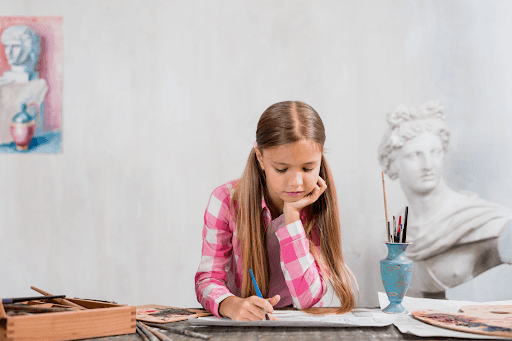
Neuroscience has finally caught up with what Indian traditions knew centuries ago—arts education isn't decorative, it's developmental. Musical training and movement-based learning activate multiple brain regions simultaneously, creating stronger cognitive foundations.
Musical Training and Brain Development
Research published in the Journal of Neuroscience demonstrates that children receiving regular music instruction show enhanced language processing and mathematical abilities. Musical training during childhood enhances executive function, memory, and spatial reasoning. Indian classical music, with its emphasis on rhythm and pattern recognition, offers unique cognitive benefits. The connection between musical training and academic performance is no longer anecdotal—it's scientifically validated and measured.
Dance and Movement for Holistic Development
Traditional Indian dance forms combine physical discipline, storytelling, and cultural knowledge. This multidimensional engagement develops motor skills while simultaneously building cultural literacy. Movement-based learning activates multiple brain regions, creating stronger memory retention than sedentary learning. Ancient educators understood what neuroscience now confirms—the body and mind learn together, not separately, making dance a powerful educational tool.
Balancing Cultural Roots with Global Competency
The globalized world demands students who can navigate multiple cultural contexts while maintaining strong personal identities. This balance requires intentional curriculum design rather than superficial cultural programming.
The Challenge of Cultural Identity in Globalized Education
Indian students today navigate between preserving cultural identity and developing global perspectives. Many schools treat this as an either-or proposition, emphasizing Western educational models while relegating Indian traditions to annual day celebrations. The CBSE framework, while academically rigorous, leaves room for schools to infuse cultural elements meaningfully. Progressive educators argue that cultural grounding doesn't limit global competency—it enhances it by providing students with distinct perspectives and value systems.
Sanskrit-Named Pedagogical Frameworks
Using vernacular terminology for educational concepts does more than preserve language—it signals philosophical commitment. Sanskrit terms carry layered meanings that English translations often miss. When schools structure their pedagogy around indigenous concepts, they demonstrate that traditional knowledge systems can framework modern learning. Students internalizing concepts through culturally rooted terminology develop deeper connections to both their heritage and their learning process, creating authentic bilingual thinkers.
Infrastructure That Prioritizes Holistic Wellness
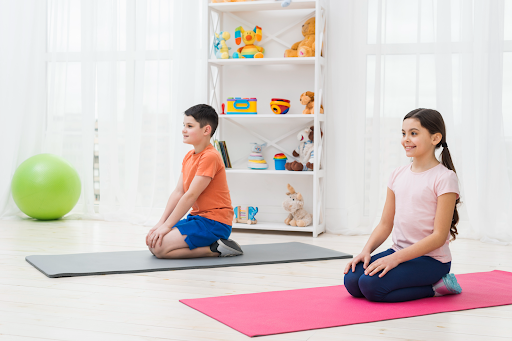
Modern educational infrastructure extends beyond smart classrooms and laboratories. Comprehensive student wellness requires addressing physical health, emotional needs, and safety simultaneously—a truly holistic approach.
Beyond Academic Facilities: Physical Safety Measures
Infrastructure decisions reveal institutional priorities. Transport safety measures, including speed governors and onboard supervision, reflect systemic thinking about student wellbeing rather than token gestures. The presence of full-time nursing staff and dedicated medical bays ensures immediate response to health emergencies. When schools invest in safety infrastructure as seriously as technology, they acknowledge that learning requires students to feel physically secure.
Emotional Wellness as Educational Priority
The presence of in-house counsellors signals recognition that emotional safety enables academic success. Mental health support shouldn't be reactive crisis management but proactive developmental support. Schools creating dedicated spaces and staff positions for emotional wellness demonstrate understanding that psychological safety is foundational, not optional. Regular parent-teacher interactions and parent immersion programs further strengthen the support network around each child.
Check Out | State-of-the-Art Infrastructure That Inspires Learning
Kesar The International School Bagalur: Where Cultural Heritage Meets Progressive Education
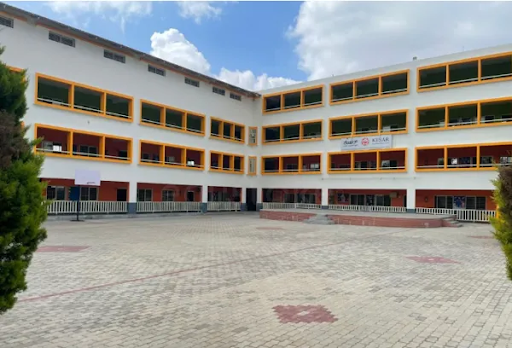
Located in Bagalur, Bangalore, Kesar The International School (KTIS) operates under the MVM Group of Institutions, offering CBSE-affiliated education from pre-primary through Grade 12. The school has earned recognition through Asia Book of Records and Guinness World Record achievements.
KTIS structures its philosophy around five Sanskrit-named pillars that transform abstract goals into daily practices:
- KALA (Art, Music & Dance): Mandatory keyboard instruction through Grade 5, transitioning to guitar for older students—each child receives an individual instrument
- EKTA (Co-curricular Activities): Student council organised into four houses named after Indian rivers—Ganga, Sindhu, Yamuna, and Kaveri
- SANSKRITI (Cultural Activities): Vidyaarambh ceremonies, ethnic day celebrations, and speech-drama programs woven throughout the academic calendar
- ANUBHAVA (Practical Learning): Hands-on laboratories for science, mathematics, and robotics alongside a 6,000-book library
- RAKSHA (Safety & Precautions): On-site nursing staff, in-house counselling, and transport safety with speed governors limiting buses to 40 km/hr
KTIS distinguishes itself through compulsory musical education, not as peripheral enrichment but core curriculum. Every student receives individual keyboard instruction, reflecting the conviction that musical literacy equals mathematical literacy in importance for comprehensive development.
The school spans Foundational (ages 3-8), Preparatory (8-11), Middle (11-14), and Secondary (14-18) stages. Each phase employs age-appropriate pedagogical approaches, balancing traditional values with contemporary learning methodologies for holistic growth.
KTIS's vision centers on empowering students to become "confident, compassionate, and responsible global citizens" through knowledge, skills, and values. This institution demonstrates that preserving cultural heritage and pursuing academic excellence aren't competing priorities. When thoughtfully integrated through comprehensive frameworks, they become mutually reinforcing, creating students rooted in tradition yet equipped for tomorrow's challenges.
For more information on this and other such schools in the area, check out this list of the best schools in Bangalore.
 as a preferred source on