






Every parent has stood at this crossroads. You watch your child struggle with homework, and a voice inside screams for stricter rules. Yet, another part of you worries that too much control will crush their spark. We have all been there, caught between the fear of raising an undisciplined child and the guilt of being too harsh. It is the oldest dilemma in the book of parenting: How do we raise kids who are both respectful and resilient?
And this is the time, we will move beyond opinions and look at the hard science of happiness in learning. We will explore why the "either-or" debate is flawed, how warmth changes the rules of discipline, and what some of the best schools, like Grand Columbus International School, that get this balance right, actually look like in practice.
Also Read | What Questions Should Parents Ask Before Selecting a School?
The False Choice We Have All Been Sold
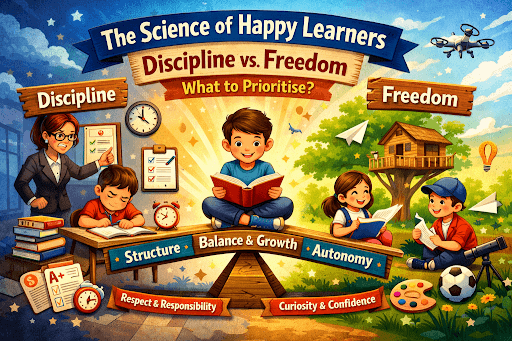
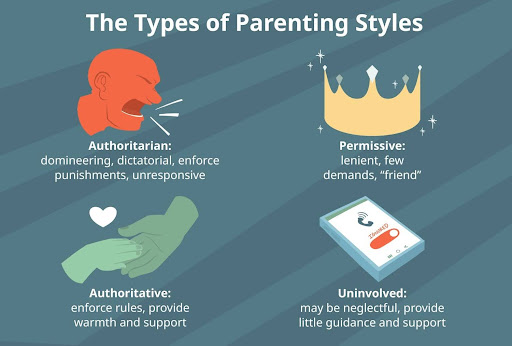
For years, we have been told to pick a side. Either you are a "helicopter parent" who enforces strict schedules, or you are a "free-range parent" who prioritises emotional freedom. But this binary is a trap. Modern child psychology suggests that this battle is imaginary.
A child does not have to choose between being happy and being successful. In fact, the absence of structure often leads to anxiety, while the absence of freedom and increased strictness leads to resentment.
The "Warm Strictness" Paradox (The Science)
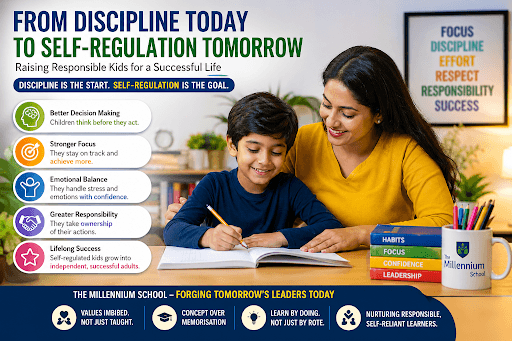
There's a word that makes most children flinch, and honestly, most parents, too. But the version of discipline that research actually supports looks nothing like punishment charts or rigid routines. Discipline, in its truest educational sense, is about creating a predictable, orderly environment where children feel safe enough to take risks.
According to peer-reviewed research in the Journal of Educational Research, discipline is the learner's ability to discern what is right or wrong, not merely the enforcement of rules. When children internalise this, something remarkable happens: they stop needing to be managed and start managing themselves.
The American Psychological Association's research on student motivation confirms this: when students see themselves as agents of their own learning, they take genuine responsibility not out of fear, but out of ownership. That shift is what separates a child who studies because they're told to from one who studies because they want to.
But here's where it gets interesting: that ownership doesn't emerge from control alone. It also needs room to breathe, and that's where freedom enters the picture.
"Freedom" is a curiosity with a safety net
Many parents worry that giving children too much freedom means losing control. Research, however, tells a very different story, and it begins in an ordinary mathematics classroom. Education researcher Barbara McCombs once observed something extraordinary: Students who walked into class, gathered their materials, paired up, and began working without a single instruction from their teacher.
The teacher had simply told them at the start of the year: This is your class. The result was not disorder. It was self-directed, motivated learning, operating within a structure the children had already internalised. This is the core of what psychologists Deci and Ryan call self-determination theory: human beings learn best when they feel autonomous, competent, and connected.
Freedom, in this context, isn't the absence of boundaries. It's the presence of trust. So what happens when schools choose only one: either rigid control or total permissiveness? The consequences are ones most parents never see coming.
The Real Cost of Getting the Balance Wrong
Both extremes carry a weight that quietly tips the scale against children, in ways that don't always show up in report cards. A 2024 systematic review published in NIHR Open Research found that punitive disciplinary strategies were linked to poor academic outcomes and measurable harm to children's emotional well-being. Children under excessive control showed higher anxiety and disengagement - the very opposite of the focused, motivated learners that strict discipline is supposed to produce.
On the other hand, children raised without structure struggle with self-regulation, one of the strongest predictors of long-term academic and life success. And once we see that, the question changes entirely: it's no longer which one, but how do we build the right blend?
The Sweet Spot: Structure That Sets Children Free
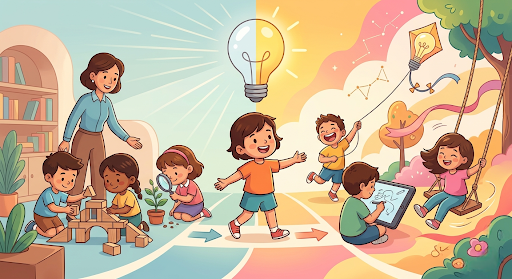
The most thriving classrooms operate on a principle that sounds almost paradoxical: discipline is what makes genuine freedom possible. Think of it like learning to ride a bicycle. The training wheels aren't the destination, but the structure that builds the confidence to eventually ride without them. A child raised with thoughtful boundaries learns to set their own. That internal compass - what researchers call self-discipline is ultimately the most powerful gift a school or parent can give.
The OECD's Education 2030 framework places student agency at the centre of future-ready education. But agency, they emphasise, is not the absence of guidance, but the outcome of sustained, positive support over time. Children do not arrive at self-direction on their own. They are brought there, carefully, by adults who know when to hold on and when to let go.
Understanding this balance intellectually is one thing. Seeing it built into a school's daily culture is another entirely, and that difference is everything.
Check Out | How Learning Takes Flight? Explore the Drone Lab and Innovation Culture at GCIS
Some Schools Talk About Balance. Others Are Built On It - The Story of Grand Columbus International School
Grand Columbus International School (GCIS) is one of those places where the philosophy isn't framed in a brochure, but woven into how every school day is designed. Established in 1994 on a 2-acre campus, GCIS has built what many schools spend decades searching for: a culture where discipline and personality development are not opposing forces, but two sides of the same coin.
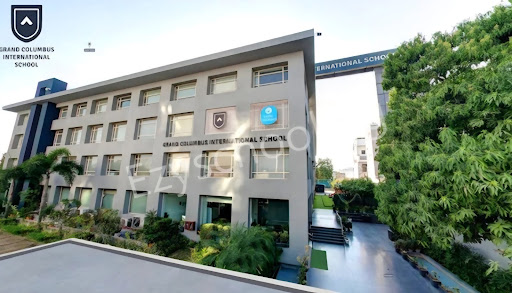
For parents in Faridabad seeking this equilibrium, Grand Columbus International School (GCIS) offers a compelling option. It is one of the top CBSE schools in Faridabad, known for blending modern infrastructure with traditional values.
The school’s vision focuses on creating "reflective and life-long learners" who are both passionate and responsible. With facilities ranging from smart classrooms to robust sports programs, GCIS ensures that structure does not stifle creativity but rather enhances it.
Conclusion
A happy learner is not a child who is always comfortable. A happy learner is a child who has learned to be okay with discomfort because someone gave them the tools to navigate it.
The question was never discipline or freedom. It was always: how do we give children enough structure to feel safe, and enough trust to feel capable?
For more information on this and other such schools in the area, check out this list of the best schools in Faridabad.

 as a preferred source on