








Choosing a school rarely feels like a simple decision, it often begins with a list. A few websites open on the browser recommendations from relatives. A couple of school visits and somewhere in the middle of all that information, parents try to answer a bigger question: which environment will actually help their child grow?
Because selecting a school today is no longer only about academic boards or exam results. Schools shape routines. Habits. Confidence. Social behaviour. Even the way children begin to see learning itself. This is why many parents spend time exploring and comparing the best schools in Faridabad before making a final decision. Not just to understand the curriculum, but to evaluate the overall learning environment, teaching approach, and school culture that will influence their child’s development in the years ahead.
If you are currently exploring the best schools in Faridabad for your child, take the time to visit campuses, interact with educators, and understand how each institution approaches learning and student development before making your choice.
Also Read | A School That Blooms: The Power of a Beautiful School Campus of GCIS, Faridabad
What Kind of Learning Environment Does the School Create?
One of the first things parents often notice during a school visit is the infrastructure. Classrooms, labs, playgrounds, libraries. These are important, of course, but the learning environment goes deeper than physical facilities. Parents can observe things like:
- Are students encouraged to ask questions during class?
- Do teachers engage students in discussions or mostly rely on lectures?
- Are projects and activities part of the learning process?
Sometimes the overall atmosphere of a classroom says more than any prospectus. A space where students feel comfortable participating often leads to stronger learning outcomes.
-
How Does the School Balance Academics and Activities?
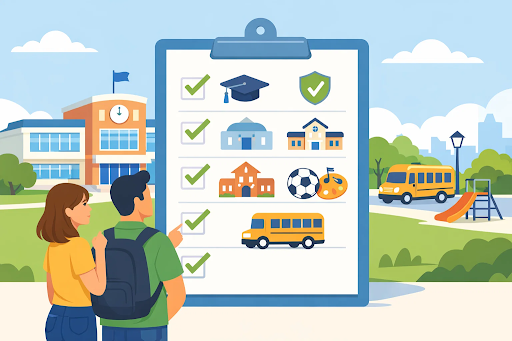
Academic performance remains important, that will probably never change, but many parents today also look for a balance between structured learning and broader development. Activities such as sports, arts, debates, music, and clubs help students discover interests beyond textbooks. When visiting a school, parents may want to understand:
- Whether extracurricular activities are integrated into the schedule
- How frequently students participate in sports or creative programs
- Whether activities are optional add-ons or part of the regular routine
A balanced schedule can help students manage both academic responsibility and personal interests without feeling overwhelmed.
-
What Is School Culture Like?
School culture is something parents often sense rather than read about. It appears in everyday interactions between teachers and students, between students themselves, and even during school assemblies or group activities. Parents might consider questions such as:
- How approachable are the teachers?
- How does the school handle mistakes or disciplinary issues?
- Are students encouraged to collaborate or mostly compete?
A supportive school culture often plays a quiet but powerful role in shaping a child’s confidence and emotional well-being.
-
How Does the School Communicate with Parents?
Education works best when schools and families stay connected. Regular communication helps parents stay informed about a child’s progress, behaviour, and areas that may need support. Some schools rely on digital platforms, while others prefer periodic meetings or reports. Parents may want to ask:
- How frequently does the school update parents on student progress?
- Are parent–teacher meetings structured and consistent?
- How accessible are teachers or school coordinators when concerns arise?
Clear communication systems often make it easier for families to remain involved in their child’s educational journey.

-
How Does the School Support Different Learning Styles?
Every child learns differently. Some students grasp concepts quickly through reading. Others understand better through visual explanation, hands-on activities, or group discussions. Schools that recognize these differences often create more inclusive learning environments. Parents might explore:
- Whether the school uses project-based or activity-based learning
- How teachers support students who need additional academic help
- Whether classrooms encourage collaboration and peer learning
Such approaches can make learning more adaptable for a wide range of students.
Check Out | What Parents Actually Look for Before Sending Their Child to a Boarding School
Where does the Grand Columbus International School (GCIS) fit in?
Within the educational landscape of Faridabad, Grand Columbus International School (GCIS) is one of the institutions operating in an area where residential communities and educational infrastructure have been growing steadily. As families continue to settle in the region, schools in the locality often play a central role in shaping the educational environment for young learners.
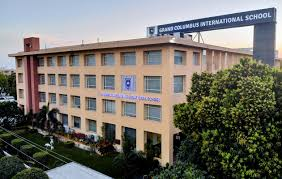
At Grand Columbus International School, the academic structure focuses on delivering curriculum through classroom teaching combined with student engagement activities. Lessons are supported by discussions, assignments, and collaborative tasks that allow students to interact with concepts rather than only memorizing them.
The school environment also emphasizes routine and participation. Assemblies, classroom sessions, co-curricular activities, and group events together create a rhythm that shapes everyday student life. Within this routine, students gradually develop habits related to discipline, teamwork, and communication.
Another aspect that shapes the experience is peer interaction. Schools naturally become spaces where students meet individuals from different backgrounds, interests, and perspectives. These interactions often influence how children develop social skills and adaptability over time.
Like many schools located in expanding urban areas, Grand Columbus International School (GCIS) functions as both an educational institution and a community space where families, teachers, and students remain connected through academic programs and school activities.
For parents exploring the best schools in Faridabad, observing how schools encourage student interaction, collaboration, and community involvement can provide valuable insight into the overall learning environment.
For parents researching the best schools in Faridabad, institutions like GCIS often become part of the broader conversation around how curriculum, environment, and everyday school culture contribute to a child’s overall development. Exploring such schools closely can help families better understand the learning spaces shaping the next generation of students in the region.

Conclusion
Selecting a school often begins with searching for information, but it becomes clearer when parents start asking meaningful questions. Facilities matter along with the curriculum, but the daily experience inside classrooms, corridors, and playgrounds often shapes a child’s learning journey the most.
By asking thoughtful questions about teaching approaches, school culture, communication, and student engagement, parents can gain a deeper understanding of how a school actually functions beyond its prospectus.
And in growing education hubs such as Faridabad, schools like Grand Columbus International School (GCIS) form part of this evolving educational ecosystem where curriculum and culture together influence how students learn, interact, and gradually prepare for the world beyond school.
If you’d like to learn more about this and other schools, explore the list of top schools in Faridabad.








 as a preferred source on