







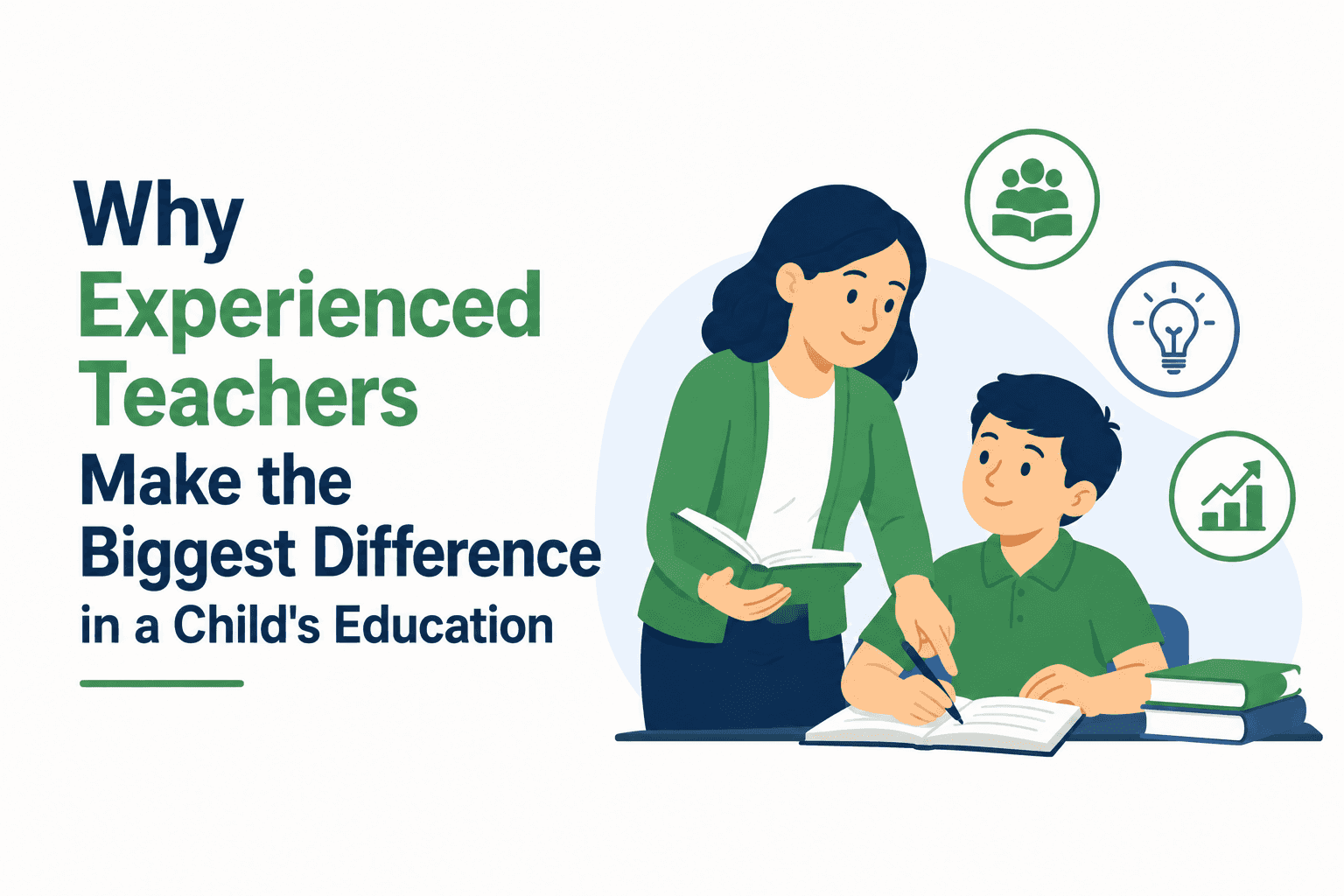

Parents researching schools spend a lot of time comparing infrastructure. Smart classrooms, well-equipped labs, sports facilities, air-conditioned buses — all of it matters, and none of it is irrelevant. But if you ask researchers, educators, and child development specialists which single factor most reliably predicts how well a child learns, the answer isn't a piece of equipment. It's the person standing at the front of the room. One of the top schools in Greater Noida West, St. Teresa School, Sector 10, has built its academic approach around exactly this understanding — that skilled, experienced teachers are the foundation on which everything else rests, and that no amount of technology or infrastructure replaces what a great educator brings to a classroom.
Why Teachers Remain the Biggest Factor in Student Success
What the Research Has Always Said
Decades of educational research — across countries, school systems, and economic contexts — point to the same conclusion: teacher quality is the most powerful in-school factor influencing student outcomes. More than class size, more than curriculum design, more than physical infrastructure. A child taught by a strong, experienced teacher outperforms a peer in a better-equipped classroom with a weaker teacher, consistently and significantly. This isn't a recent discovery. It's one of the most replicated findings in educational research, and it's one that school selection conversations don't always center the way they should.
Subject Knowledge vs. Teaching Experience — They're Not the Same Thing
There's an important distinction that parents often miss when evaluating a school's faculty. Knowing a subject well and knowing how to teach it are two entirely different skills. A teacher who deeply understands chemistry but has never learned to read a room — to notice when half the class has mentally checked out, to rephrase an explanation when it isn't landing, to anticipate which concept will cause confusion before the confusion appears — isn't necessarily a more effective educator than someone with fewer credentials and more years of practice. Teaching experience builds a kind of pedagogical intelligence that subject knowledge alone simply doesn't provide. It's the difference between knowing your material and knowing your students.
Also Read| How the Right School Shapes a Child's Future
What Experienced Teachers Do Differently
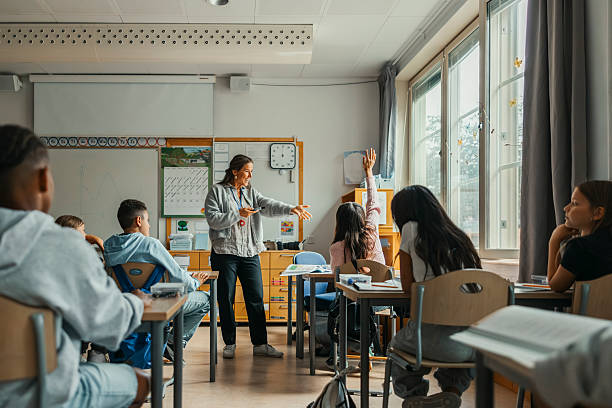
Identifying Learning Gaps Faster
One of the most valuable things an experienced teacher brings to a classroom is the ability to spot a learning gap before it compounds. A newer teacher might notice that a student is struggling. An experienced teacher often knows why — and knows it early, before a small confusion about fractions turns into a persistent problem with algebra, or a gap in reading comprehension starts affecting performance across every subject. That pattern recognition comes from years of watching how different children process information, where common difficulties tend to cluster, and which early signs are worth paying attention to. It's a diagnostic instinct that can't be taught in a training program — it develops through practice, and it saves children from carrying gaps they didn't need to carry.
Classroom Management That Actually Creates Learning
Classroom management is one of those topics that sounds administrative but is deeply academic in its effects. A classroom where behavior is managed poorly isn't just unpleasant — it's a space where a significant portion of available learning time disappears into disruption, re-settling, and re-instruction. Experienced teachers manage classrooms differently: with more economy, more calm, and more authority. They spend less time disciplining and more time teaching. They've learned which interventions work, which ones escalate things unnecessarily, and how to keep thirty different children — with thirty different moods, energy levels, and attention spans on any given day — oriented toward learning. That skill takes years to develop, and its effect on how much a student actually learns over a school year is considerable.
The Dimensions of Teaching That Go Beyond the Classroom
Personalized Attention and Meaningful Parent Communication
A teacher who has been in a classroom for years knows something a newer teacher is still learning: that the parent-teacher relationship is as important as the student-teacher one. Experienced educators communicate with parents differently — with more specificity, more context, and more productive framing. They can tell a parent not just that their child is "struggling with science" but exactly where the difficulty lies, what they've already tried in the classroom, and what might help at home. That precision builds trust, helps parents reinforce what's happening in school rather than working at cross-purposes, and keeps a child's support system coherent across home and classroom.
Emotional Mentoring and Building Confidence
Children don't park their emotional lives at the school gate. They arrive carrying anxiety about friendships, pressure from home, fear of failure, and sometimes much heavier things. Experienced teachers have learned to hold both dimensions simultaneously — the academic and the personal. They notice when a usually engaged student has gone quiet. They know when a child needs to be gently pushed and when they need to be steadied. And they've built the kind of classroom relationships where students feel safe enough to say they don't understand, which is the foundation of all genuine learning. That emotional attunement is something experience teaches, and something children feel even when they can't name it.
Why Teacher Quality Outweighs Infrastructure
An honest conversation about school selection has to include this: a well-resourced classroom with an inexperienced teacher will consistently underperform a simply furnished classroom with a skilled, experienced one. Infrastructure enhances teaching; it doesn't replace it. A smart board in the hands of a mediocre educator is a more expensive version of a regular board. In the hands of a skilled teacher who knows how to use it to deepen understanding, it becomes genuinely valuable. When parents are evaluating schools, the quality of the faculty deserves at least as much weight as the quality of the campus — arguably more.
Also Read| NEP 2020 in 2026: Is your child ready for it?
How St. Teresa School, Greater Noida West, Embodies This
A Faculty Averaging 10 Years of Teaching Experience
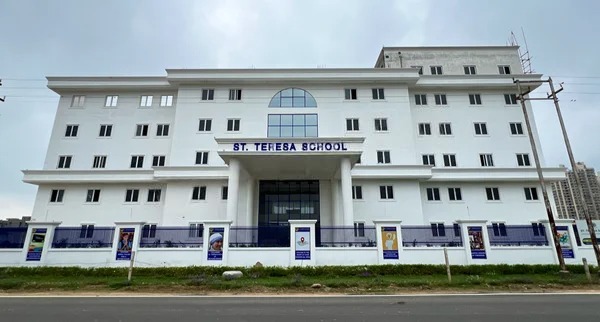
At one of the best CBSE schools in Greater Noida West, St. Teresa School, Sector 10, the school's average faculty teaching experience stands at 10 years. That number matters in practical terms: it means the educator a child encounters on their first day is, in all likelihood, someone who has already guided hundreds of students through similar challenges, transitions, and learning moments. They've seen the patterns. They've developed the instincts. They know the difference between a student who needs encouragement and one who needs a different explanation of the same concept. That depth of experience doesn't just make individual lessons better — it creates a classroom environment where children feel genuinely seen and consistently guided.
Personalized Attention, Consistent Guidance, and Holistic Development
Each teacher at St. Teresa School is committed to providing individualized attention to every student — ensuring that no child falls through the cracks because a classroom is moving too fast or because their particular learning style doesn't match the default approach. Academic guidance is consistent across years, giving students the continuity of support that matters enormously at key transitions — from primary to middle school, and from middle to senior secondary.
Beyond academics, the faculty's approach extends to the personal. Teachers at St. Teresa School are invested in students' character and confidence, not just their marks. The school's student-centric philosophy means that learning is shaped around the child rather than the child being expected to simply adapt to a fixed system. Holistic development — building students who are confident, curious, and grounded in good values — runs alongside academic achievement as a deliberate goal, not an afterthought. This is what experienced teaching, sustained over time, actually produces.
Conclusion
Great teachers are not a background detail in a school's story — they're the story. The research is unambiguous, and experienced educators confirm it every day in classrooms: the quality of who teaches a child shapes that child's learning more than almost anything else a school can provide. At St. Teresa School, Greater Noida West, a faculty with an average of ten years' teaching experience isn't a marketing claim. It's the foundation on which confident students, consistent academic progress, and real holistic development are built — one classroom, one child, one well-taught lesson at a time.
Explore more about these schools and others in Greater Noida West, click here
 as a preferred source on