







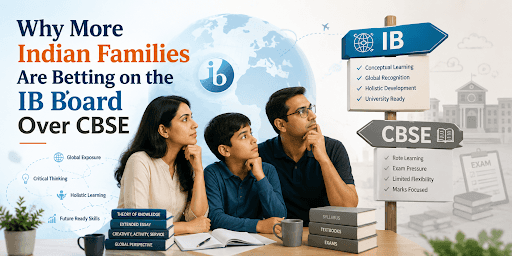

For the longest time, CBSE was just... the default. You didn't really question it, your parents didn't question it, everyone around you went to a CBSE school, and that was that. But lately, something's shifted. You hear it in parent circles, at birthday parties, in random chai conversations, "arre yaar, we're putting our son in an IB school." And you can't help but wonder, why? What's suddenly so special about IB that parents who grew up on CBSE or ICSE are now choosing it for their own kids?
Even schools in Bangalore like Naavu School in Whitefield, one of the city's known IB institutions, are seeing this exact curiosity play out: parents walking in simply to understand what IB actually offers that their own schooling didn't. It's not like CBSE stopped being good overnight. So what changed? Is it really about better learning, or is there something else going on- global exposure, changing parenting mindsets, university admissions? Let's actually get into it and figure out what's driving this shift.
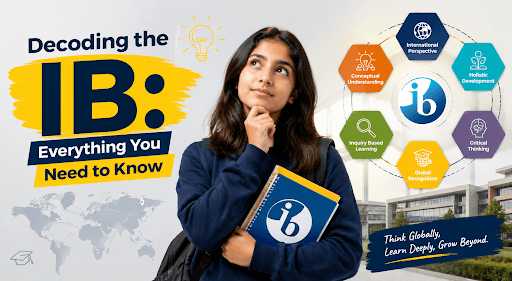
Also Read: Decoding the IB: Everything You Need to Know
So, What Exactly Is The IB Board?
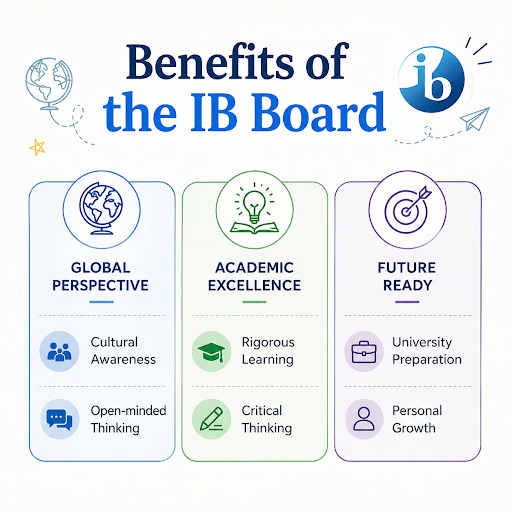
IB, or International Baccalaureate, isn't some new-age thing that popped up recently. It's been in Indian schools since 1976, just quietly building itself up in the background while CBSE stayed the loud, obvious choice. Now it's finally having its moment.
The board itself is split into four stages: PYP for the younger ones, MYP once they hit middle school, and then DP and CP for the senior years. Each stage kind of builds on the last, so a kid isn't just thrown into "serious academics" one day; it's more of a gradual build-up.
Key Features of IB Board:
- Kids are pushed to understand things properly instead of mugging up the night before an exam
- There's a real focus on communication, so children get comfortable speaking up, presenting, and putting their thoughts into words
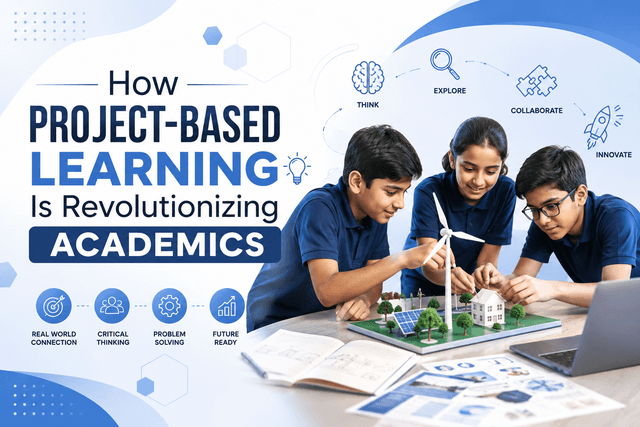
- Learning leans heavily on projects and asking questions, not just reading chapter after chapter
- The certificate is globally recognized, so it works whether the child stays in India or applies abroad later
- Kids naturally start thinking for themselves, since teachers keep asking "why" and "how" instead of just handing out answers
That's IB, in short. Now let's get into why so many Indian parents are actually choosing it.
Why Indian Parents Are Choosing It For Their Kids
According to one of the studies, IB schools in India grew from 192 in 2020 to 276 in 2025, a jump of nearly 44% in just five years. What's even more telling is that a large chunk of this growth is happening in tier-2 and tier-3 cities, not just the usual metro hubs like Mumbai, Delhi, or Bangalore.
Parents, as the study noted, are willing to pay a premium for this shift because they genuinely believe it sharpens their child's critical thinking and problem-solving skills. So this isn't some small, quiet trend; it's an actual, fast-moving shift in how India is choosing to educate its kids.
Now let's actually get into why parents are so drawn to it.
NEP 2020 lines up almost perfectly with how IB already works.
India's own education policy started pushing for inquiry-based, skill-first learning, and IB had been built that exact way since the start. So instead of parents feeling like they're picking something "foreign" or unconventional, IB now feels like it's simply ahead of where Indian education was already heading.
It counts as Class 10 and 12, both in India and abroad, at the same time.
IBDP and MYP are recognized as equivalent qualifications here, which means parents no longer have to choose between "settling in India" or "going abroad" while picking a board. One certificate works both ways.
Kids come out genuinely better at communicating, and parents notice this fast.
IB puts a lot of weight on presentations, oral assessments, and defending your own point of view in class. Parents often say their child becomes noticeably more confident speaking up, explaining ideas, or handling questions on the spot, something that isn't really built the same way in traditional boards.
Career-focused programmes are pulling in a different kind of parent.
With IBCP now offering tracks like Artificial Intelligence and Business Administration inside school itself, it's attracting parents who don't want their kid figuring out "what to do in life" only after Class 12; they want that direction to start early.
Gives kids real global exposure, and that matters even for families who eventually move back to India.
A lot of Indian parents work abroad for a few years and then return, or plan to send their kids overseas later for higher studies. IB gives their child a curriculum that stays consistent no matter which country they're in, so shifting from Dubai to Delhi, or Delhi to Toronto, doesn't mean starting from scratch academically. That continuity alone is a huge relief for a lot of parents.
At the end of the day, it's not really about IB being "better" on paper. It's that IB happens to solve a bunch of real, specific problems Indian parents were already dealing with, and it showed up right when they were looking for exactly that.
Also Read: The Truth Behind 5 Common IB Board Myths
Naavu School: A Good Example Of This Shift In Bangalore
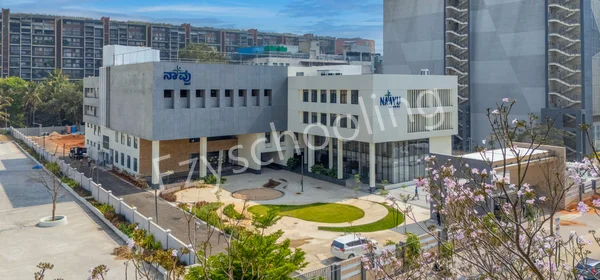
Bangalore is one of the cities where this shift towards IB is really visible, and Naavu School in Whitefield is a good example of it.
It's an IB Continuum school, which means your child can start at age 3 in the Early Years Programme and stay on the same IB path all the way through to the Diploma Programme in Grade 12. No switching boards halfway, no adjusting to a completely new system in Class 9 or 11, which is something a lot of Indian kids end up going through.
What stood out to me is how each stage actually builds on the one before it. The early years are kept playful and curiosity-driven, and by the time kids reach the Middle Years Programme, things shift towards interdisciplinary projects, research, and a level of independent thinking most Indian kids don't really get exposed to at that age.
Naavu also starts University Guidance surprisingly early, right from the Middle Years itself. Most schools only start that conversation around Grade 11, once board exams are almost at the door. And honestly, this is the same pattern you'll notice across most top IB schools in Bangalore right now. It's not about adding IB just for the label or the prestige tag. Schools are rebuilding their entire structure, right from early childhood to university prep, around this one continuous approach.
Naavu is simply one of the clearer examples of how that shift is actually playing out on the ground in Bangalore, a real, long-term rethink of how kids are being educated, not some passing wave.
For more information regarding this and other schools in the nearby area






 as a preferred source on