







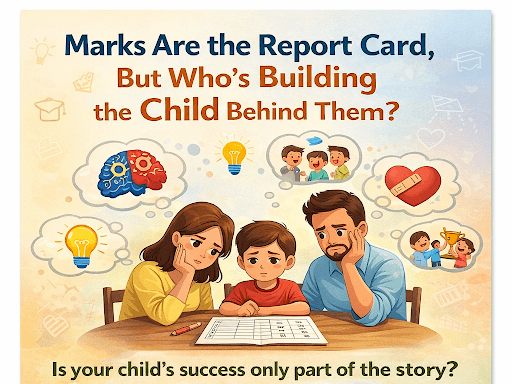

Every year, millions of Indian parents sit across the kitchen table, a report card between them and their child, trying to decode a number, as if that number holds the whole truth of who their child is. It doesn't. And somewhere, quietly, most parents already know this.
We've built an education system obsessed with measurement. We measure intelligence in percentages, potential in ranks, and success in college admissions. But the child, the curious, anxious, dreaming, struggling human being sitting in that classroom, can't be reduced to a column of scores.
So the real question isn't how your child is performing. Who is your child becoming?
In this article, we explore why holistic development matters more than marks alone, what role a school's environment plays in shaping a child's character, why the residential schooling model is gaining ground among thoughtful parents, and how Aadya Academy, one of the best boarding schools in India, approaches education as the building of a whole person.
Also Read | Why Residential Education Matters: Insights from Aadya Academy – The Residential School, Bangalore
The Grade on the Paper Doesn't Measure the Fire Inside
Think back to your own school years. The moments that shaped you, the argument you won in a debate, the friend who stayed by you during a crisis, the teacher who believed in you when no one else did, none of those show up on a marksheet.
Research consistently shows that social-emotional learning, resilience, communication, and adaptability are stronger predictors of long-term success than academic scores alone. Yet, the infrastructure of most schools is built almost entirely around the latter.
Parents feel this tension acutely. They want good grades, yes, but they also want their child to be kind, confident, and capable of standing on their own two feet. These goals aren't opposites, the right environment can nurture both simultaneously. But what a child actually needs apart from your expectations of textbook learning? Confused right? Let’s understand their psychology deeply.
What a Child Really Needs Beyond Textbooks?

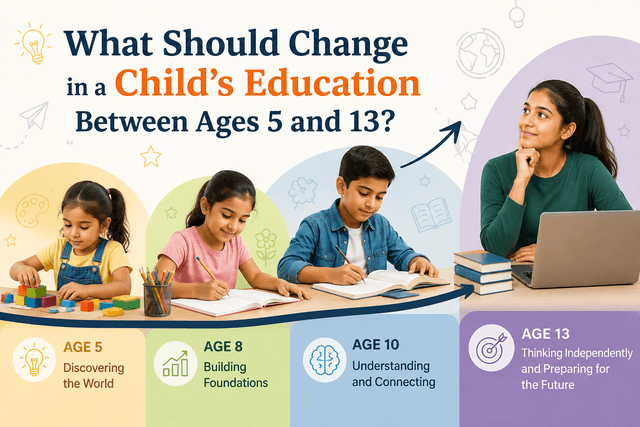
The years between ages five and fifteen are not just academic years, they are identity years. Children in this window are figuring out who they are, what they value, and where they belong.
A school that only delivers curriculum is missing the point. What shapes a child is the culture they're immersed in, the way teachers speak to them, whether their interests are taken seriously, and if they're allowed to fail safely and try again.
A child who grows up in an environment of genuine care, structured freedom, and real accountability develops something no exam can test: character. This is why the question of where a child goes to school is, in many ways, a question about who that child will grow up to be. And if you’ve been asked what your child’s residential school should have been like? Will you be able to answer that? But we have! It’s time to settle in for that and check out the next section now.
The Case for Residential Schooling - And Why More Parents Are Listening?
For a long time, residential schools carried a certain stigma in Indian households, the idea that sending your child away meant giving them up. That perception is changing, and for good reason.
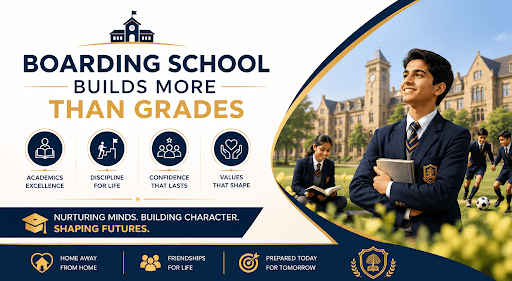
A well-designed residential school offers something most day schools structurally cannot: an unbroken environment of growth. When a child lives where they learn, the separation between "school time" and "life time" dissolves. They learn to manage their mornings, navigate friendships without a parent to mediate, discover their interests in the space between structured classes, and slowly, steadily, they find themselves.
And not to mention, we have a school that has been built to prove these things to be true for your child’s development. Let’s decode that deeply.
Check Out | Voices That Matter: How ‘The Talk Show’ Inspires Expression at Aadya Academy
Aadya Academy - A School Named After Excellence and Built to Prove It
Tucked in the calm of Budigere, on the outskirts of Bangalore, Aadya Academy – The Residential School was founded on the belief that education is not preparation for life, it is life itself. The name "Aadya" comes from Sanskrit, meaning the first and the excellent, and it reflects the school's commitment to openness, honesty, integrity, and purity, values they seek to instil in every student.
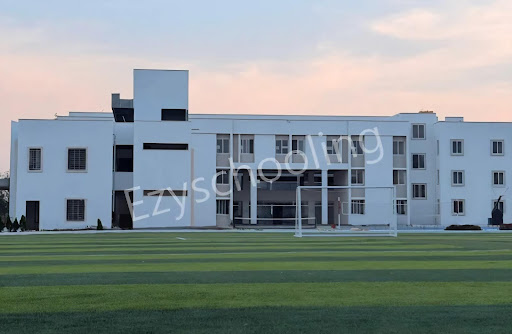
Affiliated with the CISCE board and catering to students from LKG through Class 10, the school operates on a 1.6-acre campus with a student-teacher ratio of 15:1, which matters because it means teachers can actually see every child in their care.
Explore the best boarding schools in Bangalore and see how Aadya Academy compares with other top institutions in the city.
An Environment Built Around the Whole Child
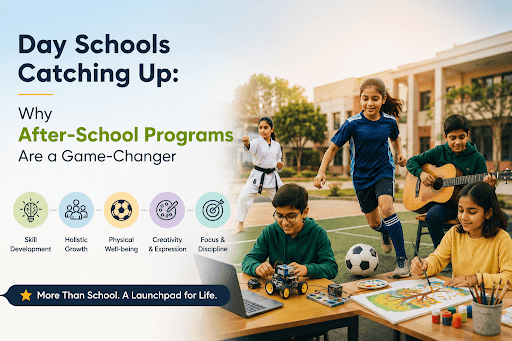
The school's infrastructure signals its priorities clearly. Alongside smart classrooms and science, computer, language, and robotics labs, students have access to a swimming pool, horse riding, skating, yoga, taekwondo, karate, music, dance, drama, art, and gardening. These aren't afterthoughts; they're part of what the school considers education.
The campus includes both boys' and girls' hostels, a medical room, meals, day care, and round-the-clock safety through CCTV, GPS bus tracking, and a student tracking app. For parents, this infrastructure answers one of the deepest questions: Is my child safe?
Leadership That Sets the Tone
Chairman Mr Anil Kumar brings over 25 years of experience in education to the school. He is known for his empathetic leadership, strategic foresight, and deeply collaborative approach, actively involving his faculty team in shaping the school's vision and curriculum.
Principal Ms Shalini M V leads with an equally clear purpose: to prepare students for a world defined by rapid change, by nurturing not just academic excellence but also strong character, critical thinking, and a global perspective. Their combined philosophy filters into daily school life, in how teachers engage, how students are challenged, and how the residential environment is managed.
Conclusion
A child who scores 95% but is afraid to speak up, struggles to handle failure, or has no sense of who they are outside of academics, that child is not fully educated. Success, in the truest sense, is a child who knows their strengths, faces difficulty with resilience, and moves through the world with both competence and compassion.
The schools that understand this are the ones that build environments where the whole child is seen, not just their test results. And the parents who choose these schools are making a quiet, powerful declaration: that their child is more than their marks.
To learn more about this and other boarding schools, check out this list of the best boarding schools in India.








 as a preferred source on