









Ask most parents why they want their child on a football field or a swimming lane, and they'll talk about fitness, discipline, maybe a growth spurt in confidence. Fewer connect the dots to what happens inside the classroom an hour later. But one of the premier schools in Gurugram, Manav Rachna International School (MRIS), Sector 46, Gurugram, has built its approach around the idea that a child who moves well through the day also thinks better through the day. Sport isn't a break from learning here. It's part of how learning happens.
The science behind this isn't new, but it's rarely explained in a way parents can actually use. So instead of another generic opinion on "sports are good for kids", here's a closer look at what's actually going on in an active child's brain and body.
The Body-Brain Connection Behind Better Learning
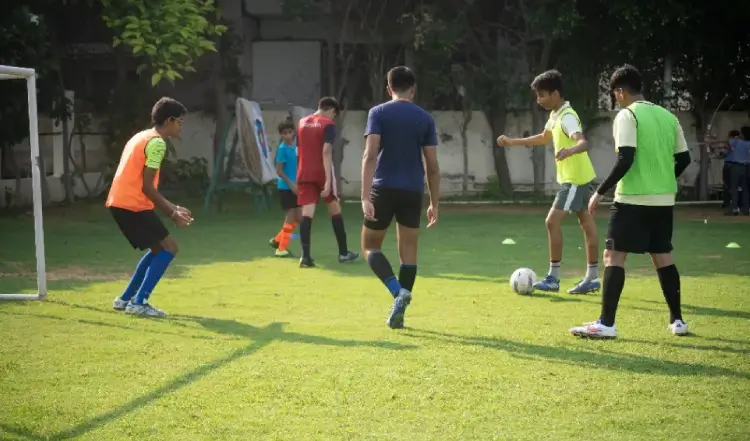
Before concentration, memory, or engagement can improve, something more basic has to happen first: the brain needs to be properly fuelled. That's where movement starts doing its quiet, structural work.
Exercise Improves Blood Circulation to the Brain
Every time a child runs, jumps, or plays a quick game of tag, their heart rate climbs and blood flow increases to the brain. That extra circulation carries more oxygen and glucose to brain tissue, which is exactly the fuel the brain needs to function at its best. Regions responsible for attention, decision-making, and problem-solving get a genuine physiological boost, not just a mood lift. A child who's had 30 minutes of physical activity before a math class isn't just rested; in fact, their brain is quite literally better resourced for the task ahead.
Better Concentration
Teachers have long noticed that the most fidgety child in the room is often the same one who settles down fastest right after the PE period. That's not a coincidence. Physical activity burns off excess nervous energy and helps regulate the neurotransmitters — dopamine and norepinephrine among them — that govern focus. The result is a child who can sit through a 40-minute lesson without their attention scattering every five minutes. Concentration isn't something you can lecture a child into. It's something you build through movement.
Memory Improvement
Exercise doesn't just wake the brain up temporarily — it changes it structurally over time. Regular physical activity has been linked to growth in the hippocampus, the part of the brain most responsible for forming and storing memories. That's why children who play sports consistently often find it easier to retain what they've studied, recall it during exams, and connect new information to what they already know. Movement, in this sense, is quietly doing memory-consolidation work that no amount of rote revision can replace.
Also Read| Why Real Understanding Matters More Than Rote Learning
Why Active Children Handle School Life Better
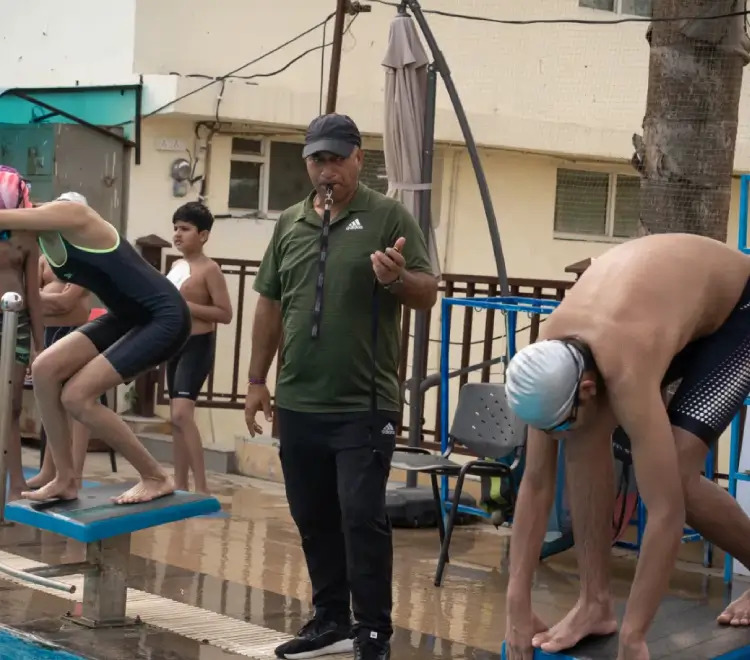
A well-fuelled brain still needs the right conditions to actually perform — low stress, good rest, and a reason to stay engaged. This is where sport shapes not just brain chemistry but a child's entire relationship with the school day.
Reduced Stress
Academic pressure builds early these days, and children absorb more of it than adults often realize. Sport gives that stress somewhere to go. Physical exertion lowers cortisol, the body's primary stress hormone, while releasing endorphins that improve mood almost immediately. A child who plays basketball after a tough school day isn't just having fun — they're physically discharging tension that would otherwise follow them into homework time, dinner, and sleep.
Better Sleep
Stress and screen time have made good sleep harder to come by for children, and poor sleep is one of the biggest silent drains on learning. Physical activity helps regulate the body's natural sleep-wake cycle, making it easier for a child to fall asleep faster and sleep more deeply. Deep sleep is also when the brain does much of its memory consolidation — so a child who's active during the day and sleeps well at night is essentially getting a second, unconscious study session every single night.
Higher Classroom Engagement
Put all of the above together — better blood flow, sharper focus, stronger memory, lower stress, deeper sleep — and what you get is a child who shows up to class genuinely ready to participate. Active children tend to ask more questions, volunteer more answers, and engage more willingly in group work. Engagement isn't a personality trait some children have, and others don't. It's often a downstream effect of how their body and brain have been prepared for the school day.
The Emotional and Personal Growth Sports Build
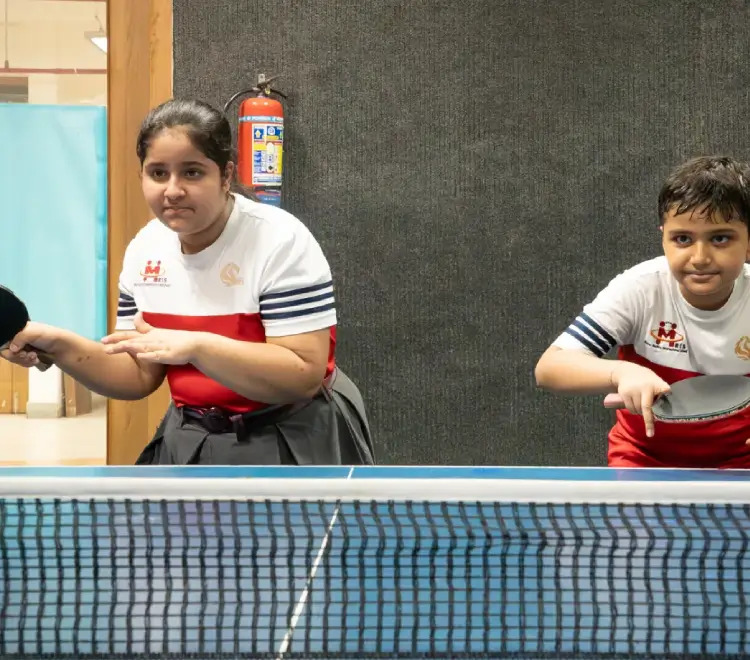
Beyond biology, sport does something academics rarely can on their own: it puts children in repeated small situations that shape how they handle setbacks, competition, and self-belief.
Emotional Regulation
Team sports, in particular, put children in constant small situations that mirror real life — losing a point, being left out of a play, disagreeing with a teammate, celebrating a win without gloating. Navigating these moments, again and again, on a field, teaches emotional regulation far more effectively than any classroom discussion about "managing your feelings." Children who play sports regularly tend to handle classroom frustrations — a wrong answer, a tough test, a disagreement with a classmate — with noticeably more composure.
Confidence and Resilience
Every sport involves failure — a missed shot, a lost match, a personal best that doesn't happen on schedule. Learning to try again after that failure, without giving up, builds a form of resilience that transfers directly into academics. A child who has learned to get back up after losing a match finds it easier to attempt a difficult problem a second time after getting it wrong the first. Confidence built on a field, brick by brick, tends to walk straight into the classroom with the child.
Also Read| How Multi-Sensory Learning Transforms Classroom Experience
Building This Into School Life
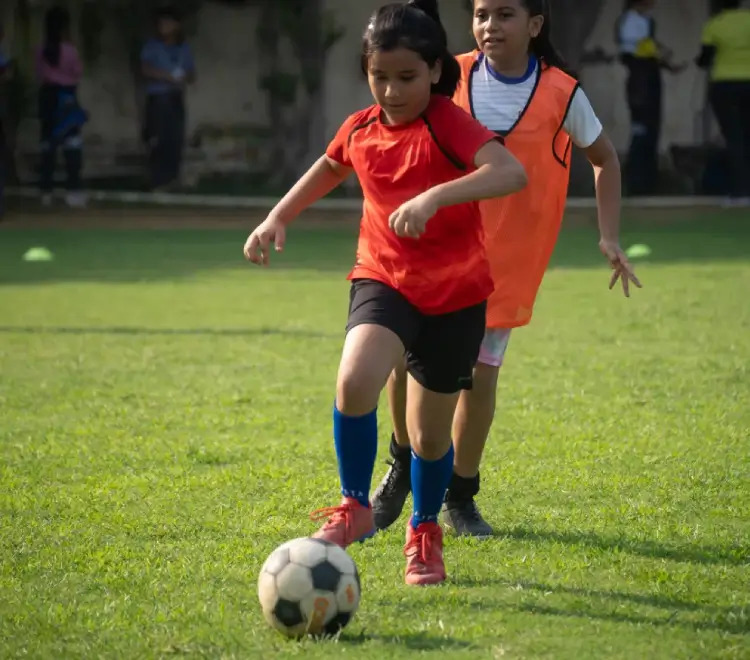
None of these benefits happens by accident. They happen when a school treats physical activity as a designed part of the timetable, not an optional extra squeezed in when time permits.
Designing Sports Into the Daily Routine
A few principles matter here for any school trying to get this right:
- Daily, not occasional, movement. A single PE period a week isn't enough to produce the physiological changes described above. Sport needs to show up in some form — structured or unstructured — every single day.
- Movement breaks between academic blocks. Short bursts of activity between long stretches of classroom instruction help reset attention rather than letting it decay over hours.
- Sport as curriculum, not an afterthought. When physical education is timetabled with the same seriousness as math or science, children internalize that their bodies' wellbeing matters as much as their exam scores.
- Variety over repetition. Different sports build different skills, such as team sports for emotional regulation, individual sports like swimming or athletics for personal resilience and pacing.
- Professional coaching, even at the school level. Structured, well-coached sport builds better habits and technique than unsupervised free play alone, and it keeps children motivated to stick with it over years, not months.
How MRIS Gurugram, Sector 46, Puts This Into Practice

This is where one of the top CBSE schools in Gurugram, Manav Rachna International School, Sector 46, has built something more deliberate than most schools attempt. Physical education at MRIS isn't treated as an add-on to the academic day — it's one of the seven core curriculum areas the school designs around, sitting alongside Languages & Literacy, Numeracy, and Future Skills under what the school calls Sports and Well-Being. That structural choice alone signals how central movement is meant to be to a child's day, not how peripheral.
The campus backs that intent with real infrastructure. Students have access to a swimming pool, a skating rink, basketball courts, and a shooting range, alongside outdoor playgrounds and activity zones designed for football, basketball, and cricket. All of this sits under the umbrella of the Manav Rachna Sports Academy, which gives students professional coaching and structured opportunities to compete and improve, rather than leaving physical development to chance.
The results show up in ways that matter to parents evaluating the school: MRIS Sector 46 students have represented the school and their city at state and national levels, placing at the Haryana State School Games for cricket, competing nationally in swimming, football, and lawn tennis. These aren't isolated star performers; they're evidence of a system where sport is coached, tracked, and taken seriously across age groups. It's a fair reflection of a school that clearly believes, and structures its day around the belief, that a child who moves well is a child who learns well.
Conclusion
The link between an active body and a sharper mind isn't a motivational slogan — it's biology, backed by better circulation, sharper focus, stronger memory, lower stress, and deeper sleep. Schools that take this seriously don't leave it to chance; they build it into the timetable, the infrastructure, and the coaching a child receives every day. At MRIS Gurugram, Sector 46, that philosophy is visible not just in policy documents but in the pools, courts, and playing fields students use daily — and in the confidence and composure those students carry back into the classroom.
For more information regarding this and other schools that integrate future-ready skills and sustainability as one subject
















 as a preferred source on