








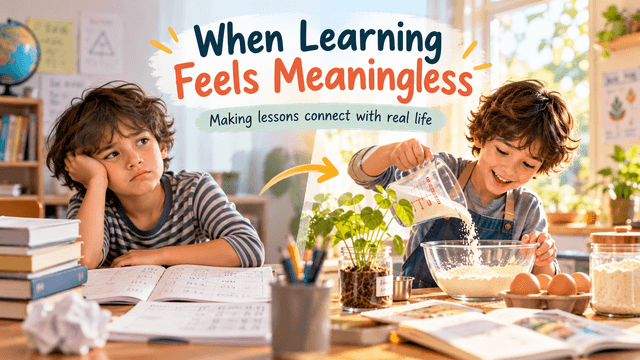
Schools today face a real challenge. Children spend most of their time inside classrooms, reading textbooks and preparing for tests. This leaves very little room for curiosity, play, or exploration. Over time, many children begin to see learning as a burden rather than a joy.
Research and classroom experience both point to the same truth. Children learn better when they are active, engaged, and having fun. A rigid school day often works against this natural way of learning. Many schools recognise this problem but struggle to act on it consistently.
One of the best schools in Pune, The Keystone Ankuram in Handewadi, Pune, takes a different approach. The school runs a dedicated program called Bagless Day of Fun, or BDF, which gives children a full school day free from books and bags. In this article, we explore what BDF looks like, why it matters, and what science tells us about learning beyond the classroom.
Also Read | When Students Tend Gardens and Animals: Education Reimagined at TKA Handewadi
Why Children Need a Break from Textbooks
Not every important lesson comes from a book. Children build some of their strongest skills through movement, creativity, and real-world experience.
Play Builds More Than Just Fun
When children play freely, their brains stay active and alert. They solve small problems, make decisions, and learn from mistakes. These moments build resilience and confidence in a natural way.
Creativity Grows Outside the Classroom
Art, music, dance, and drama help children express what they feel and think. These activities develop imagination and communication skills that formal lessons often miss.
Social Skills Need Space to Develop
Children learn how to share, cooperate, and lead through group activities. A structured classroom does not always provide enough room for these skills to grow organically.
What Research Says About Experiential Learning
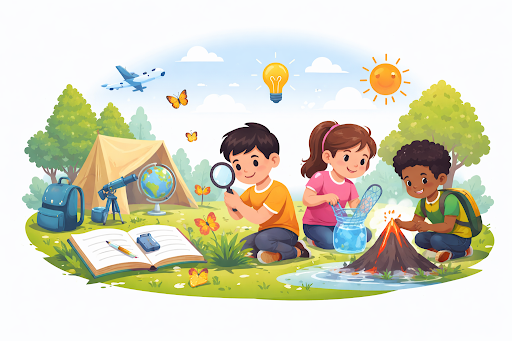
Education experts have studied how children learn for decades. Their findings support a simple idea: doing something is more powerful than reading about it.
The Brain Responds to Experience
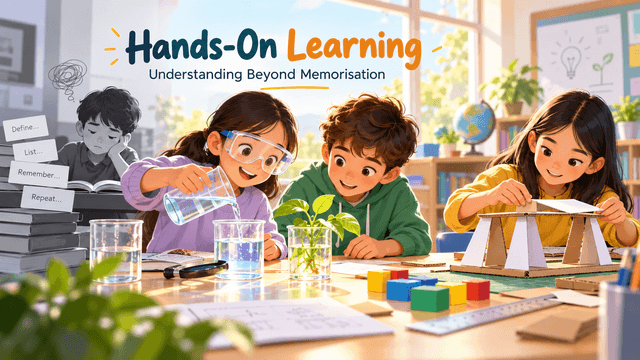
When children engage with something physically or emotionally, their brains form stronger memories. Hands-on activities create connections that reading alone cannot always build.
Active Learning Improves Retention
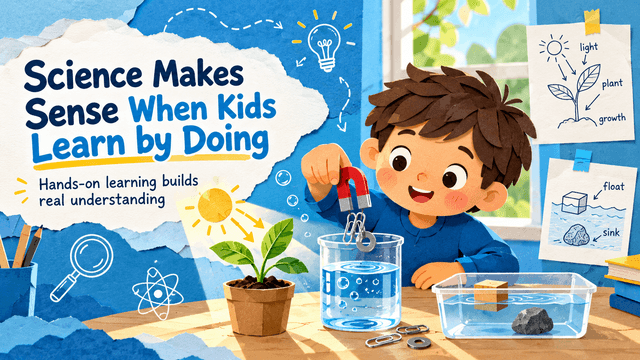
Studies show that children retain information better after active learning experiences. When a child plants a seed or builds a model, the learning sticks longer and feels more meaningful.
Rest and Play Support Academic Performance
Regular breaks and play time do not reduce academic achievement. In fact, they improve focus, reduce stress, and help children return to formal learning with more energy and attention.
Also Read | The Power of Experiential Learning at GD Goenka Public School, Greater Noida
The Role of Schools in Making Learning Enjoyable
Schools carry a responsibility beyond delivering a syllabus. They shape how children feel about learning for the rest of their lives.
A Positive Environment Changes Everything
Children who enjoy school are more likely to stay curious and motivated. A warm and supportive school culture builds a love for learning that goes far beyond the classroom years.
Teachers as Guides, Not Just Instructors
When teachers step away from the board and join children in activities, the relationship changes. Children see teachers as partners in learning, which builds trust and openness.
School Should Feel Safe to Explore
Children take more risks and try harder when they feel safe. A school that celebrates effort over results gives children the confidence to explore without the fear of failure.
Check Out | Integrating Social Responsibility into Student Life at SIS, Greater Noida
TKA Handewadi: Where Fun Is Part of the Plan
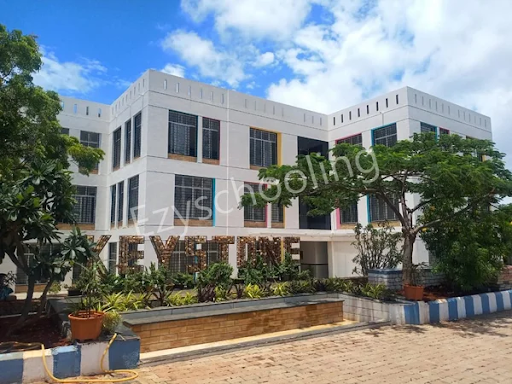
The Keystone Ankuram is one of the best CBSE schools in Pune, located near Handewadi Chowk in Pune. The Shalaka Foundation established it with a clear belief that school should be a place children love to attend. The campus sits close to nature and offers a calm, open environment far from the noise of city life.
TKA runs a dedicated weekly program called Bagless Day of Fun, known as BDF. On this day, children come to school without their school bags or textbooks. The school fills the day with activities that stretch beyond the regular timetable. Children take part in music, dance, gardening, cooking, clay modelling, skipping, and much more. The idea behind BDF is simple: learning lives everywhere, not just in books. The school believes that a child who laughs and explores on a Wednesday will sit more attentively on a Thursday.
BDF also helps teachers see children differently. Away from tests and written work, teachers observe how children solve problems, lead groups, and express themselves. This gives them a fuller picture of each child's strengths. BDF is not a holiday or a free period. The school plans it carefully to support the overall growth of every child. It brings energy, joy, and a sense of possibility into the school week.
Conclusion
TKA proves that a school can be serious about education and still make room for delight. When children look forward to going to school, the whole process of learning becomes richer and more human. That is the spirit BDF carries, and it is what makes TKA a school worth knowing.
For more information on this and other such schools in the area, check out this list of the best schools in Pune.







 as a preferred source on