








It usually starts small. A child dragging their feet in the morning, slow, uninterested. You think maybe it’s just laziness, or mood, or one of those days. But then it repeats again, and again. And somewhere in between homework, screen time, and packed schedules, something important quietly slips.
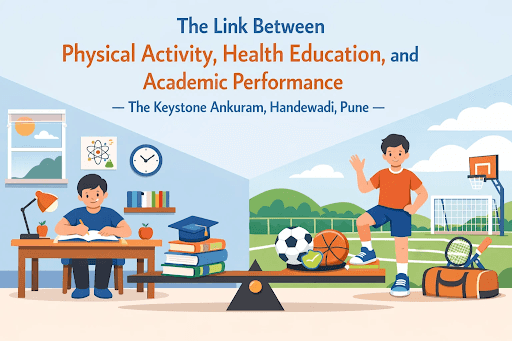
Movement, not just sports, not just PT periods, but real, consistent physical activity. The kind that wakes up the brain. The kind that actually shapes how a child learns. Most parents don’t notice this connection immediately. Why would they? Marks still come. Exams still happen. Life goes on. And somewhere in that search for the “best schools in Pune”, this part often gets missed. But here’s the thing. The link between physical activity, health education, and academic performance is not optional anymore. It’s essential. And science has been saying this for years now.
Also Read | What Makes a Modern School Truly Holistic? The Keystone Ankuram Approach
When the Body Moves, the Brain Follows
There’s a reason kids feel more “awake” after running around. It’s not just energy burn. According to a study published by the Centers for Disease Control and Prevention (CDC), students who engage in regular physical activity show better grades, improved concentration, and higher cognitive performance. Not slightly better. Noticeably better.
Another study from Harvard Medical School found that exercise increases blood flow to the brain, particularly to the hippocampus, the area responsible for memory and learning. In simple words? Movement feeds the brain, and yet, most routines today are built the other way around. Study first. Sit more. Move less. Score high. Sounds logical. But it isn’t complete.
-
A Small Story. But Real.
A parent once shared something interesting. Her son was “average.” That’s the word she used. Average marks, average attention, always distracted, always tired. Then something changed, not tuition, not extra classes. He started playing football every evening. Within months, his teachers noticed something. He was more attentive. Less restless. More involved in class.
His grades? They improved too, not drastically overnight, but steadily. What changed? Not his intelligence, that was always there. What changed was his energy. His focus. His ability to sit and actually absorb.
-
Health Education: The Missing Piece Parents Often Ignore
Now here’s where it gets even more interesting. Physical activity alone is powerful. But when combined with proper health education, the results multiply. Because children don’t just need to move. They need to understand why they are moving.

Health education teaches:
- Why sleep matters
- How food affects mood and focus
- Why hydration impacts energy levels
- How stress can influence learning
A report by the World Health Organization (WHO) highlighted that schools integrating health education programs saw improved student attendance and academic outcomes. And it makes sense, a child who understands their body handles their mind better.
-
The Reality Today. And Why It’s Concerning.
Let’s be honest for a moment, screen time is high, really high. A 2023 report suggested that children spend an average of 6–8 hours daily on screens. That includes school, entertainment, and everything combined. Outdoor play? Reduced, structured sports? Occasional. Unstructured movement? Almost gone. And this is where problems begin.
- Reduced attention span
- Increased anxiety
- Poor sleep cycles
- Lower retention levels
-
Where Schools Start Making a Difference
Now this is where the role of a school becomes crucial. Not just as a place of academics. But as an ecosystem, because realistically, children spend a large portion of their day in school. And what they experience there shapes habits, deep ones.
At The Keystone Ankuram, the approach doesn’t isolate academics from physical well-being. It connects them. There is a clear understanding that learning doesn’t happen only at a desk. It happens on the field. During movement. In moments where children are active, engaged, and alive. Structured physical activities are not treated as “extra.” They are integrated into the learning process.
And it shows that students are not just prepared for exams. They are prepared to stay mentally alert. Physically capable. Emotionally balanced.
-
What Parents Often Ask (But Don’t Say Out Loud)
- “Will sports affect studies?”
- “Will too much play reduce focus?”
- “Shouldn’t we prioritize academics first?”
- These questions are valid. Very real.
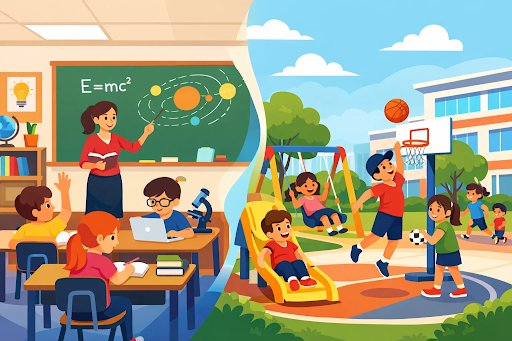
But here’s the honest answer. Ignoring physical activity harms academics more than supporting it. Because learning is not just about time spent studying. It’s about the quality of attention during that time. And attention depends on energy.
Check Out | What Questions Should Parents Ask Before Selecting a School?
Inside a Balanced School Environment: The Keystone Ankuram
Walk into a school on any regular day, and you can tell a lot. Not from the notice board. Not from the brochures, but from the children. Some look tired, some look rushed. Some are just going through it. And then there are schools where something feels different.
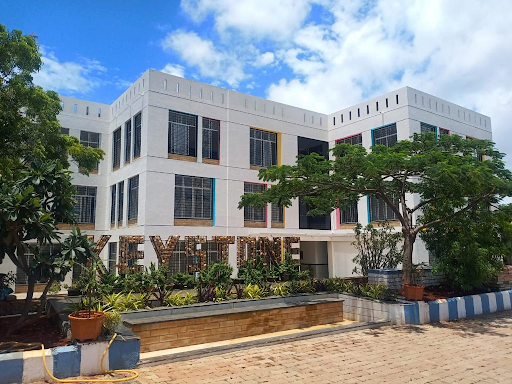
At The Keystone Ankuram, that balance is not accidental. It is designed. Thought through and lived daily. You won’t find children sitting still for hours without movement. That’s not how the day flows here. There are breaks, real ones, not just in the timetable, in rhythm. A class might begin with a focus. Quiet. Structured. Then shift. A quick activity. A stretch. Sometimes, even a small game. Not to “kill time.” But to reset attention, because attention, honestly, doesn’t stay fixed for long. And forcing it rarely works. Teachers here seem to understand that. They don’t just deliver lessons. They observe energy. And adjust. Subtle, but important.
There’s this one moment a parent once noticed. A group of students, mid-day, outside. Not a sports period. Not recess. Just a short, guided movement session. Simple exercises. Breathing. A bit of laughter in between. It looked small. But it wasn’t. Those few minutes matter more than we think. And for many parents searching for the “best schools in Pune”, this is the kind of detail that often goes unseen, but quietly makes all the difference.
Research says children can only maintain deep focus for around 15–20 minutes before their attention starts dropping. Yet most systems expect them to sit and absorb for much longer. That gap shows. Here, the attempt is different; learning is broken into pieces, manageable with movement in between, with pauses that actually help. And then comes the physical activity part. Not treated like an afterthought. It’s not like “finish studies, then play.” It’s integrated.
Activities that are structured, but not rigid. There is room for skill-building, yes. But also for just being active. Not every child is pushed into competition. That’s important. Some run fast. Some don’t. Some enjoy team games. Some prefer individual movement. All of it is allowed, and that’s where confidence quietly builds. Because when a child doesn’t feel compared all the time they participate more. Another thing you’ll notice here is how health is spoken about. Not as a subject. Not as a chapter in a book, but as part of everyday conversation.
Teachers casually remind students about water intake. About posture, about why sitting too long isn’t ideal. Your kids will face no big lectures, just consistent reminders over time. They start noticing their own habits, some even correct each other in their own way. There’s also a certain calm in how things are handled. No unnecessary pressure. But also no lack of structure. It’s a mix, slightly formal, slightly relaxed; children know what is expected, but they are not constantly pushed to the edge. And this matters more than most parents realize, because constant pressure doesn’t always create better results. Sometimes, it creates resistance.
You can’t replicate that through textbooks. Parents often worry about whether such an environment might reduce academic seriousness. It’s a fair concern. But what’s visible here suggests otherwise. The seriousness is there, just not in a stressful way. Children complete their work. Concepts are covered. Progress is tracked. But it doesn’t feel forced every minute. There is breathing space, and in that space, learning actually settles.
Another small but noticeable thing. Transitions are smooth. From class to activity. From activity back to class. No chaos. No abrupt switches. Which means children don’t lose rhythm constantly. That consistency helps. More than we think because young minds take time to shift gears, and when transitions are too sharp, learning breaks.
The Final Thought. Something to Take With You.
Next time your child says they want to go play, pause before saying no. That hour outside might be doing more for their academics than an extra worksheet ever could. It might be improving their memory, their focus, and their mood. It might be building the foundation you’re trying to create, just in a different way.
If you want to know more about this and other similar schools, then check out the list of the top schools in Pune.















 as a preferred source on