







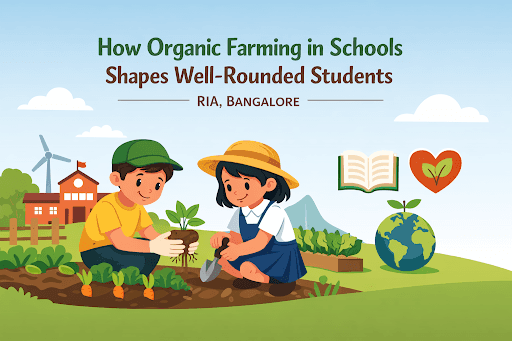

Schools today are redefining what education truly means. Learning no longer stays confined within four walls. Students need real experiences to grow into thoughtful, capable individuals. Redbridge International Academy (RIA) in Bangalore understands this deeply.
One of the best boarding schools in India, RIA has built an environment where students learn by doing. The school integrates hands-on experiences into everyday learning. One such initiative stands out clearly — organic farming. In this article, we explore how organic farming as a school program builds important life skills and why experiential learning matters for students today.
Also Read | Four Pathways, One Vision: Discovering Educational Innovation at RIA Bangalore
Why Experiential Learning Matters in Education
Modern education demands more than textbook knowledge. Students benefit greatly when they engage with the real world. Experiential learning builds confidence and practical understanding in students.
It Connects Lessons to Real Life
Abstract concepts become clearer through direct experience. A student who grows a plant understands biology differently. Real-world activities make subjects more meaningful and memorable.
It Builds Responsibility and Patience
Waiting for a seed to grow naturally teaches patience. Students learn that effort and time produce results. These are life lessons no textbook can fully deliver.
It Encourages Curiosity and Observation
Students who work outdoors ask more questions. They notice details that a classroom setting rarely reveals. This habit of observation strengthens scientific thinking over time.
The Role of Nature in a Child's Development
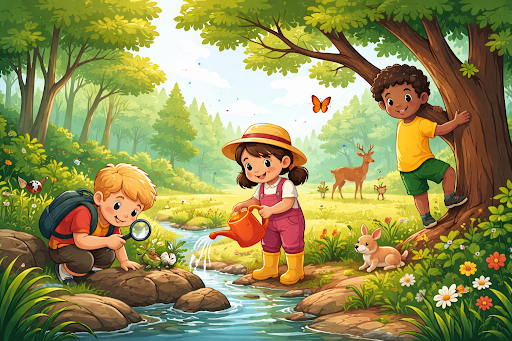
Nature plays a powerful role in shaping young minds. Time spent outdoors reduces stress and improves focus. Schools that use natural environments wisely support student well-being effectively.
Nature Improves Mental Health in Students
Spending time in green spaces reduces anxiety in children. Fresh air and open spaces create a calm learning environment. Students who connect with nature tend to feel more grounded.
Outdoor Learning Builds Environmental Awareness
Students who grow food understand where it comes from. They learn to respect natural resources through direct engagement. This awareness often turns into a lifelong environmental responsibility.
Physical Activity Outdoors Supports Overall Health
Outdoor activities keep students physically active every day. Movement improves students' concentration and energy levels. Healthy bodies directly support better academic performance in school.
Also Read | From Kindergarten to Class 10: Nurturing Complete Development in Every Child
How Schools Can Use Farming as a Learning Tool
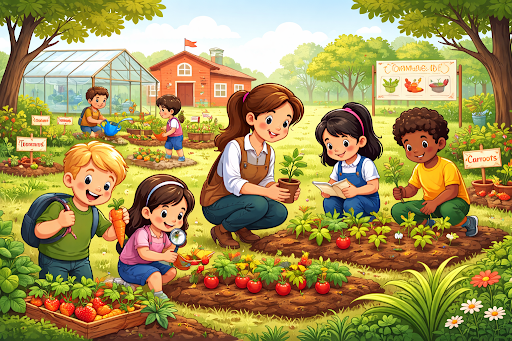
Farming is not just an agricultural activity. In a school setting, it becomes a multi-subject learning tool. Science, math, sustainability, and teamwork all come alive on a farm.
Farming Teaches Practical Science Skills
Students observe plant growth, soil health, and natural cycles. These real observations strengthen concepts taught inside the classroom. Practical science makes students more confident during formal assessments.
It Supports Mathematical Thinking
Measuring plots, tracking growth, and managing water use involve math. Students apply arithmetic and measurement in a natural context. This approach makes numbers feel purposeful and less intimidating.
Group Farming Activities Build Teamwork
Students work together to plant, water, and harvest crops. Each student takes on a specific role within the group. This builds communication skills and a sense of shared achievement.
Check Out | When Students Tend Gardens and Animals: Education Reimagined
Organic Farming at Redbridge International Academy, Bangalore

One of the best ICSE boarding schools in India, RIA stands among the finest boarding schools in India. The school operates across an 18-acre eco-friendly campus in Bangalore. Students here experience education in a rich and active environment.
RIA actively includes students of all ages in organic farming. Students plant, monitor, and harvest crops as part of their daily school life. The school also uses a rainwater harvesting system to support natural resource conservation. This program gives students a real sense of achievement and calm. Working under an open sky, they develop a deep respect for the environment. The farming experience connects directly to what students study in science, math, and environmental studies.
The organic farming initiative at RIA builds more than agricultural knowledge. Students develop patience, responsibility, and a strong work ethic through this program. They learn to observe natural processes and draw meaningful conclusions. The activity also builds community among boarding students who spend time together on the farm.
Living away from home, these shared outdoor experiences create strong bonds and a sense of belonging. The program shapes students who are not just academically capable but also grounded, thoughtful, and aware of the world around them.
Conclusion
Education works best when it moves beyond the classroom. Organic farming at RIA is a clear example of this approach. Students gain practical skills, mental well-being, and a strong connection to nature. Schools that invest in such programs prepare students for real life. RIA continues to lead by building learners who are ready for the future, inside and outside the classroom.
For more information on this and other similar schools in the area, check out this list of the best boarding schools in India.







 as a preferred source on