




Schools in Pune 2027-28: Fees, Admissions, and Reviews
Ezyschooling lists 1150+ schools in Pune across CBSE, State Board, ICSE, IB, and Cambridge/IGCSE boards. Monthly fees range from ₹583 to 80.64K at CBSE Schools, from ₹417 to 22.36K at State Board schools, from ₹1.02K to 42.50K at ICSE Schools, from ₹1.25K to 27.79K at Cambridge/IGCSE Schools, and from ₹2.50K to 1.65 lakh at IB schools. The areas with the most schools Wagholi, Hadapsar, Hinjewadi, Moshi, and Bhosari.
 as a preferred source on
Near Me
District
Popular Area
Localities
Monthly Fees
SUGGESTION
Enter Manually
From
to
Class
Board
Ownership
School Type
Gender
International Schools
Schools in Pune
- 1151 Schools
















Not sure which school is
right for your child?
Get free counselling now.






AI Powered Assistant
Not able to find the right schools?
Our AI understands your preferences and recommends schools that truly fit your child's needs.




Board:
CBSE, IB Board +1



What is your preferred Board?
These are the most sought boards by Parents.











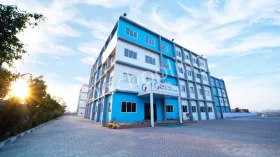


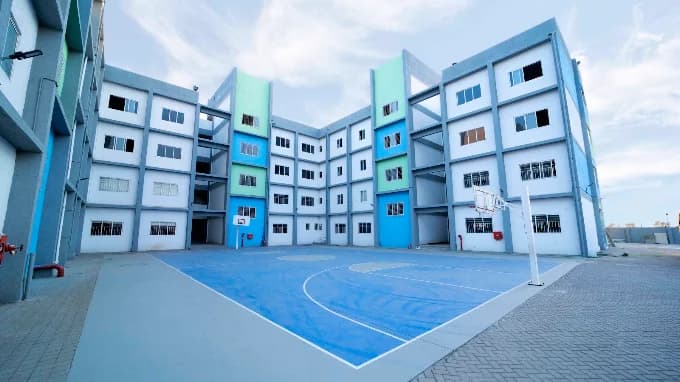



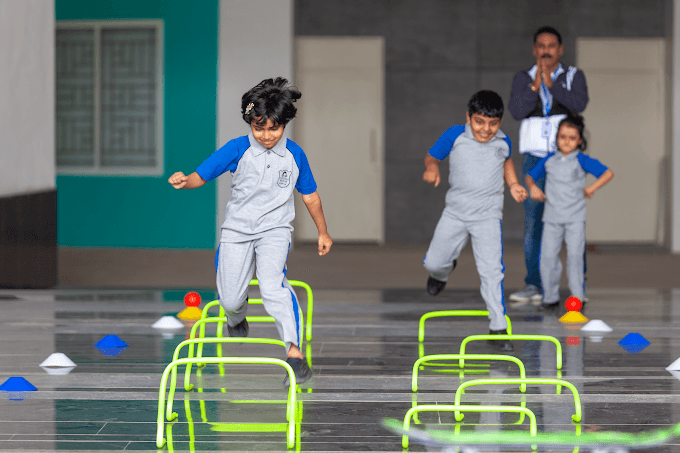










Showing 27 of 1151 schools
10 Best Schools in Pune with Fee Structure 2027-28
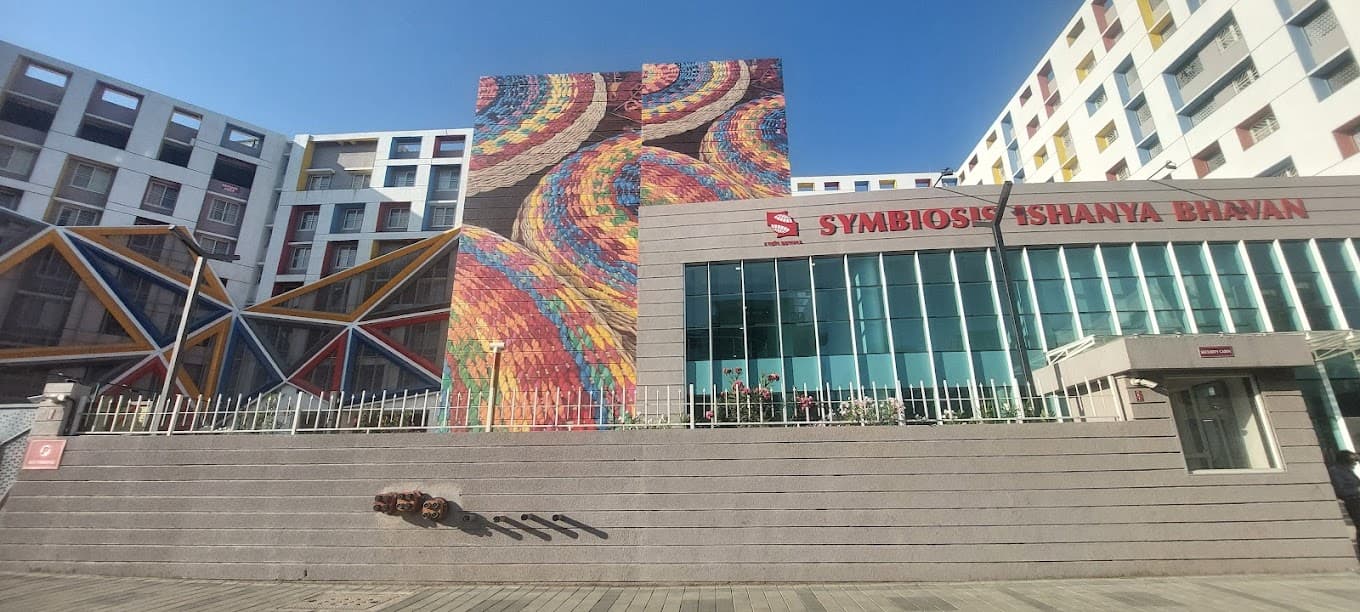
The best schools in Pune district include Symbiosis International School, The Bishop's School, and Indus International School. The schools cover IB, CBSE, ICSE, and Cambridge schools across Pune and Pimpri-Chinchwad, from Camp and Aundh to Hinjewadi, Wagholi, and Chinchwad. The table below lists schools with their area, board, and monthly fee range from ₹2.50K to 1.65L.
Best Schools in Pune by Board
Pune schools follow five main boards. CBSE has the most schools, followed by the State Board; ICSE and Cambridge schools are fewer, and IB and Cambridge schools charge the highest fees. Here are leading schools in each board, from established names to lower-fee options.
3 Best CBSE Schools in Pune with Fee Structure
Best suited to students who want a national curriculum and preparation for entrance exams like JEE and NEET.
|View all CBSE schools in Pune|
3 Best State Board Schools in Pune with Fee Structure
The most affordable option, following the State Board (SSC and HSC) syllabus up to Class 12.
|View all State Board schools in Pune|
3 Best ICSE Schools in Pune with Fee Structure
Known for strong English and a broad, detailed syllabus up to Class 12.
|View all ICSE schools in Pune|
3 Best Cambridge/IGCSE Schools in Pune with Fee Structure
A British international curriculum, often with A Levels in Classes 11–12.
|View all Cambridge/IGCSE schools in Pune|
3 Best IB Schools in Pune with Fee Structure
International curriculum, preferred by families planning university study abroad.
Best Schools in Pune by Area
Most parents choose a day school within 5–7 km of home. Below are leading schools located in Pune's most popular areas. Open any area to see all schools in and around it, or use the Near Me filter to find schools within your preferred distance.
Kharadi
Hinjewadi
Undri
Wagholi
Hadapsar
Baner
Viman Nagar
Kothrud
More areas: Kalyani Nagar - Magarpatta City - NIBM - Camp - Aundh - Bavdhan - Kondhwa - Wanowrie - Pashan - Sinhagad Road
Why is Pune a Popular Choice for Parents?
In just over a decade, Pune has emerged as one of India’s most sought-after hubs for schooling, offering a winning blend of academic excellence, holistic development, and an overall student-centered ecosystem. Its rise as a preferred destination for education stems from several compelling factors:
- Rich Educational Legacy & Diverse Curriculum: Pune has long been known as the “Oxford of the East,” rooted in its rich heritage of schools, colleges, and universities.
- Outstanding Academic Results: Pune’s schools deliver exceptional board exam outcomes. In the 2025 CBSE Class X and XII results, multiple schools like Delhi Public School (DPS), The Orbis School, Global Indian International School, and Army Public School achieved 100% pass rates, including special-needs students. Notable individual scores ranged up to 99.4% and higher.
- Cutting-Edge Infrastructure & Holistic Development: Schools here invest heavily in modern facilities, including smart classrooms, robotics labs, sports arenas, arts, and music studios, building environments that foster creativity, critical thinking, and practical learning.
- Safe, Multicultural, and Affordable City: Pune is praised for its safe neighborhoods, affordable cost of living, and a cosmopolitan culture. This makes it highly attractive to families seeking a blend of quality education and lifestyle amenities.
- Strong Industry-Academia Integration: Proximity to Pune’s robust corporate, R&D, and startup ecosystem offers students exposure through internships, guest lectures, and collaborative programs, creating a practical learning edge.
- Cultural & Extracurricular Richness: From performing arts to sports and eco-initiatives, Pune schools emphasize all-round development. Many institutions facilitate leadership, community engagement, and multicultural exchange opportunities.
Sources: Times of India
Commonly Asked Questions
Q.1 When do school admissions start in Pune?
A.1 Pune has no common admission calendar, and each school sets its own dates. Many CBSE and ICSE schools open nursery registration in October.
- The Orchid School opened nursery and Class 1 registration for 2027–28 on 18 October 2026.
- Hutchings High School & Junior College issued play group and nursery forms from 8 October to 4 November 2026.
- Delhi Public School had closed the first phase of its 2027–28 registration by early November 2026.
Popular schools fill their entry-level seats quickly, so apply early.
- Nursery and Class 1: many CBSE and ICSE schools open registration from October.
- Class 11: schools that run their own Classes 11 and 12 take registrations directly. State Board junior colleges admit students through the state's online admission process after the SSC results.
- RTE seats: applications open early in the calendar year. The 2026–27 lottery was drawn on 6 April 2026.
- Higher classes: admission depends on vacant seats.
Q.2 What is the right age for nursery, Jr KG, Sr KG and Class 1 admission in Pune?
A.2 Maharashtra revised its admission age rule through a Government Resolution dated 15 October 2026. Age will now be counted as on 30 June of the admission year. The change starts with nursery in 2027–28 and moves up one class each year, reaching Class 1 in 2030–31. For the 2027–28 session:
Heads of schools can relax the age limit by up to 15 days. Children already in nursery to Class 1 in 2026–27 are not affected. Class names differ between schools. For example, Delhi Public School, Pune calls its class for 3-year-olds Pre-Nursery. Enquire with an Ezyschooling counsellor before taking admission.
Q.3 When does the school session start in Pune?
A.3 It depends on the board. Maharashtra State Board schools begin the year in mid-June, after the summer vacation, and re-opened on 15 June in 2026. CBSE schools start the session in April, break for the summer in May and resume in June. Delhi Public School, Pune, for instance, begins its 2027–28 session on 1 April 2027.
Q.4 Is Marathi compulsory in Pune schools?
A.4 Yes. The Maharashtra Compulsory Teaching and Learning of Marathi Language in Schools Act, 2020 makes Marathi compulsory from Class 1 to Class 10 in every school in the state, whatever its board or medium. This includes CBSE, ICSE, IB and Cambridge schools. In 2026, the state warned that schools not teaching Marathi could be fined up to ₹1 lakh and lose recognition. Children moving from other states may need extra support, so it is worth asking how the school helps students who start Marathi late.
Q.5 What were the CBSE, ICSE and State Board 10th and 12th results for Pune in 2026?
A.5 In 2026, Pune's results were above the national or state average in every board.
- CBSE Class 10: 96.66% pass percentage in the Pune region (all-India: 93.70%).
- CBSE Class 12: 87.32% pass percentage, tenth among all CBSE regions (all-India: 85.20%).
- Maharashtra SSC (Class 10): 94.24% pass percentage in the Pune division (state: 92.09%).
- Maharashtra HSC (Class 12): 91.25% pass percentage in the Pune division (state: 89.79%).
- ICSE and ISC: CISCE does not publish city-wise results. In Maharashtra, 99.93% of ICSE (Class 10) and 99.88% of ISC (Class 12) students passed (all-India: 99.18% and 99.13%).
Q.6 Do Pune schools charge anything apart from the monthly fee?
A.6 Yes. Private schools in Pune usually charge a one-time admission fee and a term or annual fee. Transport, books, uniform and activities are charged separately. Under Maharashtra's fee law, a private school's fees must be approved by the executive committee of its Parent-Teacher Association (PTA). Ask for the full fee structure in writing before paying, and check which charges are compulsory.
Q.7 How much can Pune schools increase fees?
A.7 Under the Maharashtra Educational Institutions (Regulation of Fee) Act, 2011, a private school can revise its fees only once every two years. An increase of up to 15% needs the approval of the PTA's executive committee. Parents who dispute an increase can take it to the Divisional Fee Regulatory Committee (DFRC). Schools can also declare fees for several years ahead at the time of admission, so it is worth asking for the fee schedule for the coming years.
Q.8 Are there free seats for weaker sections in Pune private schools?
A.8 Yes. Under the RTE Act, private unaided schools reserve 25% of entry-level seats for children from disadvantaged groups and economically weaker families. In Maharashtra, parents apply online on the state's RTE portal, and seats are allotted by a statewide computerised lottery. For 2026–27, the lottery was drawn in Pune on 6 April 2026 for 1,14,826 seats in 8,701 schools across the state. Pune district had the most RTE seats of any district in 2025–26. In the economically weaker category, annual family income had to be up to ₹1 lakh in 2025–26, so check the current limit before applying.
Q.9 If parents are moving to Pune from another state, how do they switch schools?
A.9 Collect the Transfer Certificate and the latest report card from your child's current school before the move. Maharashtra schools usually call the Transfer Certificate a School Leaving Certificate. Keep the child's Aadhaar and APAAR ID ready. A move from one CBSE school to another is usually smooth, as the syllabus stays the same. Marathi is compulsory up to Class 10 in every Maharashtra school, so ask how the new school supports children who have not studied it before.
Q.10 How does Class 11 admission work in Pune?
A.10 Many Pune schools stop at Class 10.
- State Board students usually move to a junior college for Classes 11 and 12. Admission to these runs through Maharashtra's centralised online process on mahafyjcadmissions.in, in rounds based on marks and the colleges each student chooses.
- Schools that run their own Classes 11 and 12, such as The Orchid School and Hutchings High School & Junior College, take registrations directly, often months earlier. The Orchid School opened Class 11 registration for 2027–28 on 14 October 2026.
Q.11 Do Pune schools help with JEE and NEET preparation?
A.11 Some schools and junior colleges build JEE and NEET coaching into the Class 11 and 12 timetable. Others leave entrance preparation to outside institutes. For example:
- MIT Junior College, Kothrud: includes coaching for NEET, JEE and MHT-CET in the regular junior college timetable.
- Akshara International School, Tathawade: a CBSE school where outside coaching experts teach maths, physics and chemistry in school for engineering entrance exams. Extra classes run during the summer, Diwali and Christmas breaks.
In some integrated colleges, students spend most of their time at coaching and attend college mainly on paper. In June 2026, the Maharashtra government said it would tighten biometric attendance in junior colleges. It also said colleges that allow large-scale absenteeism could face action. Before admission, ask the school whether the coaching is included in the fee, who teaches it, and how attendance is recorded.
Q.12 Are there special schools in Pune for children with special needs?
A.12 Yes.
- Suyog Sunderji Wisdom School, Wagholi, works with children with autism, ADHD and Down syndrome. Admission depends on seat availability.
- Savali and Aashayein work with children with autism, Down syndrome and cerebral palsy.
- Several mainstream schools also take children with dyslexia, ADHD or autism and employ special educators.
Q.13 What safety rules apply to school buses in Pune?
A.13 The Maharashtra Motor Vehicles (Regulations for School Buses) (First Amendment) Rules, 2026 were notified on 16 July 2026.
- School buses must have GPS tracking, CCTV, panic buttons, a seat belt for every passenger and fire safety equipment.
- Buses carrying children up to Class 5 must have a woman attendant or a designated staff member on board.
- The rules also regulate school bus fares for the first time.
- Pune's school bus safety committee has warned that buses without working CCTV will face action.
Q.14 What are typical school timings in Pune?
A.14 Since the 2024-25 session, Maharashtra has required classes from pre-primary to Class 4 to start at 9 am or later, in schools of every board. Classes for older children can start earlier. In 2024, Pune's primary education department issued show-cause notices to schools that started young children's classes before 9 am. Pune traffic adds time every day, so a school close to home makes a real difference.
Q.15 Do Class 10 students in Pune CBSE schools take the board exam twice?
A.15 Yes, from 2026. The first board exam in February is compulsory. A second exam in May is optional and can be taken to improve the score in up to three subjects, with the better of the two scores counting. Students who skip the first exam cannot take the second.
Schools in Pune (FAQs)
The fees for Schools in Pune usually ranges from Rs.417 to Rs.80,640 per month. The fee structure differs from school to school depending on several factors such as facilities available, class level, curriculum options and so on.
Based on our recent data compilation, there are over 1151 Schools in Pune. Out of these, there are 530 CBSE schools, 34 international schools, and 302 schools affiliated with the State Board.
Reviews of Schools in Pune
School has good approach to studies.
Lots of co-curricular options! The sports facilities were recently upgraded.
Teachers are polite, patient, and always there to help.
Wish they would give more importance to sports apart from studies.
Extracurricular activities like sports and arts are well-organized
Excellent school with enough facilities; should work more on infrastructure maintenance
A very nice school, teachers are polite and kind and also easy to talk to. Best if you have shy children.
The annual concerts and sports events are impressive, with students getting many opportunities.
The teaching staff clearly know what they're doing. My child's grasp of things has gotten noticeably better since joining.
Balanced approach to studies and sports; the legacy speaks for itself
Teachers at this school are patient and kind with every child I have noticed.
Galaxy International School offers a nurturing and dynamic environment that supports my child’s growth academically, socially, and personally. The dedicated teaching staff, engaging extracurricular opportunities, and focus on character development make it a valuable place for education. The infrastructure and activities provide a strong foundation for building confidence, creativity, and critical skills — truly making it a school where students are prepared to thrive in a rapidly changing world.
Most Compared Schools in Pune
Top schools that parents nationwide are comparing side-by-side before applying

Orchids The International School, Chinchwad
location_onChinchwad, Pimpri Chinchwad
Elpro International School
location_onChinchwad, Pimpri Chinchwad


Global Indian International School
location_onHadapsar
Pawar Public School
location_onHadapsar
Trinity International School
location_onYewalewadi

