




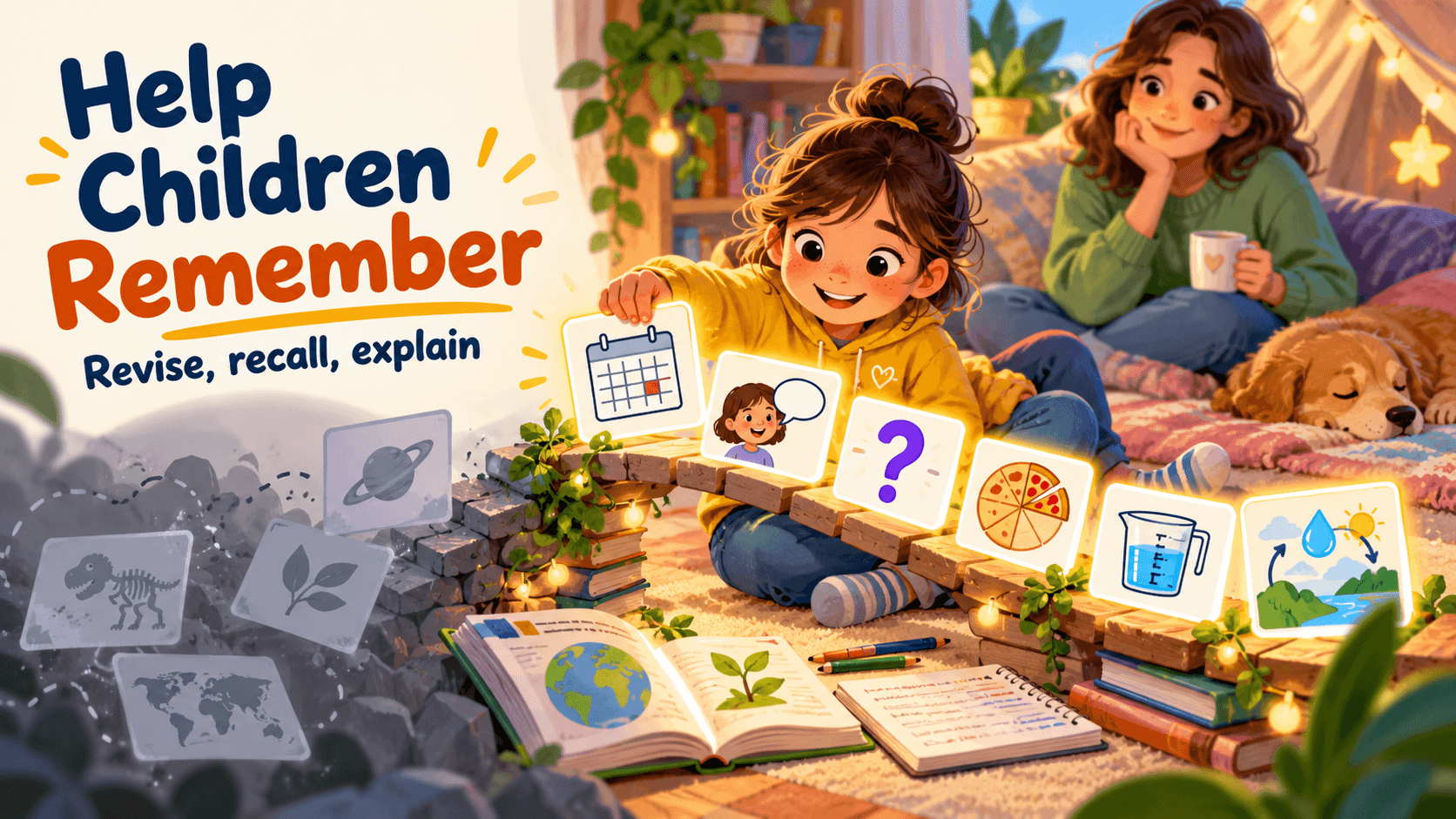

Your child studies a science chapter carefully, answers all your questions correctly, and seems to understand everything. But a few days later, when you ask the same questions, they struggle to remember the answers. You wonder, "Did my child actually learn anything?"
This situation is familiar to many parents. Children may understand lessons during class or homework but find it difficult to recall them later. For parents exploring Top schools in bangalore, understanding how children learn and retain information is just as important as examining academic programmes. Schools such as The Paradise Academy(TPA), Electronic City, Bangalore provide a relevant context for discussing learning and revision.
The good news is that simple changes in study habits can help children remember what they learn.
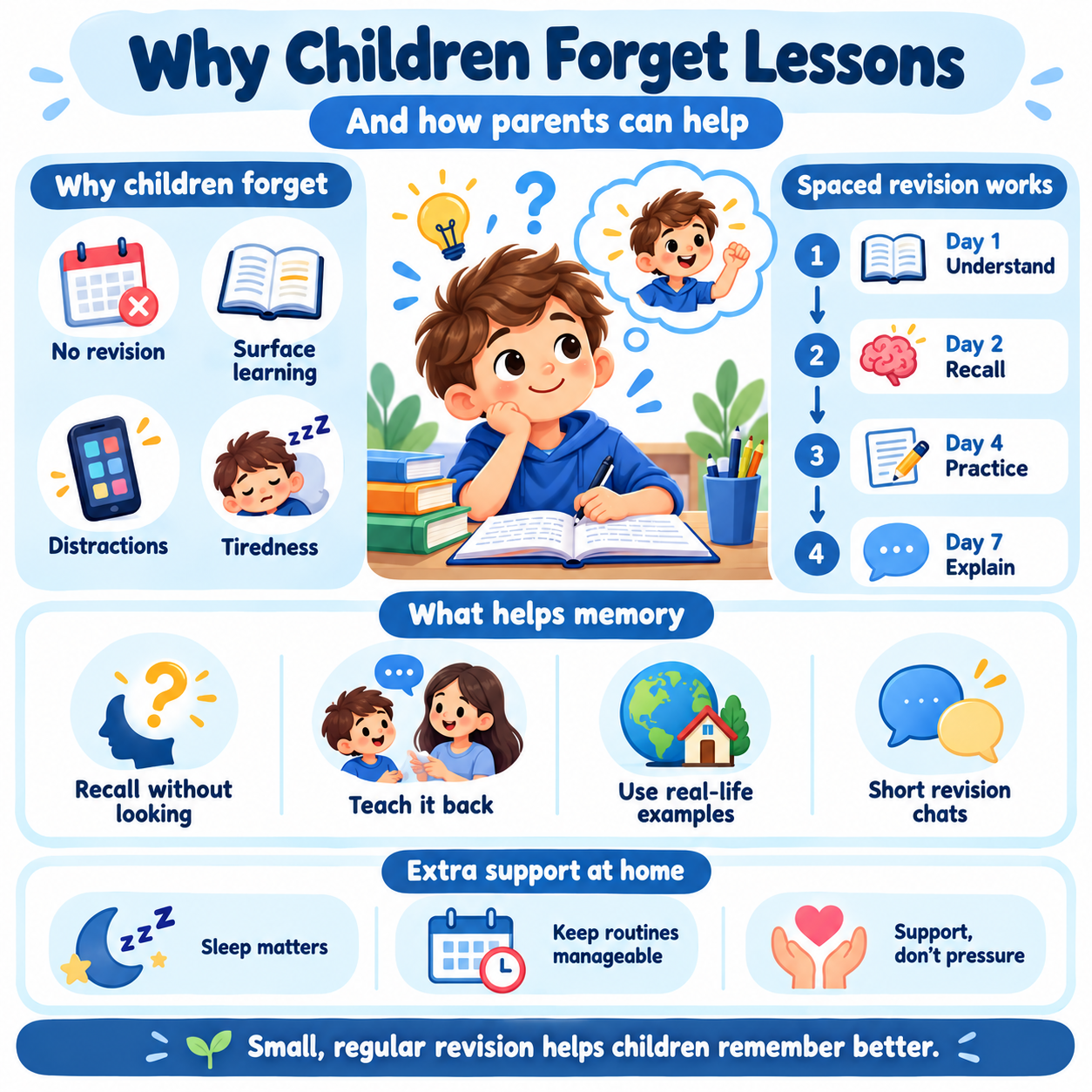
Why Do Children Forget Lessons They Have Already Studied?
Forgetting does not always mean a child was distracted or did not study properly. Sometimes, the problem lies in how information was learned and revised.
When children read a chapter several times, the words become familiar. However, recognising information while looking at a textbook is different from remembering it without help.
For example, a child may understand fractions while watching their teacher solve problems. But when asked to solve a similar question independently, they might forget the steps.
This can happen for several reasons:
- Lack of revision: Lessons are not revisited after the first study session.
- Surface-level learning: Children remember definitions without understanding their meaning.
- Distractions: Frequent interruptions make it harder to concentrate.
- Tiredness: Poor sleep or exhaustion can affect attention and memory.
Instead of immediately asking children to study harder, parents can first identify where they are struggling.
Why Revising at Different Times Helps Children Remember
Many children revise an entire chapter the night before an examination. Although this might help them answer some questions the next morning, it may not support long-term memory.
A more useful approach is spaced revision, which means revisiting information across several study sessions rather than learning everything at once.
Research guidance from the US Institute of Education Sciences recommends spreading learning over time to support retention.
Parents can introduce this approach through a simple routine:
- Day 1: Read the lesson and understand its main ideas.
- Day 2: Recall important points without opening the textbook.
- Day 4: Answer a few questions and review forgotten information.
- Day 7: Explain the lesson again using examples.
This is a flexible example, not a fixed schedule every child must follow.
Even short revision sessions can help when children actively try to remember what they previously learned.
Simple Activities That Help Children Remember Lessons
Improving memory does not require expensive learning tools or additional tuition classes. Parents can introduce effective learning activities through everyday conversations.
1. Ask Children to Recall Without Looking
After completing a lesson, ask your child to close the textbook and share three things they remember.
For example, after studying the water cycle, ask, "What happens when water from rivers and lakes gets heated?"
If they cannot remember, provide a small hint before showing the answer.
This approach, known as retrieval practice, helps children practise recalling information independently.
2. Let Children Teach You
Ask your child to explain a concept as though you are learning it for the first time.
A child studying the digestive system might explain how food travels through the body.
Listen carefully and ask simple questions, such as "Why does that happen?" or "Can you give another example?"
Explaining ideas can reveal what children understand and which parts need further attention.
3. Connect Lessons With Everyday Experiences
Children may find abstract ideas easier to understand when they connect them with familiar situations.
For example:
- Use a pizza or roti to explain fractions.
- Discuss discounts while shopping to practise percentages.
- Observe wet clothes drying to understand evaporation.
- Measure ingredients while cooking to practise quantities.
These examples make lessons more meaningful and give children opportunities to revisit concepts outside textbooks.
4. Turn Revision Into Short Conversations
Instead of conducting lengthy tests every evening, ask two or three questions during a relaxed conversation.
Encourage children to explain their answers rather than simply repeat memorised sentences.
If they make mistakes, discuss the correct explanation calmly. The aim is to identify gaps in understanding, not make children afraid of forgetting.
Build Better Study Habits Without Increasing Pressure
Good memory depends on more than revision techniques. Children also need sufficient rest, manageable routines, and time away from textbooks.
The American Academy of Pediatrics highlights the importance of sleep for children's learning, attention, and memory.
Parents can support healthier study habits by keeping revision sessions manageable and encouraging regular sleep schedules.
Avoid comparing children with classmates or siblings when they forget an answer. Instead, recognise their effort and help them practise again.
If memory or learning difficulties continue across subjects, speak with teachers to understand whether additional support is needed.
Supporting Children's Learning at The Paradise Academy
For parents considering Best schools in Bangalore, learning habits deserve attention alongside academic subjects and school activities. The Paradise Academy(TPA), Electronic City, Bangalore offers a relevant setting for understanding the importance of consistent learning support. Regardless of the school a child attends, parents can strengthen classroom learning by encouraging regular revision, asking thoughtful questions, and creating a supportive study environment at home.

Conclusion
Children do not always remember everything after studying it once. Learning becomes more effective when they revisit concepts, explain ideas, and practise recalling information.
Start with one small change this week, such as a five-minute recall session after homework. Over time, consistent practice can help children develop greater confidence in their learning.
For more information on this and similar schools, check out this list of the best schools in Bangalore.














 as a preferred source on