






Ever seen "CISCE" on a school brochure and wondered what this board is now? Well... It's one of those acronyms parents nod along to without really knowing anything about it, where it came from, why it exists, or how it's different from the boards they already know. And if you're someone who is currently exploring schools in Bangalore, that knowledge gap can actually cost you a good decision. Think about it!
New Oxford International School is one of the institutions where this board comes into play, which makes it even more worth understanding properly. So before you get more confused, let's go back to where it all started: the origin of CISCE, and what ICSE and ISC really mean for a student's academic journey today. By the end of this, you won't just know the full form; you'll actually understand the system behind it.
Also Read: Why does financial literacy need to be taught in schools?
CISCE: What It Is, Its History & Origin
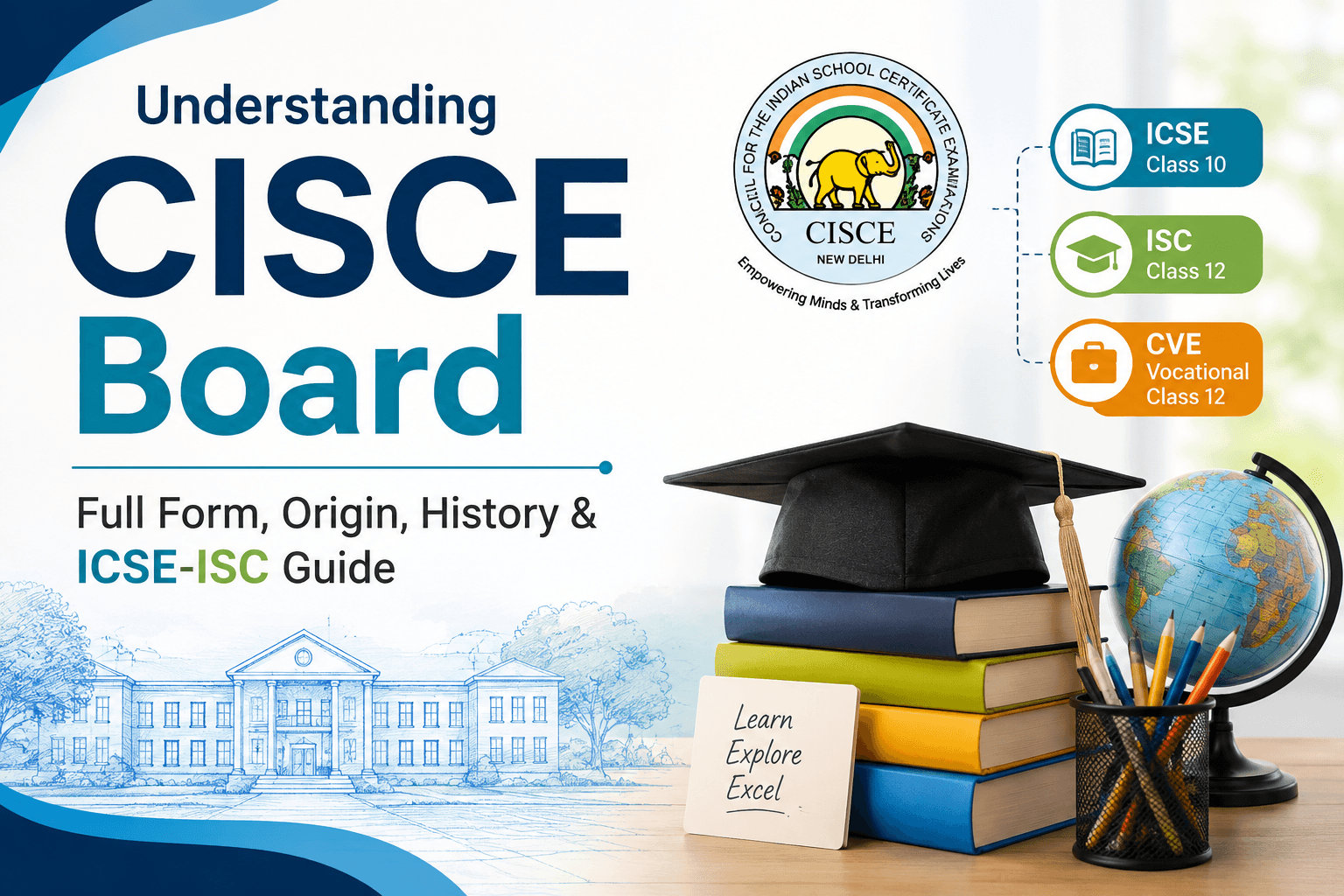
CISCE stands for Council for the Indian School Certificate Examinations. It's private, not run by the government the way CBSE is. CBSE technically works as an autonomous body under the Ministry of Education; CISCE doesn't; it's registered as its own society and runs on its own.
Here's how it came about. Before independence, schools in India that followed the Cambridge system had exams tied to the University of Cambridge in England. Once India became independent, people started pushing to move away from that and build something Indian instead.
In 1952, there was an All India Certificate Examinations Conference held under Maulana Abul Kalam Azad, who was the Education Minister back then, to look at replacing the Cambridge exam with an Indian one. Frank Anthony is the person usually credited with pushing this forward, and he went on to become the founding chairman. That's what eventually led to CISCE being set up in 1958.
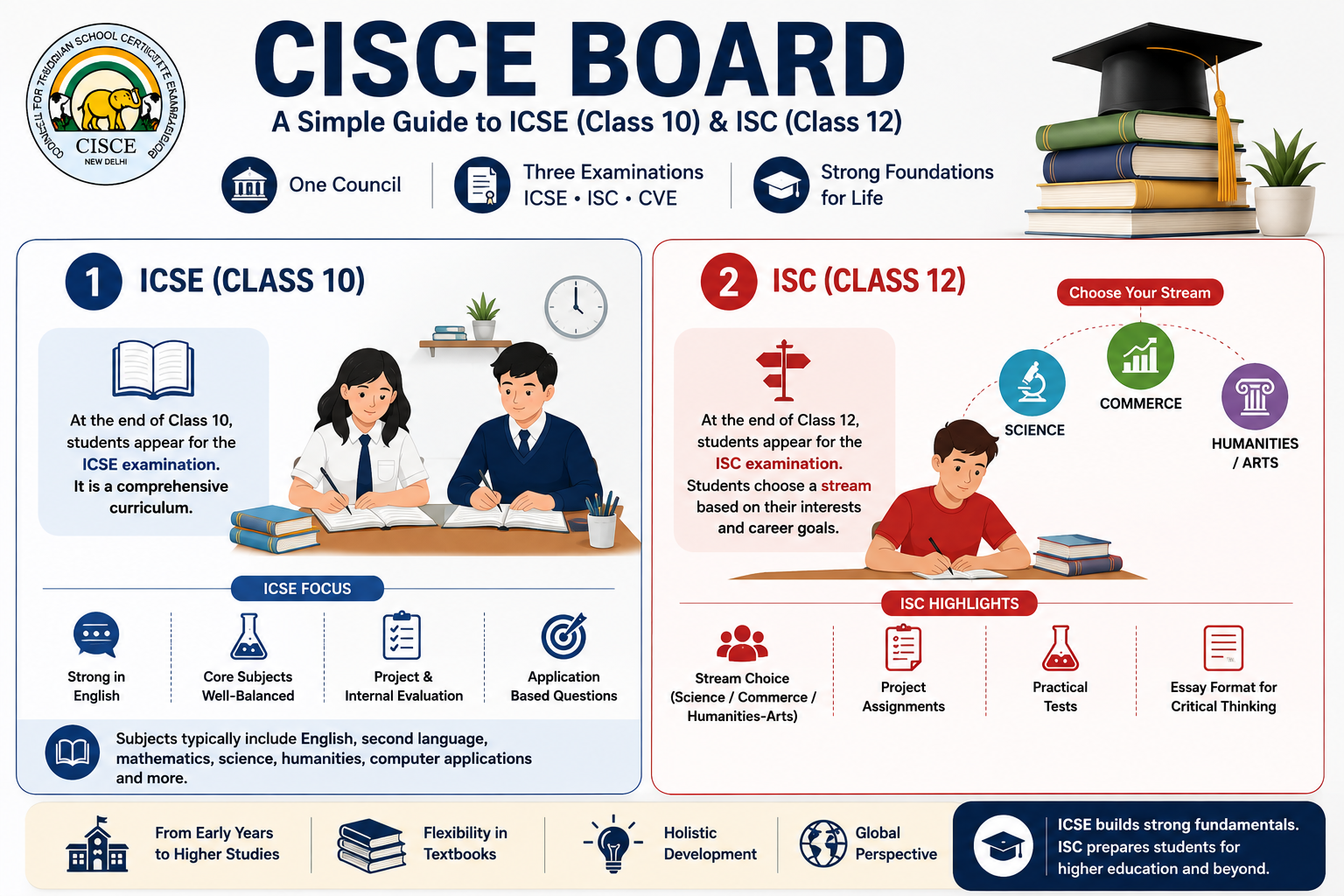
CISCE runs three exams:
- ICSE, taken at the end of Class 10
- ISC, taken at the end of Class 12
- CVE, a vocational exam for Class 12
People throw around "CISCE," "ICSE," and "ISC" like they all mean the same thing, but they don't. CISCE is the council. ICSE and ISC are just the exams it conducts.
ICSE vs. ISC: What’s the Difference?
The easiest way to think about it, they're just different stages of school.
|
Basis |
ICSE |
ISC |
|
Full Form |
Indian Certificate of Secondary Education |
Indian School Certificate |
|
Level |
Class 10 |
Class 12 |
|
Conducted By |
CISCE |
CISCE |
|
Purpose |
Secondary School Exam |
Senior Secondary Exam |
Key Features of CISCE Board
- CISCE doesn't just run one exam. It handles ICSE for Class 10, ISC for Class 12, and there's also CVE, a vocational certificate for Class 12.
- Schools aren't stuck with one fixed textbook. Except for languages, CISCE doesn't tell schools which books to use, so they can pick whatever covers the syllabus properly.
- The curriculum isn't something that starts suddenly in high school. CISCE actually lays it out from preschool itself, then carries through primary and middle school before ICSE and ISC.
- Final marks aren't decided by one exam alone. Assignments, practicals, and regular coursework add to the score in a lot of subjects.
So, Is CISCE Good For Your Child?
Honestly, no board is the "right" one for every kid. It depends on the kid.
CISCE does give you a fairly structured curriculum, some freedom on textbooks, and marks that don't come from just one final exam. But two CISCE schools can still feel completely different in how they actually run things day to day.
So don't just go by the board's name. Ask what subjects the school actually teaches, how they teach them, how kids get graded, what's happening outside the classroom, and whether any of it actually fits how your child learns.
Knowing what CISCE means is step one. Figuring out how a specific school actually runs with it- that's the part that really matters.
Also Read: Does ICSE Really Give Students an Edge After Class 10?
New Oxford International School: A CISCE Board Example in Bangalore
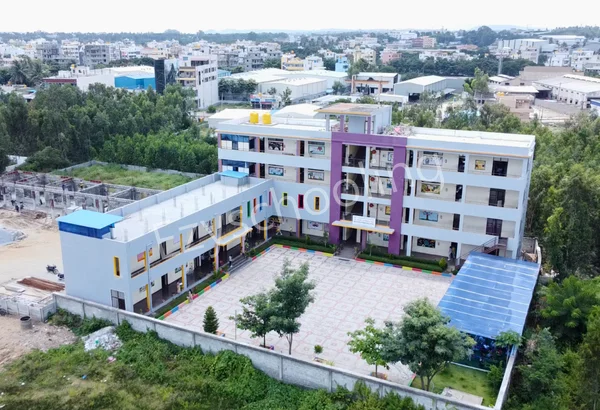
Reading about a board is one thing. Actually seeing it play out at a school is different. New Oxford International School is located in Haragadde, just off Bannerghatta Road. It's one of the schools that runs on CISCE, and honestly, it's a decent one to look at if you want to see the board in action rather than just on paper.
The younger kids don't really do "academics" in the strict sense. Pre-primary is mostly play, hands-on stuff, getting comfortable in a classroom. Primary is where it shifts a bit: more questions, more back and forth with teachers, kids actually trying things instead of just copying down answers.
Secondary is where it gets more serious. Same basic idea though, just with more project work and problem-solving added in as the subjects get harder. Even at Nursery, LKG, and UKG level, they're not just playing all day. English, Maths, EVS, Hindi or Kannada, all already in the mix. Art, dance, cursive writing too, on the side.
What stands out is that none of this starts suddenly. It builds slowly, year after year. And that's really how CISCE itself works too; the curriculum exists from preschool, it doesn't just show up once a kid hits Class 9 or 10.
So if you're comparing schools in Anekal, Bangalore and want an actual example of what a CISCE school looks like day to day, not just what the board says on its website, this is one worth checking out.
For more information regarding this and the other schools in the nearby area

 as a preferred source on