







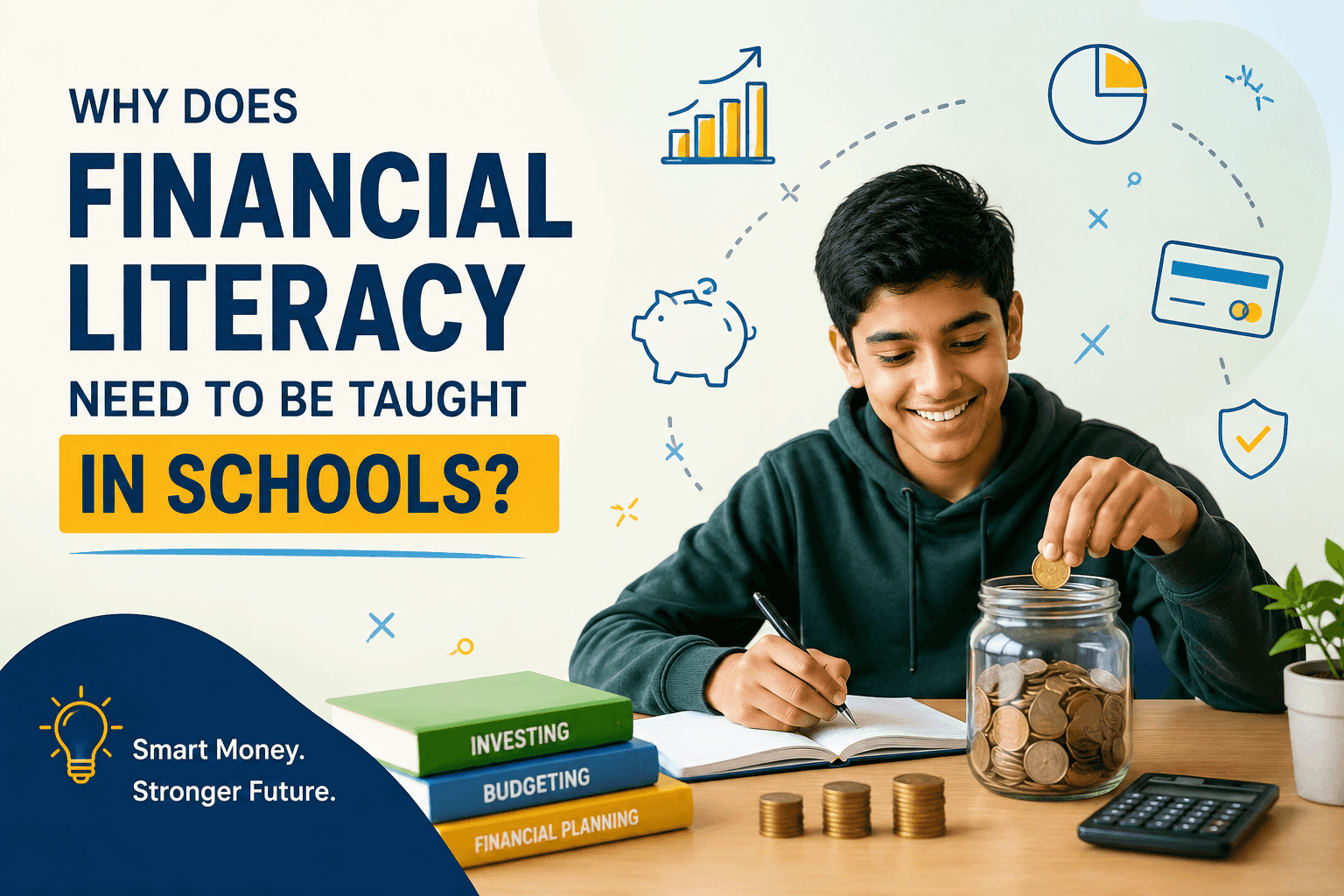

Do you remember the time when your teacher taught you about tax filing? Or was there any lesson where you learnt about the basics of a payslip, like HRA? Remember any? Or even about other things like how compounding interest can double your savings over time? How to read a credit card statement to avoid debts? And how to actually use credit cards to save money. All these things are something that life teaches us with experiences. When a child is placed in first office, they get to see a whole new world, a world of finance. And gradually with time, they learn everything.
Now that we know people eventually figure these things out, a simple question arises: why wait until adulthood?
Today, we will explore why financial literacy deserves a place in school education and how schools like New Oxford International School, one of the schools in Bangalore, are embracing holistic education that prepares students not just for examinations but also for the practical challenges of life.
Why Financial Literacy Matters More Than Ever
Money kinda steers almost every choice we make once we are grown. Like whether it’s planning higher education, buying a home, launching a business, putting money aside for retirement, or just trying to keep up with monthly bills, understanding finances matters a lot.
Still, a lot of adults will say they walked into the real world without really grasping the fundamentals of personal finance. And then it shows up as bad money decisions, avoidable debt, spontaneous spending, and savings that never really get going.
If we start teaching financial literacy while students are still in school, it can help close that gap and give them a bit of confidence before they land fully in adulthood.
Financial Literacy Goes Beyond Mathematics
Many people assume financial education is simply about numbers, but it is much more than calculations. It teaches students how to:
- Create and manage a budget.
- Differentiate between needs and wants.
- Understand savings and investments.
- Learn the power of compound interest.
- Use digital payment systems safely.
- Read bank statements and salary slips.
- Understand taxes, loans, and insurance.
- Develop responsible spending habits.
Building Responsible Decision-Makers
Financial literacy also develops critical thinking. Before making any financial decision, students learn to ask questions such as:
- Is this purchase really necessary?
- Should I save first or spend first?
- Is taking a loan the right option?
- How do interest rates affect borrowing?
- What happens if I miss a credit card payment?
Learning to analyse situations before making decisions nurtures responsibility, patience, and long-term thinking—qualities that benefit students far beyond financial matters.
Encouraging an Entrepreneurial Mindset
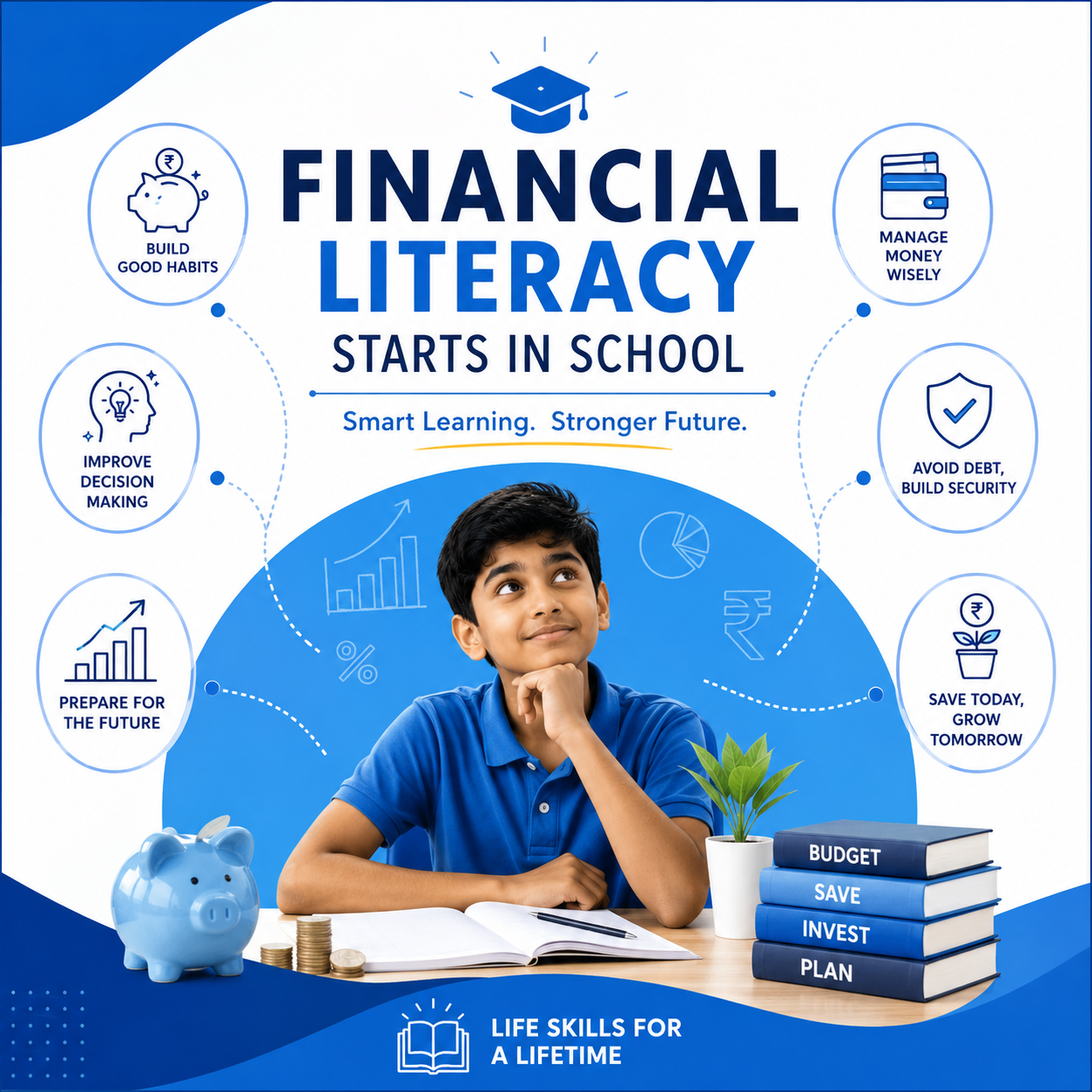
Today’s students are growing up in a world where entrepreneurship, freelancing, digital commerce, and creator careers are getting more and more normal. Financial literacy helps students get a grip on how businesses actually run, how profits get made , why investments count, and how smart financial planning can really support success. Even if they end up chasing traditional careers, knowing something about money gives them more strength to make better work related , and personal choices, so yeah it can help either way.
Financial Education Builds Life Skills
One of the biggest advantages of financial literacy is that it teaches discipline. Students gradually develop habits like:
- Setting financial goals.
- Delaying unnecessary spending.
- Saving consistently.
- Planning ahead.
- Taking responsibility for their decisions.
These habits translate into stronger decision-making, greater confidence, and improved independence as they grow older.
Why Schools Need to Introduce Financial Literacy
Education has changed quite a lot over the last ten years. Nowadays schools are kinda expected to ready children not only for exams, but also for the rest of life outside the classroom. And honestly, that shift matters.
At the same time, students still need academic excellence, yet they also benefit from practical knowledge that helps them move into adulthood with confidence. Financial literacy is one of those core life abilities, it sits beside classroom learning and makes the lessons feel more real.
So, whether schools use project based tasks , or entrepreneurship programmes, budgeting exercises, simulations, and even simple conversations about economics plus responsible financial habits, they can gradually help students build a solid financial base early on. Little steps like this, add up, over time.
Also Read| Building Academic Confidence Through Safe and Supportive Learning at NOIS
How New Oxford International School, Bangalore Supports Holistic Learning
Preparing students for the future requires much more than academic achievement. New Oxford International School, one of the schools in Bangalore, believes in creating an educational environment that nurtures intellectual growth alongside practical life skills.

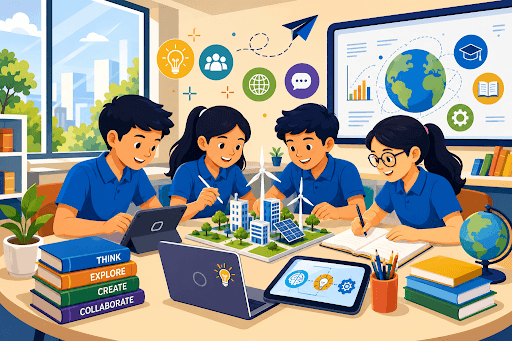
The school's learner-centric approach encourages students to become curious thinkers, confident communicators, and responsible individuals capable of making informed decisions. Through experiential learning, collaborative projects, problem-solving activities, and opportunities that promote independent thinking, students are equipped with skills that extend well beyond textbooks.
By focusing on holistic development, New Oxford International School prepares learners to face real-world challenges with confidence, adaptability, and responsibility. This balanced approach helps students become future-ready individuals who are prepared not only for successful careers but also for the everyday decisions that shape their lives.
Want to know more about this school and other schools in Bangalore







 as a preferred source on