






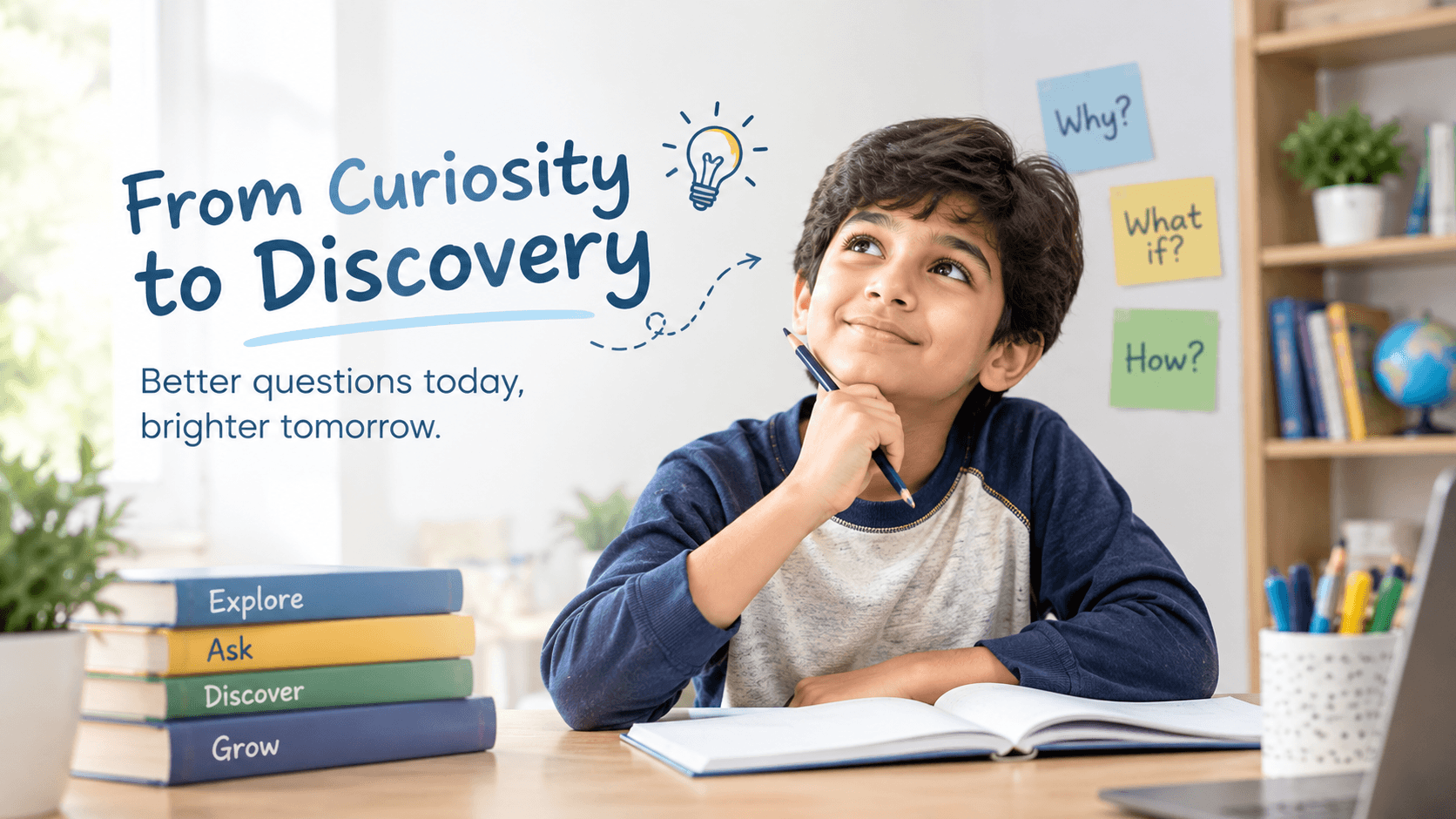

One child asks, “Why does the moon seem to follow us?” as they are coming back from a car journey. Another asks, “Why does ice melt more quickly outside?” Although these questions may appear to be simple, they reveal an important point: the child is attempting to understand how the world functions.
Parents who are looking into the Top Schools in Bangalore, such as Vishwa Vidyapeeth(VVP), Yelahanka, Bangalore, should consider whether education not only provides children with answers but also teaches them how to find answers for themselves. In a world in which information can be obtained in just a few seconds, the skill of asking questions, carrying out investigations, and thinking may become just as crucial as memorising facts.
Also Read| Why Nurturing Curiosity in Children Matters
Why Good Questions Matter More Than Quick Answers
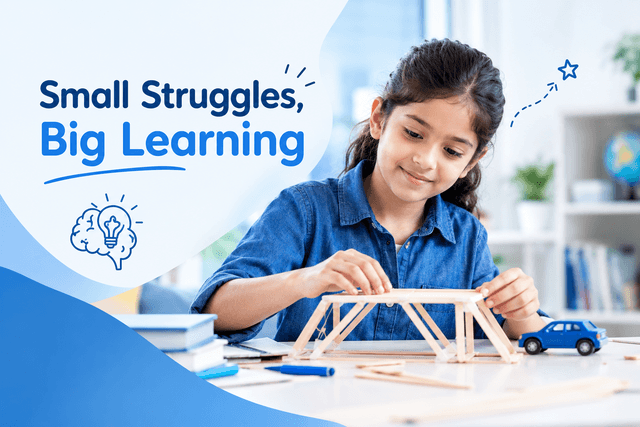
Children have a natural tendency to learn through their curiosity. Whenever they ask a question, they are attempting to link together something that they already know with something that they do not yet understand. Rather than simply giving them the answer at once, parents might at times turn the question into a small investigation.
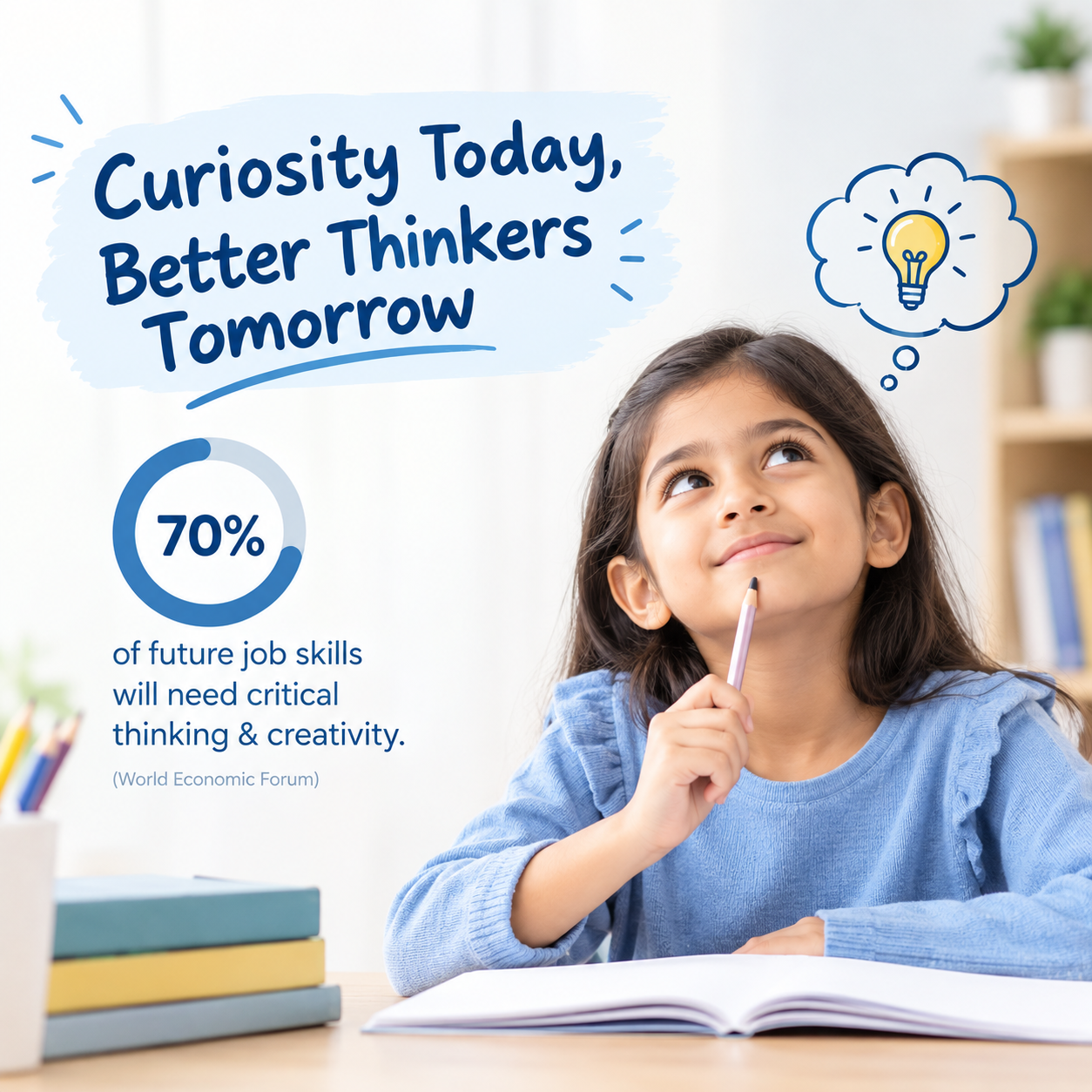
Suppose a child asks, "Why do some plants grow faster than others?" A simple reply could refer to sunlight and water. A more effective way of teaching would be to put two identical plants in different conditions and then ask the child to watch what takes place over a week.
Such an activity enables a number of skills to be acquired at the same time. According to the Center on the Developing Child at Harvard, the skills associated with executive function help children to concentrate, keep information in mind, make decisions, plan, and modify their actions. These skills emerge as a result of practice and through meaningful experiences rather than being completely present from the start.
From Curiosity to Investigation: The Missing Middle
The difference between posing a question and knowing how to investigate it is great. A curious child might ask why a ball rolls faster on one surface than on another, while an active learner would then make a prediction, test the ball on different surfaces, observe the results, and alter their explanation if the evidence fails to match their guess.
The basic principle underlying the scientific method is similar to this: it involves asking a question, making a prediction, carrying out a test, observing the results, and then drawing a conclusion.
This method can be applied during everyday situations. For instance, when you're cooking, ask yourself why one food takes longer to cook. When you're travelling, observe and find out why one road is so busy. And when you're shopping, compare two products and talk about why their prices are different.
Children can also keep a small “question diary” with three columns:
- My question
- What I think
- What I discovered
No costly equipment or special worksheets are needed; it just provides children with a reason to slow down and look closely at their own thinking.
Harvard's research also shows that play and other everyday activities provide children with useful chances to develop their ability to concentrate, their working memory and their self-control. When children grow up, adults can slowly reduce their involvement and let the children have more independence in what they do.
Let Children Be Wrong Sometimes
A very useful aspect of inquiry is realising that the initial answer isn't always correct.
Let a child believe that a heavy object always falls faster than a lighter one. Rather than straightaway correcting them, the parent could ask, “How might we test that?” As a result, the child may find that their first idea has to be altered.
It is here that trial and error proves to be useful, since making a mistake does not count as a failure if the child learns a lesson from it. Parents can encourage this mindset by responding to mistakes with questions such as:
- What did you think would occur?
- “What actually happened?”
- “What surprised you?”
- What might you do next?
This method also makes children more at ease when facing uncertainty, since they learn that saying "I don't know yet" can mark the start of the learning process rather than the conclusion of a conversation.
What we want to do is not to take the place of direct teaching since children do need clear explanations, particularly in the case of a difficult concept or when safety is a concern. The approach is to combine the provision of explanations with chances to explore.
What can parents do differently in the home?
The principle of inquiry-based learning needn't cease when the school day is over; even minor adjustments to ordinary conversations can provide children with more opportunities to think for themselves.
This shows a wider move from merely consuming knowledge to creating knowledge. Children are not just gathering facts; they are learning to use information, test ideas, and develop explanations.
Also Read| Igniting Curiosity and Using It to Build Discipline
What is Vishwa Vidyapeeth (VVP) in Yelahanka doing to assist its students by means of a strategic approach?
At Vishwa Vidyapeeth(VVP), Yelahanka, Bangalore, this method is shown in the school's focus on inquiry-based and experiential learning; the curriculum involves learning by exploring, experimenting and reflecting, through project work, laboratory work, field experiences and real-world applications.
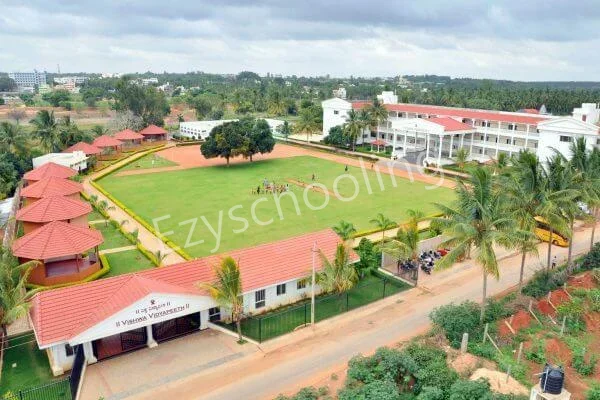
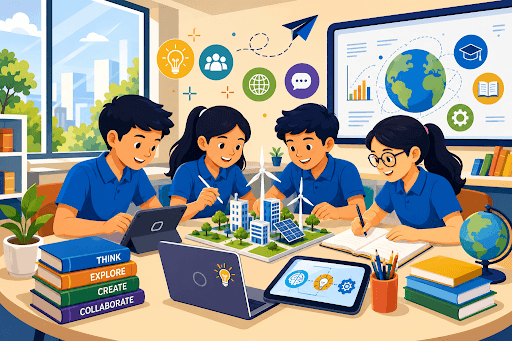
The school explains its ‘Seed to Sapling’ approach by referring to it as ‘Hearts-ON, Heads-ON and Hands-ON’ learning, in which students relate the lessons to things they observe in daily life, consider open-ended questions and take part in practical activities. The method also seeks to encourage greater student self-direction and makes use of trial and error when building logic. For parents who are comparing the Top Schools in Bangalore with Vishwa Vidyapeeth (VVP) in Yelahanka, Bangalore, this aspect is relevant since it links classroom learning to the broader ability of asking questions, exploring different possibilities and finding solutions.
VISAT: Preparing Students for the Future
For Vishwa Vidyapeeth, being future-ready is about much more than preparing children for exams or teaching them the latest technology. It is about helping them think independently, work with others, solve problems, create new ideas, and adapt to change.
After 15 years of bringing together different forms of learning, VVP has brought this approach together through VISAT – the Vishwa Vidyapeeth Future Readiness Framework.
|
VISAT Competency |
What It Helps Students Develop |
|
Visionary Thinking |
The ability to look beyond the present, explore possibilities, and take ownership of the future |
|
Innovation & Creativity |
Curiosity, imagination, experimentation and the confidence to turn ideas into action |
|
Social Intelligence & Collaboration |
Communication, teamwork, empathy, leadership and a sense of responsibility |
|
Analytical Thinking & Problem Solving |
Critical thinking, investigation, decision-making and the ability to find solutions |
|
Technological Literacy & Adaptability |
Digital skills, computational thinking and the ability to use technology responsibly and adapt to change |
These competencies are not taught in isolation. They grow through academics, experiential learning, sports, arts, leadership, community service, entrepreneurship, global exposure, robotics, coding and sustainability initiatives.
For example, a student may build a robot, participate in a Model United Nations, grow food, solve a mathematical challenge, lead a school initiative or work on a community project. Each experience develops more than one skill.
That is what makes VISAT meaningful: it connects VVP’s diverse learning experiences into one purposeful journey, helping students become curious thinkers, confident communicators, creative problem-solvers and responsible citizens prepared for a changing world.
To know more about this and other schools in nearby areas, visit our page


 as a preferred source on