









Ask ten Class 10 students why they picked Science, and at least six will say something like “my parents wanted it” or “everyone in my group is doing it.” That’s kind of the problem right there. Stream selection gets treated like a decision made in a rush, right after board results come out, when everyone’s comparing marks, and nobody’s really thinking straight. But this choice sticks around for two years and quietly shapes a lot of what comes after: college options, career direction, sometimes even confidence levels going into Class 11.
Parents researching CBSE schools in Bangalore are starting to ask better questions about this too, less about which stream sounds impressive and more about which one actually fits their child. At Kesar The International School, this is treated as a conversation worth having properly, not a form to fill out in a hurry. So what should actually drive this decision? Let’s get into it.
Also Read: Important CBSE Updates for the Academic Session 2026-2027
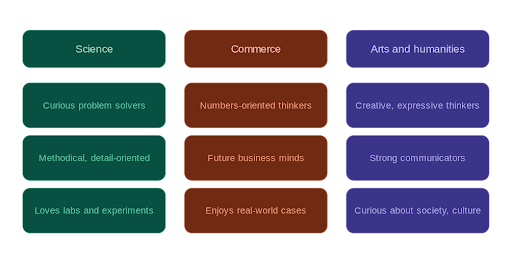
A Four-Step Approach to Picking the Right Stream
Step 1: Map your last two years, not your feelings
Pull out your Class 9 and 10 report cards and your notebooks. For each subject, note two things side by side: your marks, and how much revision it actually took you to get there. A subject where you scored 85 with minimal effort tells you something very different from one where you scored 85 after weeks of struggle. This gives you a working list of subjects that come naturally versus subjects you're managing through sheer effort. Don't skip this step by trying to remember it from memory; actually go back and look.
Step 2: Cross-check that list against real Class 11 content
Pull up the CBSE Class 11 syllabus for your shortlisted subjects and actually read the chapter names, not a summary someone posted online. Physics in Class 10 is mostly formulas you've gotten comfortable with. Physics in Class 11 brings in vectors and thermodynamics that look nothing like what came before. This is usually where a subject you thought you had figured out either still feels doable, or suddenly feels unfamiliar.
Step 3: Build two shortlists, not one
Based on Steps 1 and 2, write down two separate stream shortlists. List A is streams that match your academic pattern. List B is streams that match a career direction you're currently curious about, even loosely. Most students only do List B, which is why they end up in a stream that sounds right on paper but doesn't match how they actually study. If List A and List B point to the same stream, the decision is basically made. If they don't overlap, that gap is exactly what Step 4 is for.
Step 4: Resolve the gap with one conversation, not ten opinions
Sometimes both lists point to the same stream, and you're basically done. But if they don't, the fix isn't gathering more opinions from cousins or classmates. Go to a teacher or counselor who actually knows your academic history and ask something specific, something like, "Given how I've done in these subjects, is this stream something I'd manage, or would I be struggling through most of it?" A specific question gets you a useful answer. A vague one like "what should I pick" just gets you their personal opinion, which isn't the same thing.
Also Read: Is CBSE Alone Enough to Prepare Kids for a Global Future?
The Kesar The International School Approach to Stream Selection
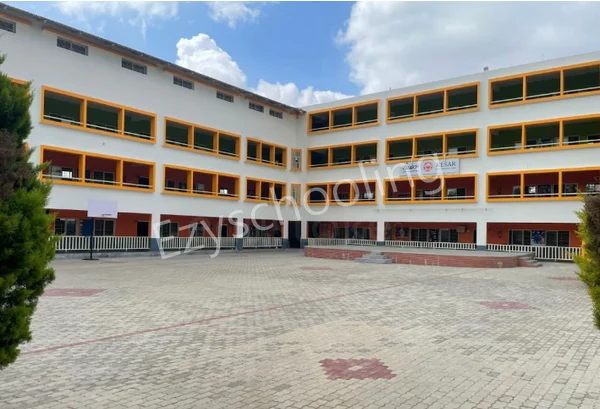
At Kesar The International School, Class 11 isn't treated as a fresh start disconnected from everything before it. Their Secondary Stage actually splits into two phases: Class 9 and 10 first, then Class 11 and 12, with the second phase built around going deeper into whatever a student has already shown strength in. That structure alone changes how stream selection gets approached here; it's not a decision made in isolation right after boards; it's something that builds on four years of watching how a student actually learns.
Being CBSE affiliated, the school follows the same syllabus every Class 11 student across the country deals with, but where it tries to make a difference is in how it prepares students to make sense of that syllabus before they commit to it. Teachers who've taught a student through Class 9 and 10 are usually the ones best placed to say whether Science, Commerce, or Humanities actually fits how that student thinks, not just how they scored.
The school's broader approach, blending academic depth with real guidance rather than rigid tracking, shows up here too. A student isn't handed a form and told to circle a stream. There's room for an actual conversation, the kind Step 4 talks about, where a teacher who knows the student's pattern can give a grounded answer instead of a generic one.
For parents comparing schools in Bangalore, this is often the part that gets overlooked, not the facilities or the results, but whether a school actually helps a fourteen- or fifteen-year-old make sense of a decision that shapes the next two years. At Kesar International School, that support is treated as part of the process, not an extra step squeezed in at the end.
For more information regarding this and other schools in the nearby area









 as a preferred source on